

Chief Executive Officer of Telecel Ghana, Patricia Obo-Nai, has called for greater recognition of human intelligence in the age of artificial intelligence (AI), saying the future should not be defined by machines but by the people who create, direct and use them.
She said while AI was rapidly transforming workplaces and industries, the human brain remained uniquely capable of imagination, inspiration, creativity and meaningful connection.
Related Stories

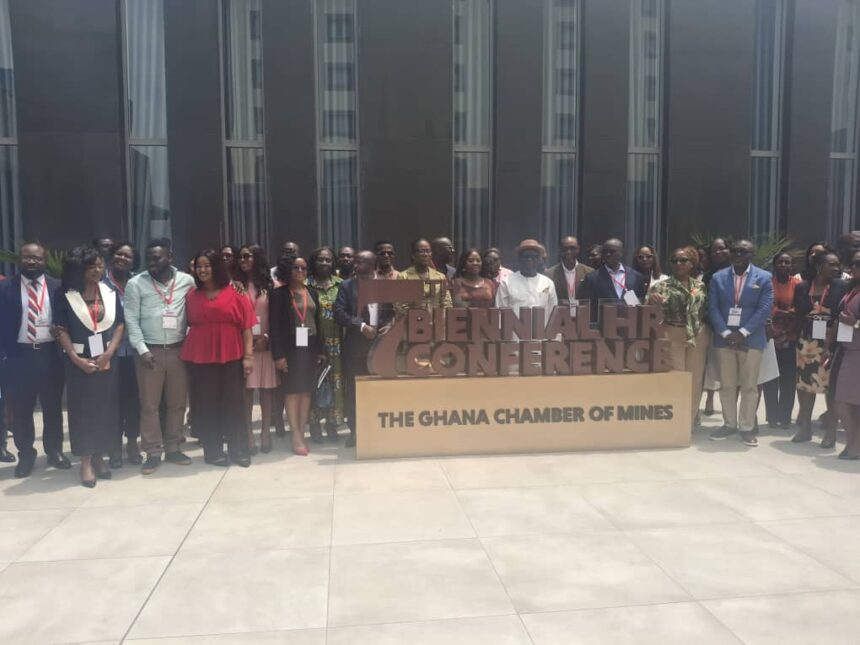
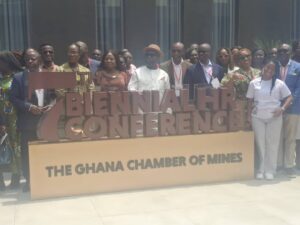
Obo-Nai was speaking as a guest speaker at the 7th Biennial Human Resource Conference organised by the Ghana Chamber of Mines under the theme, “Future-Ready People: Building the Workforce for Ghana’s Next Era of Mining.”
She urged organisations and HR professionals to shift the conversation from whether machines would replace people to how human intelligence could be strengthened and combined with AI to drive innovation and development.
Our brains can outperform machines,” Obo-Nai said, advocating greater appreciation of the capabilities of the human mind.
She said the conversation around AI should increasingly focus on “human intelligence, human imagination, human inspiration and human interconnection.”
The real story is not about machines. It is about people who will explore, people who will mine, and people who will work with HR and AI,” she said.
According to her, AI should be viewed as a tool that enhances human capabilities rather than a replacement for human ingenuity.
She said qualities such as creativity, innovation, analytical thinking, critical thinking, resilience and the ability to build relationships were essential human attributes that technology could not fully replicate.
This is the value that human intelligence has to add to artificial intelligence for us to drive the real change,” she said.
Obo-Nai said the increasing adoption of AI across industries should therefore encourage companies to invest more deliberately in people and the skills that would enable them to work effectively alongside technology.
HR must shape the workforce of the future
The Telecel CEO, later in an interview, also challenged Human Resource professionals to take a more strategic role in preparing organisations for an AI-driven future.
She said HR must understand how industries were evolving and identify the capabilities that organisations would require rather than concentrating only on the number of employees needed.
I have challenged the HR team today that the HR role is probably one of the top three around the boardroom table. This is because they play a very strategic role in discussing the capabilities that are required for the future,” she said.
 “HR should not just discuss how many personnel we need, but what capabilities do we need for the future? Where is the industry going? Whether it is mining, whether it is telco, whether it is fintech, HR must be able to understand where it is going.”
She urged HR professionals to broaden their knowledge and understand emerging technologies so they could effectively guide organisations in developing the workforce required for the future.
At Telecel Ghana, she said, the company had introduced a programme to equip employees with about 14 digital skills.
If HR is not versed in such a thing, how would they guide the people to be able to do it?” she asked.
Obo-Nai said HR professionals must therefore move into a more strategic position where they could help organisations design and develop the capabilities needed to remain competitive.
Mining must put people at the centre
Chief Executive Officer of the Ghana Chamber of Mines, Ing. Dr. Kenneth Ashigbey, on his part, said the mining industry must place people at the centre of its preparations for technological transformation.
He said Ghana’s most important resource was not its gold, manganese or other minerals but the human beings responsible for extracting, processing and developing the technologies associated with those resources.
The most important resource we have is not the gold we mine. Neither is it the manganese nor any of the minerals. The most important resource for us as an industry is the people,” Dr. Ashigbey noted.
He said AI, automation and digital technologies were changing the relationship between people and machines, making it necessary for HR professionals to prepare workers for new forms of employment.
The issues are changing significantly from the time where it was just humans operating machines to the point where now you are going to have humans working with machines,” he stated.
Dr. Ashigbey acknowledged that some jobs could disappear as technology advanced but said new opportunities would also emerge for people equipped with the appropriate skills.
Some jobs get lost, but you find out that a lot more jobs get created,” he said.
He therefore observed that Ghana’s mining industry offered an opportunity to position the country as a participant in the technological revolution rather than merely a supplier of the minerals needed to power it.
Human capital as Ghana’s lasting resource
Dr. Ashigbey emphasised that mining companies could become platforms for developing Ghanaian expertise in robotics, automation, data science, engineering and other emerging technologies.
Our mines can become places where young Ghanaian engineers learn robotics, where technicians master automation, where data scientists solve operational problems, where local manufacturers reverse-engineer components and where researchers develop technologies,” he said.
He said the next priority should be to ensure that Ghanaians moved higher up the technology and knowledge chain by developing and owning intellectual property rather than simply operating imported systems.
This will ensure that investment in human capital would remain valuable long after Ghana’s mineral resources were depleted.
Mining is exhausting. So as you mine it, the ore body gets depleted. But when it comes to humans; the more you develop it, the more you produce,” he said.
He said Ghana could eventually export highly skilled professionals and expertise to other countries if it successfully developed a future-ready workforce.
It is important to note that producing member companies of the Ghana Chamber of Mines directly employed 11,372 people in 2024, with 11,303, representing 99.4 per cent, being Ghanaians.
The 7th Biennial Human Resource Conference brought together HR professionals and industry stakeholders to discuss the skills and capabilities needed as the sector adopts artificial intelligence, automation, robotics, digitalisation and data analytics.
A key objective was to reposition HR as a strategic function that can anticipate future skills needs, rather than focusing only on recruitment and personnel management.
The two-day conference biennial conference is part of the Chamber’s efforts to provide a platform for HR practitioners in the mining industry to share knowledge, examine emerging workforce trends and develop strategies for building the skills required to sustain the sector