

By Kofi Ahovi, Antalya- Türkiye
Ghana is prioritising increased access to predictable climate finance, stronger adaptation and resilience measures, and opportunities in carbon markets as it pushes for concrete outcomes at the 31st United Nations Climate Change Conference (COP31) in Antalya, Türkiye.
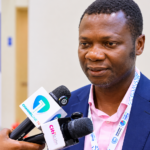
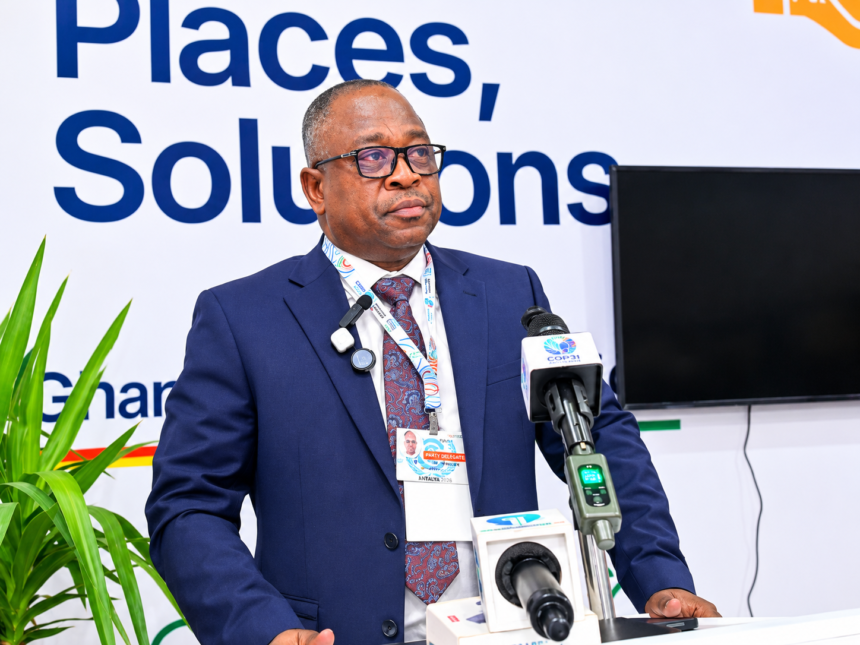
The Minister responsible for Climate Change at the Presidency, Seidu Issifu, said Ghana’s negotiating team had been briefed on the country’s priorities ahead of the conference to ensure that its positions were reflected in ongoing negotiations.
Speaking to journalists on the sidelines of COP31, he said Ghana was seeking practical financing arrangements to support its climate ambitions and address development challenges, particularly those affecting vulnerable communities.
Our priorities are scaling up predictable climate finance, adaptation and resilience, and also how to take advantage of carbon market opportunities to increase climate funding to address our development challenges,” he stressed.
He noted that Ghana was playing an important role in the negotiations, particularly as the country holds the chairmanship of the African Group of Negotiators (AGN).
According to him, this places Ghana in a strategic position to advance Africa’s collective interests and push for outcomes that reflect the continent’s climate financing and development needs.
Issifu said the central message emerging from COP31 was the need to move beyond climate pledges towards implementation, stressing that vulnerable countries needed actual financial support to translate commitments into tangible results.
COP31 is unique. Everybody is very deliberate about what to achieve and what to do. We are moving from pledges to implementation. It is all about implementation and nothing else,” he said.
He said the discussions were focused on delivering climate finance, strengthening countries’ capacity to adapt to climate impacts and building resilience against the growing effects of climate change.
The Minister also called for stronger collaboration between the media, government and other stakeholders to improve public understanding of climate change and encourage behavioural change, particularly at the community level.
He said climate change could not be addressed by government alone, adding that public education and community sensitisation were essential to reducing environmental pressures and strengthening resilience.
Community sensitisation and advocacy are key. We need strategic partnerships that will help us take the message to vulnerable communities,” he said.
He challenged journalists to play a more active role in climate communication, describing the media as a strategic vehicle for educating the public and mobilising communities to adopt environmentally responsible practices.
I want to throw the challenge back to you to collaborate and see how we can do community work to change behaviours so that people become more sensitive to their environment,” he added.
On waste management, Issiful said Ghana needed to move beyond viewing waste solely as an environmental hazard and explore opportunities to generate economic value from it.
He said the government was interested in innovative approaches that could turn waste into an economic resource, while supporting environmental protection and climate action.
He, however, said the country’s negotiating team was still engaged in discussions and that the outcomes would help clarify the strategic direction Ghana would pursue in maximising the benefits of waste management.
On Ghana’s energy transition, the Minister said the country had established a framework for transitioning to renewable energy but required substantial financing to implement its climate commitments.
He disclosed that Ghana would need at least USD55 billion to achieve its Nationally Determined Contributions (NDCs), stressing that strategic partnerships with international institutions and development partners would be critical to mobilising the required resources.
Clearly, transitioning to renewable energy will require funding… And we need to scale up financing to enable us to address our Nationally Determined Contributions,” he said.
He said the government had put the necessary policy framework in place to support a just energy transition, adding that securing adequate funding remained a major challenge.
Issiful expressed confidence that partnerships and access to climate finance would help Ghana translate its existing policies and international commitments into practical action.
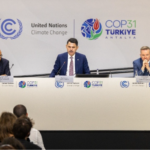
The 31st United Nations Climate Change Conference (COP31) is being held in Antalya, Türkiye, bringing together governments and other stakeholders to negotiate and advance international climate action.