

They said expanding electricity use across transport, buildings and industry would help countries reduce their dependence on imported fossil fuels, strengthen energy security and lower costs for households and businesses.
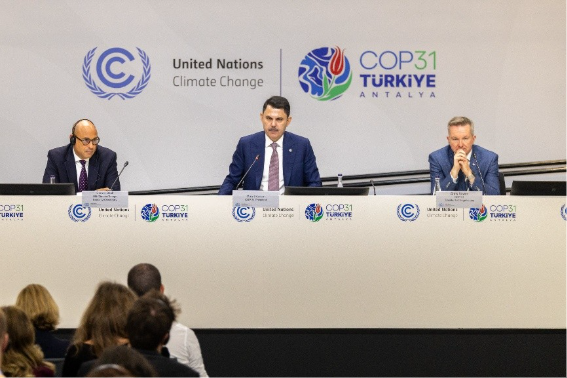
Speaking at a joint COP31 Presidency press conference in Antalya, Türkiye, UN Climate Change Executive Secretary, Simon Stiell, said countries faced a choice between embracing electrification and continuing to bear the economic consequences of dependence on fossil fuels.
Nations now face a choice: electric or shock. Rewire the global economy for the electricity age. Or accept ongoing fossil fuel cost pain for families, firms, and national budgets,” he said.
Stiell said clean energy had become increasingly affordable, noting that 90 per cent of large renewable energy projects were now cheaper than fossil fuel alternatives, according to the International Renewable Energy Agency (IRENA).
He observed that renewables had overtaken coal in global electricity generation, representing significant progress since the adoption of the Paris Agreement more than a decade ago.
However, he cautioned that the global transition remained uneven, with several countries requiring additional support to participate fully.
Up to 75% of energy demand can already be electrified with existing technologies,” he said, calling for faster deployment of available solutions and expanded electricity access across communities.
Stiell said COP31 should build on previous climate agreements by concentrating on practical solutions that would help countries translate their international commitments and national climate plans into measurable results.
He said the conference was adopting a different approach through two complementary tracks: formal negotiations and the Global Climate Action Agenda.
COP31 President, Murat Kurum, said the conference was determined to become an implementation-focused summit that would produce tangible outcomes rather than rely on declarations.
We want this to be an implementation COP. We want to get results,” he said, adding that the presidency wanted participants to leave Antalya with evidence that concrete progress had been made.
He said the swift adoption of the conference agenda had provided a positive start to negotiations and expressed confidence that parties would maintain the same spirit of cooperation throughout the two-week summit.
Kurum also reaffirmed the importance of keeping the global 1.5-degree Celsius temperature limit within reach, warning that even a temporary overshoot could result in irreversible losses and damage.
Our duty is to act swiftly to limit the temperature rise, minimise the extent and duration of any overshoot, and return below that threshold,” he said.
He stressed that adaptation and loss and damage must remain central to the climate agenda, with COP31 expected to address resilience across different sectors, including oceans and cities.
On electrification, Kurum said the conference was promoting the 35-by-35 Global Electrification Pledge, which seeks to increase electricity’s share of global final energy consumption from approximately 23 per cent currently to 35 per cent by 2035.
He said the initiative was particularly important given the vulnerability of countries dependent on imported fuels.
Between March and August this year, fuel-importing countries incurred approximately US$330 billion in additional costs, he said, citing the impact of volatility in international energy markets.
Kurum said Türkiye was also pursuing energy independence through electrification and other measures, adding that the country wanted COP31 to bring political commitment and investment together to accelerate the transition.
COP31 President of Negotiations, Chris Bowen, said the conference was taking place against the backdrop of multiple global crises, including rising living costs, energy insecurity, artificial intelligence-related pressure on electricity grids and worsening climate impacts.
He said the growing cost of fossil fuels and declining reliability of supply had placed additional pressure on households and economies.
Bowen said countries needed to demonstrate that multilateral cooperation remained effective in addressing global challenges.
Countries working together is not only the best way, it is the only way – the only way – of dealing with climate change and the other crises countries are facing,” he said.
He described the 35-by-35 electrification target as ambitious but necessary, explaining that global electrification had increased gradually from 17 per cent in 2005 to 19 per cent in 2015 and approximately 23 per cent currently.
Achieving 35 per cent by 2035, he said, would require more than a fourfold increase in the current rate of electrification.
Bowen said Australia and Türkiye were working closely together to coordinate the conference, describing their partnership as an integrated effort to deliver a successful COP31.
He also disclosed that consultations were ongoing with parties on how electrification could be reflected in the conference’s final decision.
The three leaders maintained that the success of COP31 would ultimately be measured by its ability to translate climate commitments into practical improvements in energy access, affordability, resilience and emissions reduction.