

By Faustina Dagadu
Ghana has highlighted major strides in promoting gender equality and women’s empowerment while regional leaders and development partners called for stronger institutions, greater collaboration and sustained investment to advance gender-responsive policies across West Africa.
Related Stories
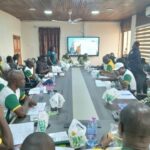
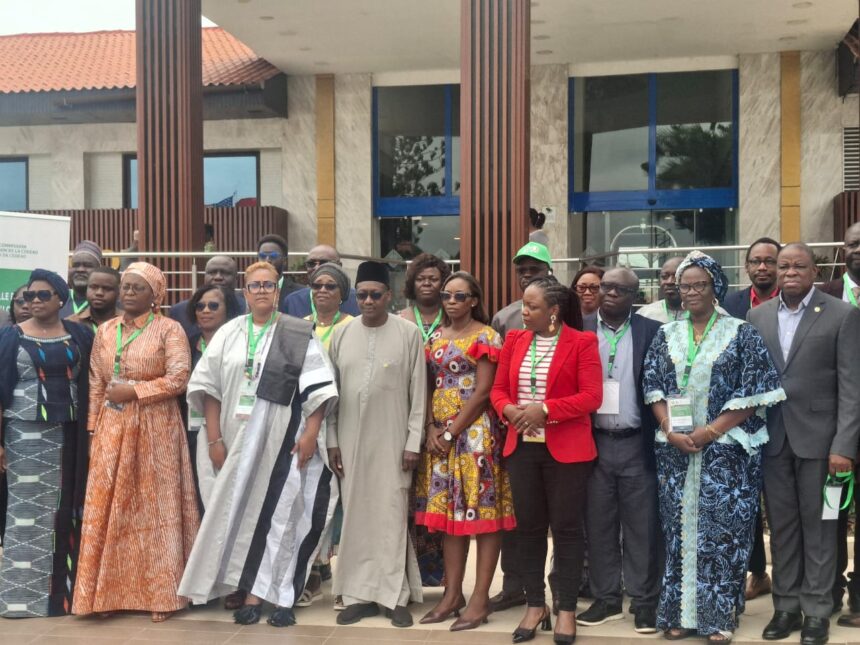
The call was made at the opening of the 2026 ECOWAS Gender Development Centre (EGDC) Annual Briefing and Information Sharing Session with Gender Focal Points, a four-day meeting in Accra that has brought together government officials, gender experts, civil society organisations, development partners and policymakers from ECOWAS member states.
Held under the theme “Strengthening the Institutional and Organisational Capacities of Regional and National Gender Mechanisms,” the workshop is reviewing the Centre’s achievements from 2022 to 2026 while outlining strategic priorities for the 2026–2030 period.
Opening the meeting on behalf of the Minister for Gender, Children and Social Protection, Dr. Agnes Naa Momo Lartey, the Deputy Director- Gender Department, Sabia Kpekata said the gathering comes at a critical time as countries in the sub-region seek to strengthen institutions responsible for promoting gender equality and women’s empowerment.
She noted that Ghana was honoured to host the annual meeting, describing it as an important platform for member states to assess progress, exchange experiences and deepen collaboration.
The governments and people of Ghana are deeply honoured to host this important gathering, which brings together dedicated gender experts, policymakers and practitioners from across the sub-region to reflect on our collective progress and strengthen our collaboration in advancing gender equality and women’s empowerment,” she said.
Ghana outlines major policy achievements
Dr. Lartey said Ghana has made significant progress in mainstreaming gender equality through legal reforms, policy development and expanded social protection programmes.
She identified the Affirmative Action (Gender Equity) Act, 2024 as one of the country’s most significant achievements, describing it as a transformative law that seeks to increase women’s representation in leadership positions across the public and private sectors.
The Act provides for a minimum of 30 percent female representation by 2026, rising to 35 percent by 2028, before achieving full parity by 2034.
This transformative agenda will reshape the landscape of leadership and opportunity in Ghana,” she stated.
She also highlighted the launch of Ghana’s revised National Gender Policy in March 2026, which provides a new 10-year roadmap for integrating gender equality into education, healthcare, agriculture, governance, digital transformation, infrastructure and national economic planning.
According to her, the policy aligns with the ECOWAS Gender Policy and the regional Gender Equality and Women’s Empowerment Strategy (2020–2030).
Fighting gender-based violence
The Minister said government has intensified efforts to combat sexual and gender-based violence through stronger institutional coordination, improved survivor support services and nationwide public education campaigns.
She noted that Ghana convened its first National Men’s Conference on Positive Masculinity in December 2025 to encourage men and boys to play active roles in preventing violence against women and girls.
She added that the Ministry continues to work closely with UNFPA, UNICEF and other development partners to eliminate child marriage through policy advocacy, community engagement and awareness campaigns.
Government, she said, has also strengthened interventions against human trafficking by enhancing law enforcement capacity, improving inter-agency coordination and expanding rehabilitation programmes for survivors.
Expanding social protection
Dr. Lartey noted that Ghana has strengthened its social protection architecture through the Social Protection Act, 2025, which provides a comprehensive legal framework for protecting vulnerable groups, including women, children and persons with disabilities.
She said the Livelihood Empowerment Against Poverty (LEAP) programme continues to provide cash transfers and health insurance coverage for poor households, while the government’s Free Primary Healthcare Programme is improving access to essential healthcare services by removing financial barriers.
She also pointed to the establishment of the Women’s Development Bank as a major intervention to increase women’s access to finance and support female entrepreneurship.
The Women’s Development Bank demonstrates government’s strong commitment to advancing women’s economic empowerment, expanding access to finance and creating opportunities for women-owned and women-led enterprises to thrive,” she said.
Looking ahead, she said Ghana would focus on the full implementation of the Gender Equity Act, expansion of social protection programmes and greater use of the ECOWAS Gender Observatory to improve gender data and evidence-based policymaking.
ECOWAS urges stronger institutions
In his remarks, Ambassador Lawan Gana, ECOWAS Resident Representative in Ghana, observed that strengthening national and regional gender institutions is essential to achieving sustainable development and inclusive economic growth.
He said the annual meeting would provide an opportunity to review the achievements of the ECOWAS Gender Development Centre from 2022 to 2026 while discussing strategic priorities for 2026–2030.
The workshop, he explained, will also equip gender focal points with the skills needed to analyse, interpret and disseminate gender data through the ECOWAS Gender Observatory.
Gender equality is not only a fundamental human right, but also an essential prerequisite for sustainable development, peace, democratic governance and inclusive economic growth across West Africa,” Ambassador Gana said.
He acknowledged that although ECOWAS has made progress in promoting women’s participation in leadership, education, entrepreneurship and governance, challenges including weak institutional capacity, inadequate financing and persistent gender inequalities continue to impede progress.
Strong institutions are the cornerstone of effective governance and are indispensable for translating commitments into measurable outcomes,” he stressed.
Ambassador Gana urged participants to use the workshop to share innovative ideas, strengthen coordination among member states and develop practical recommendations that will accelerate the implementation of regional gender commitments.
Germany and EU reaffirm support
Also addressing the opening ceremony, Valerie Arikpo-Ettah, Technical Advisor for the Women, Youth, Peace and Security (WYPS) Component under the GIZ ECOWAS Peace, Security and Governance (EPSG) Project, reaffirmed Germany’s and the European Union’s commitment to supporting ECOWAS in promoting gender equality and women’s empowerment.
She described the annual information-sharing meeting as a significant moment for reflecting on four years of progress made by the ECOWAS Gender Development Centre while laying the groundwork for a new strategic direction under its incoming leadership.
Such moments of transition are not simply administrative milestones. They are opportunities to renew ambition, strengthen partnerships and reaffirm our collective commitment to ensuring that gender equality remains central to peace, security, democratic governance and sustainable development in West Africa,” she said.
Arikpo-Ettah said Germany and the European Union value their longstanding partnership with ECOWAS because inclusive development cannot be achieved while women and girls continue to face structural barriers to opportunity, leadership and protection.
Investing in women and girls is not only the right thing to do; it is also a smart investment in what our region can make of its future,” she noted.
She commended the workshop’s focus on practical action, particularly efforts to strengthen the capacity of gender focal points to effectively use the ECOWAS Gender Observatory for monitoring, reporting and advocacy.
According to her, reliable data, timely reporting and knowledge sharing are essential for translating regional commitments into measurable results and improving accountability across member states.
Arikpo-Ettah also praised the ECOWAS Gender Development Centre for implementing flagship programmes that promote the social and economic development of women and girls throughout the region.
She explained that through the ECOWAS Peace, Security and Governance (EPSG) Project, Germany and the European Union support ECOWAS in key areas including conflict prevention, security sector reform, elections and governance, centres of excellence, and the Women, Youth, Peace and Security agenda.
She noted that the project’s Women, Youth, Peace and Security component works closely with the ECOWAS Gender Development Centre and other ECOWAS institutions to advance gender-responsive initiatives across member states.
The success of the next four years will depend not only on sound strategies but also on the strength of the partnerships and shared ownership that emerge from meetings such as this,” she said.
She encouraged participants to engage openly, exchange experiences and identify bold priorities that respond to the evolving needs of women and girls across West Africa.
The four-day meeting is expected to produce recommendations aimed at strengthening institutional capacity, improving regional coordination and accelerating the implementation of the ECOWAS Gender Policy and the ECOWAS Gender Development Centre’s 2026–2030 Strategic Agenda, as the regional bloc advances its vision of becoming “an ECOWAS of people and prosperity for all.”