

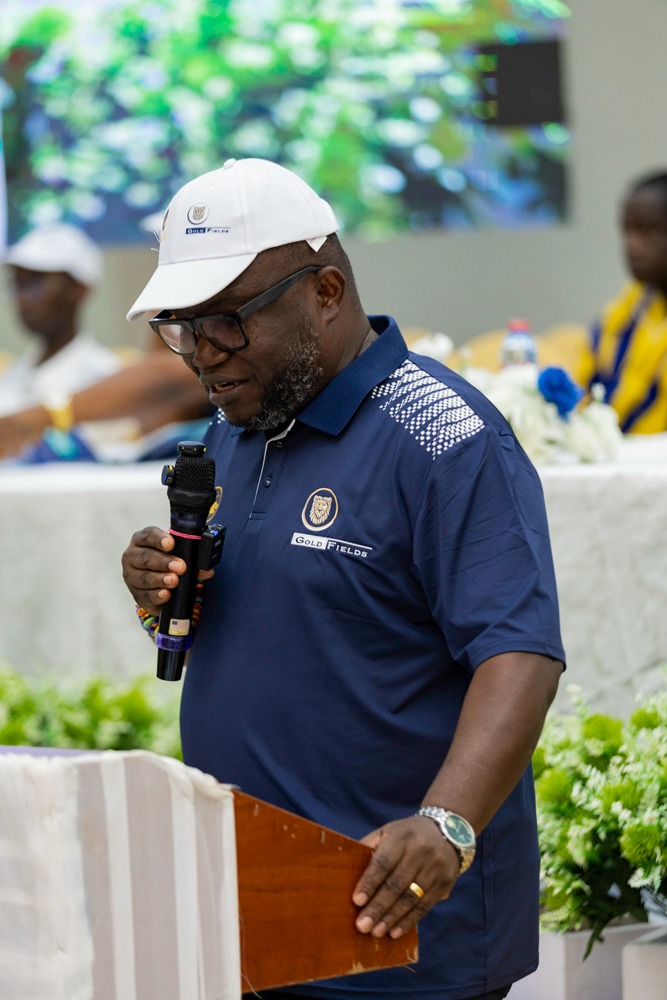
The Chief Executive Officer of the Ghana Chamber of Mines, Ing. Dr. Kenneth Ashigbey, has urged chiefs and people of the Apinto Traditional Area to prioritise dialogue and constructive engagement in addressing concerns surrounding the renewal of Gold Fields Ghana Limited’s Tarkwa mining leases.
He cautioned that while concerns over the distribution of mining benefits were legitimate, confrontation could create uncertainty for the local economy, jobs and Ghana’s broader investment environment.
Related Stories

Speaking at the 2026 Zone One Inter-Mine First Aid and Safety Competition hosted by Gold Fields Tarkwa Mine on Saturday, August 15, 2026, Ing. Dr. Ashigbey acknowledged concerns among some traditional authorities and community stakeholders that Tarkwa may not have received an adequate share of the wealth generated from mining.
He said such concerns should be taken seriously and addressed through meaningful negotiations.
If Nananom believe there are outstanding community needs, let us put those needs clearly on the table,” he said.
According to him, areas for discussion could include employment, local procurement, infrastructure development, skills and enterprise development, environmental management and greater participation of host communities in the mining value chain.
He, however, cautioned against allowing disagreements over the lease renewal to undermine a relationship and economic ecosystem that had developed around the Tarkwa mine over several decades.
The Chamber CEO called on the traditional authorities to clearly articulate their expectations and engage Gold Fields on the company’s commitments to the communities.
Let us negotiate. Let us hold each other accountable. And let us find common ground that protects the legitimate interests of the people of Tarkwa while preserving the investment, employment and economic ecosystem that has been built here,” he said.
 Lease renewal must protect wider economic interests
Ing. Dr. Ashigbey said discussions on the future of the Tarkwa Mine should not focus solely on the mining lease, arguing that the operation supports a much wider economic ecosystem.
He noted that thousands of workers and their families, contractors, suppliers, transport operators, hotels, restaurants, artisans, traders and other businesses depend directly or indirectly on mining activities in the area.
He also highlighted Gold Fields’ contribution to the development of Tarkwa over more than three decades, particularly through the Gold Fields Ghana Foundation.
The Foundation, he said, had invested in education, healthcare, water and sanitation, infrastructure, enterprise development and agriculture in host communities.
Among the projects he cited was the 33-kilometre Tarkwa-Damang road, constructed at an estimated cost of US$27 million.
He further noted that cumulative investment by the Gold Fields Ghana Foundation in host-community development had exceeded US$100 million by 2023.
The Chamber CEO stressed, however, that the company’s record of investment should not shield it from legitimate demands by host communities for greater benefits from mining.
Rather, he said, the lease renewal process presented an opportunity for all stakeholders to establish a stronger and more beneficial partnership.
Let engagement prevail over confrontation. Let us sit with Gold Fields. Let the community articulate clearly what it requires from the next phase of the relationship. Let Gold Fields listen and respond,” he urged.
Gold Fields reaffirms commitment to host communities
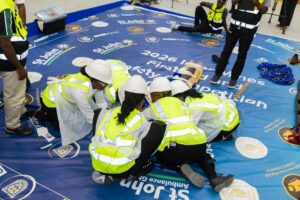 In her keynote address at the competition, Tarkwa Mine Manager of Gold Fields Ghana Limited, Dr. Catherine Kuupol Kuutor, reaffirmed the company’s commitment to the wellbeing of its host communities.
She said Gold Fields’ responsibility for safety and wellbeing extended beyond the boundaries of the mine, stressing that the welfare of surrounding communities was closely connected to the company’s operations.
Dr. Kuutor said the company continued to collaborate with community leaders, schools, emergency services, security agencies and other local stakeholders to promote safety awareness and strengthen emergency preparedness.
She said responsible mining should not be measured solely by production figures, but also by the quality of life that mining helped to protect and improve in host communities.
Safety-conscious communities protect families, preserve livelihoods and make development more sustainable,” she said, emphasising the need for continued partnership between mining companies and the communities in which they operate.
The appeal for dialogue comes as discussions over the future of the Tarkwa Mine place renewed focus on how mining communities can secure greater economic and social benefits while maintaining investor confidence and protecting the livelihoods that depend on the sector.