

By Adade Gyamfi
Plastic has become one of the world’s most widely used materials. Since large-scale production began in the 1950s, global plastic production has grown exponentially because of its versatility, durability, and relatively low cost.
Related Stories

According to the United Nations Environment Programme (UNEP), the world now produces more than 430 million tonnes of plastic every year. Yet only about nine per cent of all plastic waste is recycled, around 19 per cent is incinerated, while nearly 50 per cent ends up in landfills. The remaining 22 per cent is openly dumped, burned or leaks into rivers, lakes and oceans, making plastic pollution one of the defining environmental challenges of our time.
UNEP estimates that the African continent generates approximately 17 million tonnes of plastic waste every year, while recycling rates remain among the lowest globally.
 In Ghana, studies by the Ministry of Environment, Science and Technology, the Environmental Protection Agency (EPA), and development partners estimate that Ghana generates between 1.1 and 1.3 million tonnes of plastic waste annually, representing roughly 12 to 14 per cent of the country’s municipal solid waste stream. This translates into more than 3,000 tonnes of plastic waste every day.
The challenge is not simply the volume of plastics generated but what happens after they are discarded.
It is estimated that only about 10 to 15 per cent of Ghana’s plastic waste is collected for recycling, while the vast majority is mixed with other waste.
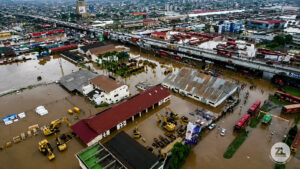
Recent flooding
The recent floods have reignited the debate, but the answer may lie not in banning plastics, but in collecting, recycling and giving them a second life.
As Ghana joined the rest of the world to mark International Plastic Bag Free Day on July 3, environmental experts, policymakers and industry players renewed calls for decisive action against plastic pollution. Yet amid the growing calls for bans on plastics, a more fundamental question emerged:
Can Ghana realistically do away with plastics altogether?
For many experts, the answer is no, not yet. Plastics have become woven into almost every aspect of modern life. From food packaging and drinking water sachets to medicine, agriculture, construction, healthcare and manufacturing, plastics offer affordability, durability and convenience that few alternative materials can currently match.
The real challenge, therefore, is not the existence of plastics, but what happens after they have served their purpose.
The Floods Told a Painful Story
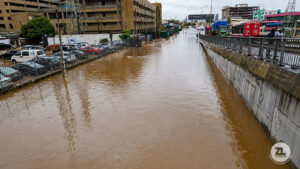
The recent floods served as a harsh reminder that Ghana’s greatest problem is poor plastic waste management.
Corporate Affairs Officer of Zoomlion Ghana Limited, Mr. James Deku, believes the floods revealed the country’s inability to effectively manage the enormous quantities of plastic waste generated every day.
Speaking at a Metro TV discussion to mark the day, he said plastics themselves are not inherently dangerous. Rather, it is the indiscriminate disposal of plastic waste into drains, streams and open spaces that turns a useful product into an environmental hazard.
“When plastics block drains,” he noted, “they prevent the free flow of water, causing floods that destroy homes, businesses and sometimes even claim lives.”
Deku advocates stronger enforcement of sanitation by-laws, continuous public education and policies that encourage recycling instead of simply outlawing plastics.
He also believes Ghana can revive some traditional packaging methods, including the use of leaves for selected products, while gradually reducing unnecessary single-use plastics.
Collection, sorting and recycling
The difference lies in effective collection, sorting and recycling systems.
This was the view shared by the Production Planner of Universal Plastic Products and Recycling (UPPR) Ghana Limited, Mr. Gabriel Kudiabor, who argued that plastics should not be demonised.
According to him, Ghana’s problem is one of waste management and public behaviour rather than the material itself.
He believes sustained public education on waste segregation, coupled with greater investment in recycling infrastructure, will significantly reduce plastic pollution.
Kudiabor also proposed the introduction of a deposit-return system for beverage bottles, allowing consumers to return empty plastic bottles in exchange for financial incentives or rewards.
Such systems have proven successful in several countries by dramatically increasing collection rates while supplying recycling plants with valuable raw materials.
Giving Plastic a Second Life
Rather than viewing used plastic bottles as waste, UPPR sees them as valuable raw materials waiting to be transformed into new products.
Every day, thousands of discarded PET (Polyethylene Terephthalate) bottles are collected, sorted, washed and processed at the company’s modern recycling facility.
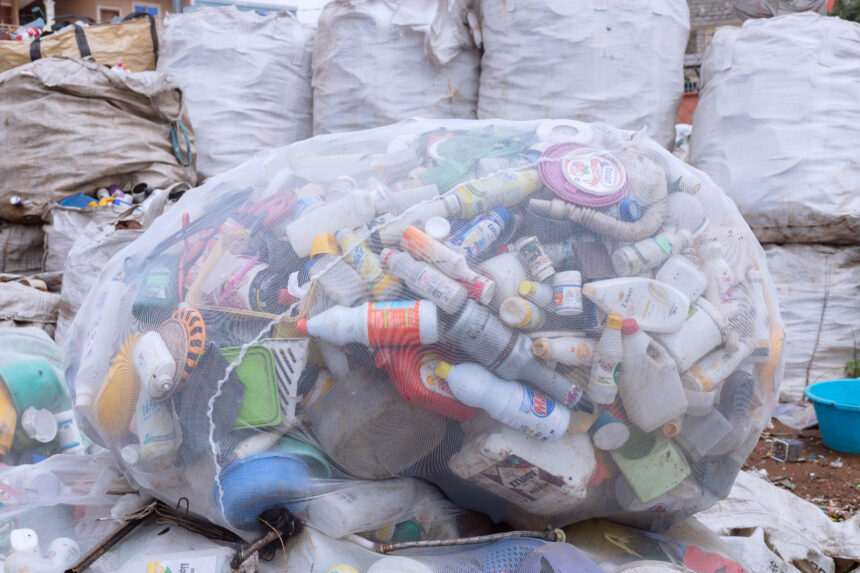
 These bottles are converted into high-quality PET flakes, which serve as industrial raw materials for manufacturing a wide range of products including polyester fibre, yarn, textiles, reflector jackets and other industrial applications.
The initiative is not only reducing plastic pollution but is also creating jobs, supporting Ghana’s circular economy and generating export revenue.
Beyond PET bottles, the Jospong Group has expanded its recycling ambitions to include other hard plastics such as Polypropylene (PP) and Polyethylene (PE), materials commonly found in household containers, buckets, detergent bottles, food packaging, crates and industrial packaging.
These plastics can equally be recycled into new products, reducing dependence on virgin plastic materials while conserving natural resources.
What many people see as rubbish is increasingly becoming an important industrial raw material,” Mr. Kudiabor argues.
A shared responsibility
The panelists including Nii Moi Omaboe of the Ghana National Action on Plastics (GNPAPS), agreed that government alone cannot solve Ghana’s plastic challenge.
Until affordable, durable and environmentally friendly alternatives become widely available, plastics will remain an essential part of everyday life.
The future therefore lies not in declaring war on plastics, but in building a nationwide recycling culture where every bottle, container and plastic package is collected, processed and transformed into something useful,” Kudiabor says adding,
“If government, industry and citizens work together, Ghana can reduce plastic pollution, create green jobs, strengthen local manufacturing and minimise flooding.”