

By Faustina Dagadu
The ECOWAS Commission has begun the final stage of its institutional self-assessment under the Gender Equality Seal for Public Institutions (GES-PI), with the Commission targeting the highest, gold-level certification.
Related Stories
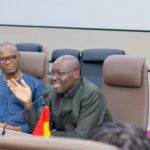
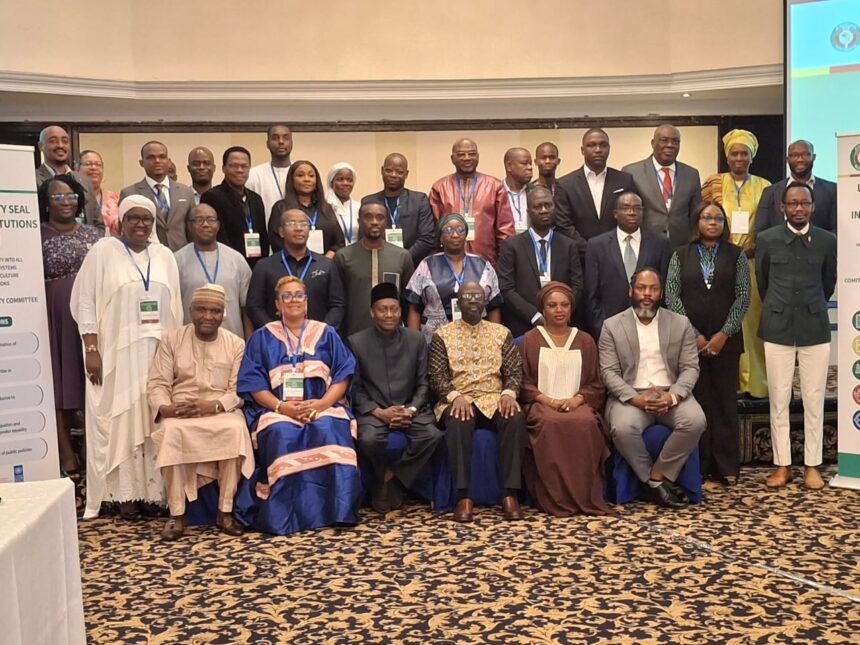
The three-day technical meeting, being held in Accra from August 3 to 5, 2026, is reviewing and validating evidence submitted by various departments and institutions of the ECOWAS Commission as part of the self-assessment process.
The initiative, implemented in partnership with the United Nations Development Programme (UNDP) and German cooperation, is designed to strengthen gender equality across the Commission’s policies, programmes, systems and workplace culture.
Director of the ECOWAS Gender Development Centre, Sandra Oulaté Fattouh, speaking in an interview during the meeting, said the exercise was intended to ensure that the Commission practised the gender equality principles it promotes across the West African region.
We need to practise better what we are preaching. We are involved across the ECOWAS region; we implement programmes for our citizens, but within the institution, we need to take a closer look at gender equality,” she said.
According to her, the assessment would examine issues including the proportion of women within the Commission, their levels of responsibility, recruitment processes and how opportunities and responsibilities are distributed.
She said the exercise involved all directorates and departments of the Commission, as well as other ECOWAS institutions, including the Court of Justice and Parliament.
We need to serve as a leader so that when we approach our member countries, we can cite the Commission as an example,” Oulaté Fattouh said.
ECOWAS seeks gold-level certification
The Gender Equality Seal provides a structured framework for public institutions to assess their performance against recognised gender equality standards and identify areas requiring institutional reform.
The certification is structured around three levels—bronze, silver and gold—with the ECOWAS Commission seeking to achieve the highest level.
Oulaté Fattouh said the Accra meeting, which is the fourth technical session under the initiative, would enable the committee to finalise its action plan before implementation across the Commission.
We will finalise the plan of action and then implement it throughout next year,” she said.
The self-assessment covers five key institutional dimensions: planning and management for gender equality; gender equality capacities and architecture; an enabling working environment; participation, partnerships and accountability; and results and impact of public policies.
ECOWAS admits gaps in gender equality
The Acting Secretary-General of the ECOWAS Commission, Muazu Umaru, acknowledged that the Commission still had work to do in translating its gender equality commitments into practice.
He said gender equality was already embedded in the Commission’s institutional frameworks and strategic plans, making implementation rather than awareness the major challenge.
The problem is not whether we are conscious that gender issues should invade what we do. The issue is: are we practising what we preach?” Umaru asked.
He said the assessment process was an opportunity for the Commission to honestly examine its performance and identify areas requiring improvement.
I think the assessment so far has told us that we are not. But that is not discriminatory at all. That is the conscious recognition that we have work to do,” he said.
According to him, gender equality remains one of the least implemented policies within the ECOWAS community, requiring stronger accountability and institutional commitment.
Our task both today and in the future is to see how we can develop policies that will allow us to make progress in this journey and ensure that we are holding ourselves accountable in the implementation of these plans,” he said.
Umaru described the Gender Equality Seal as a practical mechanism for measuring progress and strengthening institutional accountability.
It is a clear scoring system and also a three-level certification—bronze, silver, gold—that any of us can walk towards,” he said.
He pledged the support of his office to provide the visibility, resources and technical expertise required to help the Commission achieve its objectives under the initiative.
Ghana cited as regional example
Oulaté Fattouh also praised Ghana’s efforts in promoting gender equality, describing the country as a leader in a number of gender-related initiatives.
She said Ghana’s role as the African Union champion on gender matters and its experience in implementing gender-focused programmes contributed to the decision to host the ECOWAS meeting in Accra.
Ghana has been leading a number of gender initiatives and is the African Union champion in charge of gender matters,” she said.
She cited programmes in areas including education, agriculture, scholarships and healthcare as examples of Ghana’s long-standing efforts to advance gender development.
Oulaté Fattouh, however, said one of the key lessons ECOWAS could draw from Ghana was the country’s ability to bring different government institutions together to implement gender-related programmes.
We often cite Ghana for the different entities and ministries involved, because it’s not only the Gender Ministry. You also have Education, Trade and so many ministries, but they have been able to come along for better implementation,” she said.
She said stronger institutional collaboration would be critical to advancing gender equality across the ECOWAS region.
More women needed in technical fields
Oulaté Fattouh also acknowledged concerns that gender equality programmes sometimes appear to focus predominantly on women, stressing that the objective was to achieve greater balance and equal opportunities.
She pointed to the ECOWAS scholarship programme, which has been running for about 20 years and seeks to improve young women’s access to technical fields of education.
She said the programme also allocates a percentage of scholarships to boys, with the expectation that the proportion could increase as the broader objective of equality is achieved.
She noted that challenges also persisted in recruitment, particularly in attracting more women to apply for positions within public institutions.
We need to solve that issue and then I think we can work on increasing numbers,” she said.
Oulaté Fattouh acknowledged that the broader status of women across the West African region remained a concern.
Our region, the status of gender and the status of women, we are not doing well and we need to acknowledge that,” she said, calling for stronger action by decision-makers and institutions.
Self-assessment to strengthen accountability
The ECOWAS Resident Representative to Ghana, Ambassador Mohammed Lawan Gana, said the technical meeting was intended to ensure that the Commission’s self-assessment remained credible, transparent and evidence-based.
He said the process would help the Commission accurately determine its institutional performance while identifying areas for continuous improvement.
The Gender Equality Seal, he noted, was more than an assessment tool, providing a framework for institutions to measure progress, identify gaps and implement practical actions to make their policies and service delivery more inclusive.
The three-day meeting is expected to conclude with the validation of evidence under the five Gender Equality Seal dimensions, identification of outstanding gaps and agreement on a roadmap and timelines for the final submission of the ECOWAS self-assessment to the global Gender Equality Seal platform.