


Economist and Professor of Finance, Prof. Godfred Bokpin, has called on African governments to address the continent’s weak transport, logistics and payment infrastructure, warning that high transaction costs continue to undermine intra-African trade despite the launch of the African Continental Free Trade Area (AfCFTA).
Speaking at the Prudential Bank Business Forum on Wednesday on the topic, ‘The Future of Intra-African Trade: Opportunities, Challenges and the Role of Ghanaian Businesses under AfCFTA’, Prof. Bokpin said Africa’s trade architecture remains largely designed to serve external markets rather than facilitate commerce within the continent.
Related Stories
According to him, decades after independence, African countries still face structural barriers that make it easier to trade with Europe and Asia than with neighboring countries.
He noted that in many cases, goods destined for another African country must first pass through Europe before reaching their final destination, while direct flights between many African capitals remain limited.
The Africa we inherited was designed to serve the rest of the world, not Africans themselves,” he said. “Almost 60 years after independence, we have not fundamentally changed that structure. As a result, the cost of trading among ourselves remains much higher than trading with the rest of the world.”
Prof. Bokpin observed that Africa records the lowest level of intra-regional trade globally, significantly lagging behind regions such as Europe, Asia and North America. He attributed this to inadequate connectivity, fragmented markets and weak regional infrastructure.
He also pointed out that China has emerged as Africa’s single largest trading partner, reflecting the continent’s strong dependence on external markets.
China is looking for new markets as it deals with excess production capacity and trade tensions with Europe and North America. Africa presents enormous opportunities, but we must engage strategically,” he said.
Prof. Bokpin stressed that the AfCFTA offers Africa an opportunity to reverse this trend by creating a unified market of more than 1.4 billion people capable of attracting investment, improving economies of scale and expanding regional value chains.
He explained that increased trade among African countries would encourage industrialisation because intra-African trade consists largely of manufactured and value-added products, unlike Africa’s trade with the rest of the world, which is dominated by exports of raw materials.
The world does not reward raw materials; it rewards value addition. You earn higher margins only when you add value to what you produce,” he stated.
He said fully implementing the AfCFTA could significantly boost incomes across the continent, expand intra-African exports and create new opportunities for businesses, particularly if supported by efficient cross-border payment systems and improved transport networks.
Earlier, the acting Managing Director of Prudential Bank, Ebow Quayson, said Africa-China trade presents enormous opportunities for businesses, but success will depend on addressing practical challenges such as financing, regulations, payment systems and market access.
He said Prudential Bank’s role extends beyond banking to facilitating trade and supporting businesses with the financial solutions, knowledge and partnerships needed to compete in regional and global markets.
Quayson noted that the AfCFTA has created a market of more than 1.4 billion people with a combined GDP exceeding $3 trillion, while China remains Africa’s largest trading partner and a critical gateway to global supply chains.
He urged participants to use the forum to engage experts, exchange experiences and build partnerships that would help expand trade between Africa and China.
The Head of the China Desk at the Ministry of Finance, Dr. Nii Amu Okotokata Dodoo-Amoo III, said Ghana is committed to supporting initiatives that reduce dependence on the US dollar in Africa-China trade, describing local currency settlement as a critical step toward strengthening Africa’s financial sovereignty.
He noted that a significant portion of trade between Africa and China continues to be settled in a currency that neither Africa nor China issues.
According to him, shifting towards settlement in local currencies presents a “real opportunity waiting to be seized,” particularly as the African Continental Free Trade Area (AfCFTA) creates new opportunities for intra-African commerce.
A large share of our trade is still settled in the US dollar—a currency that neither Accra nor Beijing issues. Local currency settlement is a real opportunity waiting to be taken.”

He explained that adopting local currency payment systems would enable African economies to retain more value within the continent, reduce businesses’ exposure to exchange rate volatility, and lower transaction costs for traders.
When we settle trade in our own currencies, we keep more of the value at home, protect traders from exchange rate risks they did not create, and build payment systems that serve African businesses.”
Dr. Dodoo-Amoo noted that the Ministry of Finance views seamless cross-border payment solutions as essential to unlocking the full potential of AfCFTA and deepening economic integration across the continent.
He assured participants that the government is prepared to work closely with financial institutions and the private sector to advance the adoption of innovative payment solutions.
From the government’s side, we have every reason to support this initiative. We are ready to partner with institutions like Prudential Bank to ensure these solutions succeed,” he assured.
He urged Ghanaian businesses to position themselves at the forefront of Africa’s emerging financial architecture rather than merely participating in it.
Africa’s financial future is being built here on the continent. Let us ensure Ghanaian enterprises are among the drivers of that transformation—not merely passengers,he ureged.
Dr. Dodoo-Amoo commended Prudential Bank for introducing innovative cross-border payment solutions, describing the initiative as timely and aligned with Ghana’s broader agenda of promoting regional trade, financial inclusion, and economic transformation.
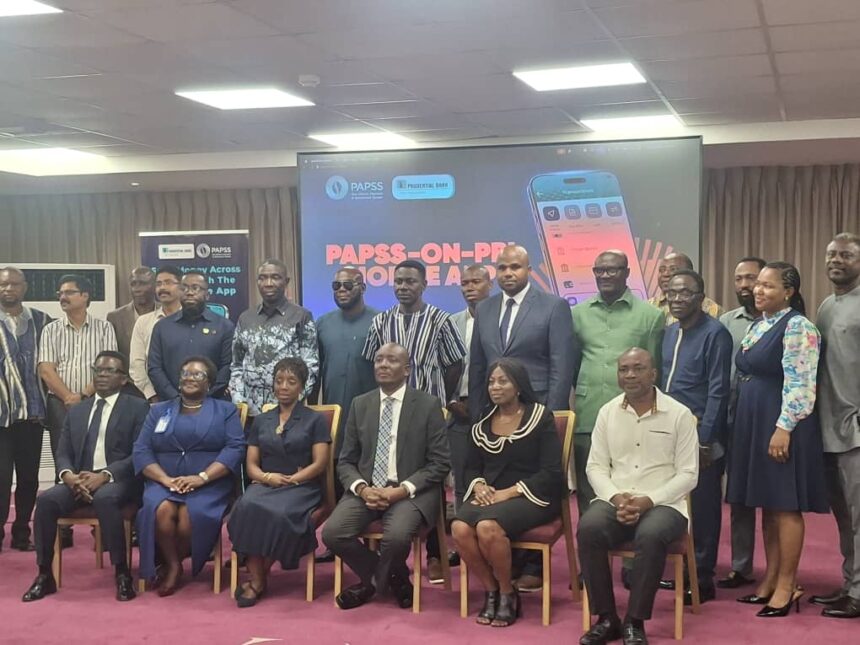
The Prudential Bank Business Forum brought together business leaders, policymakers, trade associations and industry experts to explore how seamless payment solutions can accelerate cross-border trade, deepen Africa-China commercial relations and unlock new opportunities under the AfCFTA.