

A coalition of civil society organisations working with Ghana’s fisheries and coastal communities has called on the government to urgently review offshore gold exploration activities along the country’s western continental shelf.
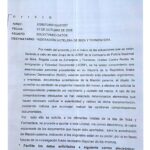
In an open letter dated September 28, 2026, and addressed to President John Dramani Mahama, the organisations said they did not oppose responsible investment or the lawful use of Ghana’s natural resources.
Related Stories

However, they said decisions concerning the same marine space must adequately protect fisheries, biodiversity, food security, human rights and coastal livelihoods before offshore gold exploration advances to more intrusive stages.
The organisations said GoldCoast Resource Corp. had reported holding 10 offshore reconnaissance licences covering approximately 10,000 square kilometres along about 300 kilometres of Ghana’s coastline, from Half Assini to Winneba, and extending about 33 kilometres offshore.
They noted that the Fisheries and Aquaculture Act, 2025 (Act 1146), defines the Inshore Exclusion Zone (IEZ) as coastal waters extending 12 nautical miles, or approximately 22 kilometres, from the coastline.
According to the letter, the company’s published map indicates that substantial portions of its licensed area could fall within the IEZ, although the exact overlap has yet to be established through publication of official cadastral coordinates and licence instruments.
CSOs raise concerns over next phase
The organisations said GoldCoast Resource Corp. had already collected approximately 50,000 line-kilometres of airborne magnetic data covering the entire licensed area.
They said more detailed work had focused on a 500-square-kilometre priority area around the mouth of the Ankobra River.
The company’s stated future programme includes marine bathymetric and seismic surveys, followed by vibro-core drilling and bulk seabed sampling.
The organisations noted that the company had acknowledged that no mineral resource or reserve, or economic viability, had yet been established.
They therefore said there was still an opportunity for government to determine the legal, environmental and social implications of the project before any further phase is authorised.
Ghana therefore still has an important opportunity to determine the legal, environmental and social implications before authorising any further phase,” the organisations said.
Legal questions over seabed activities
The coalition also raised questions about whether some of the proposed activities would be permitted under Ghana’s mining laws.
It cited Section 32(3) of the Minerals and Mining Act, 2006 (Act 703), as amended, which prohibits a holder of a reconnaissance licence from drilling or excavating.
The organisations argued that activities such as vibro-coring and bulk sampling involving seabed excavation or dredging could not simply be treated as reconnaissance activities.
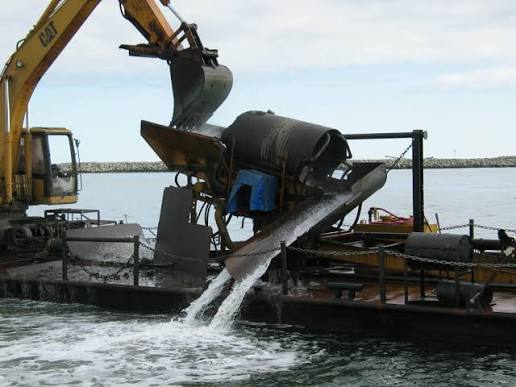
They also pointed to Section 99(6) of Act 703, as amended, which makes it an offence to use a floating platform or other equipment for mining or dredging to obtain minerals in Ghana’s natural water bodies, including the territorial sea, exclusive economic zone and continental shelf.
The organisations said this raised what they described as a “serious threshold legal question” that government should clarify before further investment, approvals or ecological disturbance occur.
How could contemplated vibro-coring, bulk sampling involving seabed excavation, dredging or eventual extraction lawfully proceed in light of section 99(6)?” they asked.
Concerns over fisheries
The CSOs said the proposed activities should be considered against Ghana’s efforts to rebuild fish stocks, protect marine habitats and strengthen safeguards for small-scale fisheries.
They cited the Marine Fisheries Management Plan 2022–2026, which estimates that the fisheries subsector employs about 10 per cent of Ghana’s population, representing more than three million people working as fishers, processors, boat owners, boat builders and in other related activities.
The 2022 Canoe Frame Survey recorded 110,351 marine artisanal fishers and 12,181 canoes.
The organisations also cited the Fisheries Commission’s 2025 Annual Performance Report, which recorded 282,658.29 metric tonnes of artisanal fish landings, representing 63.68 per cent of total landings.
They said the expanded IEZ, the Marine Fisheries Management Plan and the 703.86-square-kilometre Greater Cape Three Points Marine Protected Area should all be considered when decisions are made about mineral activities in the same waters.
Potential environmental impacts
The organisations said the potential risks extended beyond fish catches.
They raised concerns about seismic and other acoustic surveys, increased vessel traffic, seabed disturbance and sediment plumes, saying such activities could affect spawning and nursery grounds, seabed habitats and marine mammals that depend on sound for communication, navigation and foraging.
They referred to offshore mining experiences in Norton Sound, Alaska, and Bangka-Belitung, Indonesia, as examples of environmental impacts associated with seabed mining activities.
The organisations stressed, however, that those experiences did not mean the same impacts would necessarily occur in Ghana.
Instead, they said the examples demonstrated the need for site-specific baseline studies, independent monitoring and enforceable mitigation measures before activities capable of significant disturbance are undertaken.
Call for transparency and consultation
The organisations also raised constitutional and human-rights concerns, citing provisions relating to access to information, fair administrative action, participation in national decision-making, livelihoods and responsible development.
They said meaningful, prior and informed consultation with affected coastal communities was therefore necessary.
The coalition called on government to publish the official coordinates, licence instruments, conditions and approved work programmes for all 10 offshore reconnaissance licences.
It also wants an independent spatial assessment showing the relationship between the licensed areas and the 12-nautical-mile IEZ, the Greater Cape Three Points Marine Protected Area, key fishing grounds, spawning and nursery areas and other sensitive marine habitats.
The organisations further called for clarification of the legal and environmental approvals required for each subsequent phase, particularly vibro-core drilling, bulk sampling and any eventual dredging.
They urged government not to grant any prospecting licence or allow intrusive seabed activities to proceed without comprehensive environmental, fisheries, socio-economic and human-rights assessments.
They also called for the participation of the Fisheries Commission, relevant government agencies, coastal communities, academia and civil society in the review process.
Finally, the organisations asked government, after completing the review, to determine transparently whether the existing licences should continue unchanged, be modified to exclude sensitive areas, or be cancelled where applicable legal grounds and evidence warrant such action.
The open letter was signed by organisations including the Environmental Justice Foundation, Centre for Maritime Law and Security Africa, Global Fisheries and Resilience Action, Hen Mpoano, OCEANA, Friends of the Nation, Development Action Association, CEWEFIA, CERATH Development Organisation, A Rocha Ghana and Oxfam.
The organisations said the review was necessary while the project remained at a stage where legal, environmental and social considerations could still influence its future direction.