

He said expanding access to solar technology among households and farmers could create a grassroots energy transition, allowing more Ghanaians to benefit directly from renewable energy while reducing pressure on the national electricity supply.
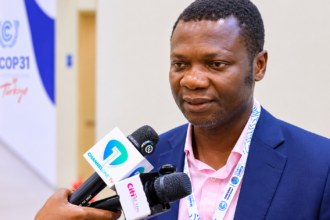
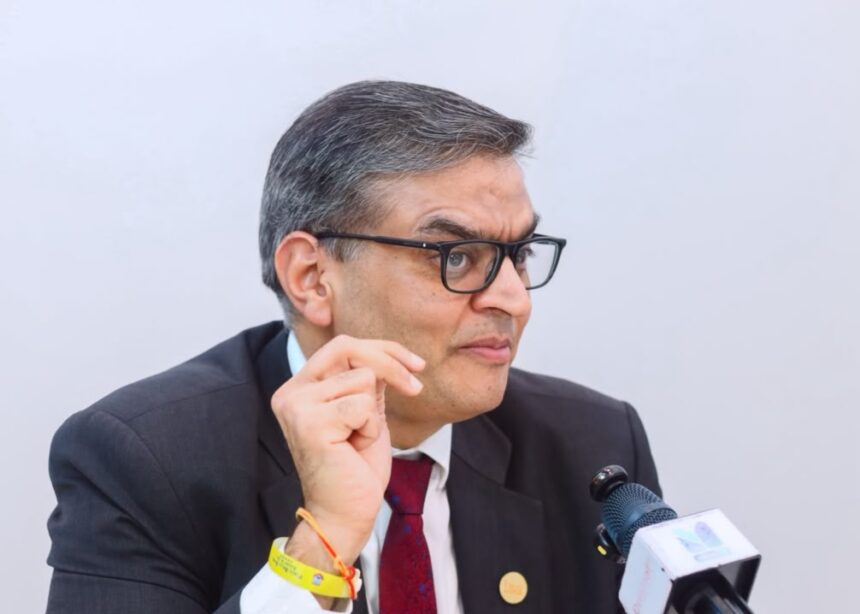
Speaking in an interview on the sidelines of COP31 in Antalya, Türkiye, Dr. Khanna said solar energy had become increasingly affordable and was attracting a growing share of global energy investment.
The world took 25 years to do the first 1,000 gigawatts. Every 1,000 gigawatts is happening every two years. The world has already done 3,000 gigawatts,” he said.
He added that about two-thirds of global electricity investment in the previous year went into solar energy, describing Africa as an emerging destination for renewable energy investment.
According to him, Africa recorded a 50 per cent increase in solar capacity for the first time, creating opportunities for countries such as Ghana to expand their renewable energy programmes.
Dr. Khanna said Ghana was a priority country for the ISA and that both had established a country partnership framework to support the development and deployment of solar energy.
He cited the government’s pilot programme involving 500 solar-powered irrigation pumps as an important starting point for transforming agricultural production.
He said solar-powered irrigation could help farmers move beyond dependence on seasonal rainfall and produce crops throughout the year.
When I met President Mahama last year, his main focus was to help us get food security through solar, and that is through solar-powered pumps,” he said.
“President Mahama told me, ‘I’m a farmer. I know our farmers are working only for two months based on the rain, but if you give solar-powered pumps, they will be able to have crops all 12 months.’”
Dr. Khanna said the ISA would work with Ghana to learn from the 500-pump pilot and explore opportunities to expand the programme nationwide.
He also pointed to an 18-megawatt rooftop solar plant in the country’s solar export processing zone and plans to develop an additional 200 megawatts of utility-scale solar capacity as part of Ghana’s ongoing renewable energy efforts.
Building a local solar industry
The ISA Director-General said Ghana needed to build a strong domestic ecosystem to sustain the expansion of solar energy, including clear policies, accessible financing, technical skills, innovation and digital systems.
He argued that rooftop solar installations could allow households and businesses to generate their own electricity and reduce their energy bills.
If you allow solar rooftop, where every Ghanaian has a right to do a solar rooftop on their roof, it will bring down the bill. All the ECG problems can be solved as well,” he said.
He added that the country needed to mobilise local financing rather than depend entirely on international development partners to fund renewable energy projects.
Stop asking the world only to finance your solar; get your own banks to start financing solar locally,” he said.
However, he acknowledged that high interest rates in Ghana could make solar investments expensive and called for government and external support to reduce financing costs.
Dr. Khanna further stressed the need to train engineers, regulators and financial professionals to develop, manage and maintain solar projects.
He cited the establishment of a Solar Technology Application Resource Centre (STAR-C) in one of Ghana’s universities as an important intervention to equip young people with the skills required by the growing renewable energy industry.
He said young Ghanaian entrepreneurs should also be encouraged to develop innovative solutions and businesses around solar technology.
Africa’s solar investment opportunity
Dr. Khanna said the ISA’s long-term ambition was to help Africa achieve 150 gigawatts of solar capacity by 2030, 500 gigawatts by 2040 and one terawatt by 2050.
He acknowledged that the targets would require substantial investment but said the continent’s growing solar capacity demonstrated that the transition was possible.
He said the ISA was supporting the effort through initiatives including the delivery of one million solar-powered irrigation pumps across Africa and the establishment of a US$200 million Africa Solar Facility to provide capital for African entrepreneurs developing solar projects.
The Alliance was also training professionals in 11 countries through local STAR-C centres and supporting the development of solar projects in small island countries.
These are not reports, not announcements, not talks. They are real projects,” he said.
Dr. Khanna called for COP31 and future climate conferences to focus more strongly on implementation, stressing that developing countries needed practical projects and financing rather than further declarations.
The Global South doesn’t need talks. Global South needs actual implementation. That’s what ISA is all about,” he said.
He also called for transparent and competitive procurement processes to attract private sector investment into renewable energy.
He said clear government policies, transparent tariffs and bankable power purchase agreements were essential to giving investors confidence.
If you announce that we will have 40 per cent of all new generation from renewables, it’s a target. Then your regulator needs to come out with a transparent tariff that has to be paid to the private sector, and you need to have a power purchase agreement that is bankable,” he said.
He added that competitive tendering based on clear policies and regulations would improve accountability and help secure better investment outcomes.
Dr. Khanna expressed confidence in Ghana’s renewable energy direction, saying the country could accelerate its progress by combining policy commitment, local financing, skills development, innovation and private sector participation.