

She said African musicians, writers, filmmakers, performers and other creative professionals deserved appropriate compensation for their intellectual contributions, just as African countries deserved the restoration of cultural treasures taken from their communities.
If I had the opportunity to be paid for the work that I have done, I am sure I would be in a much better position by now,” she said, drawing on her personal experience in the creative industry, which she entered at the age of 17.
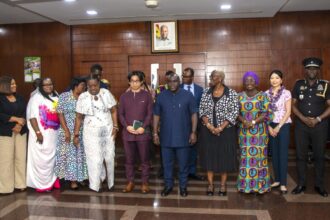
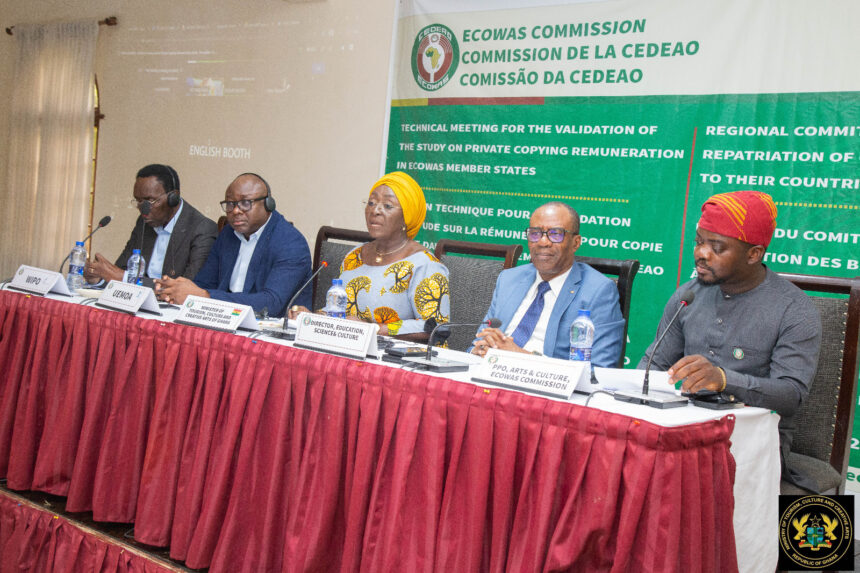
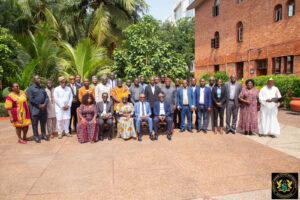
Gomashie made the remarks in Accra on Tuesday, November 3, 2026, when she officially opened a technical meeting on the validation of a study on private copying remuneration in ECOWAS member states, alongside a regional committee meeting on the return of cultural property to their countries of origin.
The meetings, which run from November 3 to 5, 2026, have brought together policymakers, intellectual property experts, copyright administrators and other stakeholders to discuss mechanisms for protecting creative works and advancing the restitution of African cultural heritage.
On private copying remuneration, the Minister said technological advancement had made it increasingly easy for people to reproduce and share copyrighted materials without necessarily compensating the creators.
 Although digital technology had expanded access to information, knowledge and entertainment, she said it had also created challenges for artists and other rights holders whose works were frequently reproduced without direct financial returns.
Private copying remuneration is an important instrument in addressing the challenges that arise from the reproduction of copyrighted works for private and personal use,” she said.
She called for transparent and sustainable frameworks to ensure that authors, performers, producers and other rights holders received fair compensation for the private reproduction of their works.
According to her, the validation of the study should not be treated as an end in itself but should lead to the development and implementation of appropriate policies and mechanisms across the ECOWAS region.
Gomashie also urged member states to deepen their engagement with the World Intellectual Property Organisation (WIPO) and take advantage of its technical expertise and international best practices to strengthen their intellectual property systems.
She raised concerns about the unauthorised use of African cultural symbols and folklore in creative productions, particularly by foreign entities, and called for stronger enforcement of Ghana’s folklore and copyright regulations.
Call for return of African artefacts
Turning to the restitution of cultural property, the Minister said the recovery of African artefacts was essential to restoring the continent’s history, cultural identity and heritage.
She rejected suggestions that the campaign to recover looted artefacts was a pursuit of outdated objects, arguing that cultural heritage was central to the identity of African people.
If I sit here and I have one leg in another country, I am not complete. All the patterns must be in their rightful place. And that is what I am doing — chasing what belongs to Africa,” she said.
She called on countries and institutions holding African cultural treasures to return them to their rightful owners and communities, insisting that restitution was a matter of justice rather than a favour to the continent.
This is not simply about reclaiming objects. It is about restoring our history, reclaiming our identity and ensuring that future generations have access to the cultural heritage that defines them,” she said.
The Minister commended President John Dramani Mahama for his leadership in advancing the campaign for reparatory justice and the restitution of African cultural artefacts.
She said the President’s efforts, including the establishment of an expert panel on the restitution of cultural artefacts, had helped move the discussion beyond historical advocacy towards concrete international action.
 Gomashie also urged countries currently unable to return artefacts because of restrictions in their domestic laws to review those legal provisions.
She cited commitments by Germany and other international partners towards the return of African cultural objects as important opportunities for cooperation.
She further encouraged ECOWAS member states to harmonise their policies, strengthen legal and institutional frameworks and support one another in negotiations with countries and institutions holding African cultural treasures.
The Minister urged representatives from countries that had made progress in recovering their artefacts, particularly Nigeria, to share their experiences to help other countries accelerate their restitution efforts.
She expressed confidence that regional solidarity and sustained international cooperation would help secure meaningful progress in protecting Africa’s cultural heritage and advancing reparatory justice.
Gomashie subsequently declared both the technical meeting on private copying remuneration and the regional committee meeting on the return of cultural property to their countries of origin officially open.