

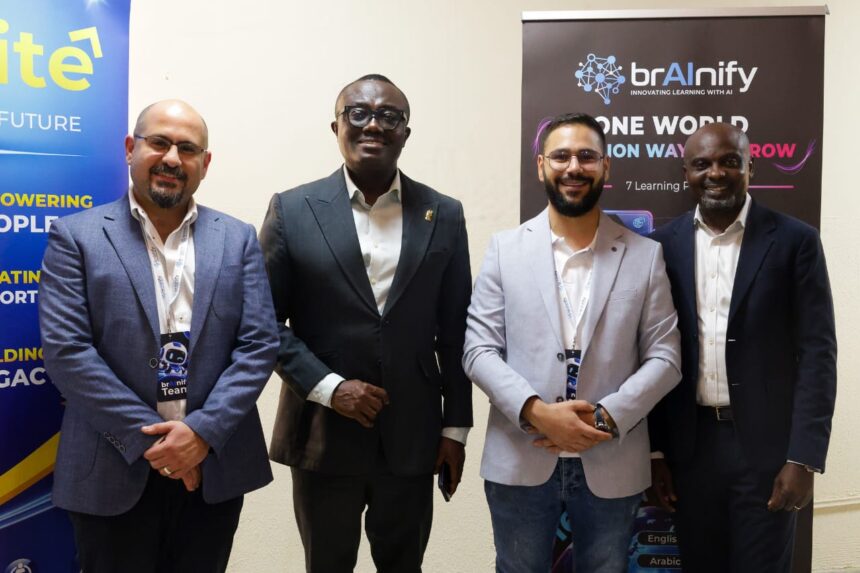
To address the growing complexity of modern digital crime, AI-powered learning platform brAInify and IGNITE Social Enterprise (IGNITE) have conducted an intensive AI and Cybersecurity Workshop in Accra for 50 leading Ghanaian law enforcement and security officers.
The hands-on capacity-building program convened senior officers from the Ghana Immigration Service alongside specialized units within the Ghana Police Service’s Criminal Investigations Department (CID). Participating divisions included investigators from Interpol, Cybersecurity, the Anti-Human Trafficking Unit (AHTU), Financial Crime, and Legal units.
Related Stories

 Designed and powered by brAInify—IGNITE’s proprietary AI-driven digital education platform—the workshop focused on practical, high-impact digital skills to assist officers in modernizing case management and command briefings:
- Applying prompt engineering and data structuring to manage high-volume case documentation.
- Tracing complex financial transaction trails across cross-border investigations.
- Detecting synthetic digital anomalies, including AI deepfakes, manipulated documents, and voice-cloning exploits.
- Developing clear, actionable intelligence briefs to support command-level decisions.
Facilitated by two international AI intelligence specialists from the United Arab Emirates, the workshop emphasized the responsible, secure integration of emerging tools into frontline procedures while upholding chain of custody and data integrity.

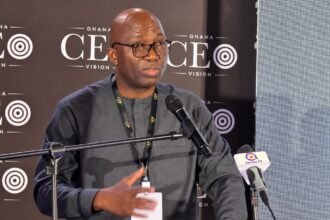
Opening the workshop, Nathan Kwabena Anokye Adisi (Bola Ray), Global Advisory Board Member and Strategic Partner for Sub-Saharan Africa at IGNITE, emphasized the value of technology in modern public safety:
IGNITE and brAInify aim to equip security professionals with the tools to work more efficiently, extract actionable insights from data, and produce dependable investigative outputs. By minimizing the hours spent manually processing administrative data, personnel can focus their critical expertise on verification, deep analysis, and swift decision-making.”
Participating officers highlighted the timely relevance of the cybersecurity and AI curriculum to their day-to-day operations.
This training has been both timely and vital,” said Assistant Superintendent of Immigration (ASI) Rachael Klomegah. “I am now properly equipped to spot critical anomalies and gaps in AI-generated text, imagery, and audio files—a capability essential for border and identity protection.”

Sergeant Salamata Sophiano of the Criminal Investigations Department (CID) noted the immediate utility for active casework:
The applications demonstrated here directly impact our day-to-day work. I have open case files where the prompt engineering and data structuring tools learned today will immediately improve how we compile and submit intelligence reports. We welcome more sessions to continue building advanced proficiency.”
Highlighting IGNITE’s broader governance framework, Paul Yao Dovi, Regional Consultant for Sub-Saharan Africa, underscored the ethos behind the program:
Responsible technology adoption requires high standards of integrity, transparency, and regulatory alignment. Whether through community micro-entrepreneurship or public-sector capacity building, IGNITE remains committed to fostering digital literacy that is ethical, compliant, and transformative.”
All 50 participating officers received official certifications upon concluding the workshop. The initiative reflects IGNITE and brAInify’s ongoing regional mission to bridge digital divides and enhance technological capability across public safety, institutional governance, and enterprise sectors in Sub-Saharan Africa, MENA, and Asia-Pacific.