

A visiting mission team from the International Monetary Fund is expected to conclude the sixth and final review of Ghana’s Extended Credit Facility (ECF) programme on Friday, May 15, as discussions with government officials enter the final stretch.
The IMF delegation, led by Ruben Atoyan, has been in Ghana since April 29 for the two-week assessment of the country’s economic reform programme under the US$3 billion support arrangement approved in 2023.
Related Stories

Sources familiar with the engagement say discussions between the Fund and Ghanaian authorities are progressing largely as planned, although concerns remain over challenges in the energy sector, particularly funding gaps, restructuring efforts and fiscal pressures.
Officials close to the talks indicate that the IMF is broadly satisfied with reforms in the monetary and banking sector, especially measures taken to address issues involving banks with significant state ownership. However, discussions surrounding one private commercial bank are reportedly still unresolved.
It remains unclear whether the IMF mission will outline additional prior actions for government before wrapping up the review and preparing its final report for consideration by the IMF Executive Board in August.
Energy sector reforms, fiscal discipline under scrutiny
The ongoing review is assessing Ghana’s economic performance since the fifth programme review earlier this year, with a strong focus on delayed structural reforms and fiscal targets.
Particular attention is being paid to developments in the energy sector, debt management efforts and government spending priorities, including allocations to social protection programmes.
The review is also expected to determine whether Ghana has met key reform benchmarks required to access the final tranche of IMF financial support and successfully complete the programme.
In the financial sector, the Fund is seeking updates on efforts to resolve long-standing weaknesses within parts of the banking system.
Ato Forson highlights recovery gains
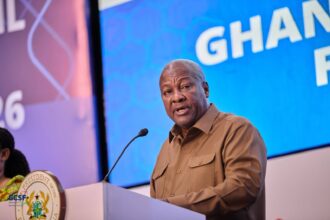
Speaking during initial engagements with the IMF team, Finance Minister Cassiel Ato Forson described Ghana’s economic recovery programme as “transformative” following the severe economic crisis of 2022.
It has been a long, demanding, but ultimately transformative journey,” he said.
According to Dr Forson, the partnership between Ghana and the IMF has helped stabilise the economy, restore investor confidence and renew hope among citizens.
He said government remains committed to sustaining the recovery momentum while shifting focus toward policies that support private sector-led growth and job creation.
We must ensure that stability translates into more investment, more jobs, and more opportunities for all,” the Finance Minister stated.
He added that the success of the recovery programme should ultimately be measured by improvements in the lives of ordinary Ghanaians rather than headline economic indicators alone.
IMF projects stronger outlook for Ghana
Ghana’s 36-month Extended Credit Facility arrangement, approved in May 2023, provides access to SDR 2.24 billion, equivalent to about US$3 billion.
During the fifth review, the IMF described Ghana’s programme performance as broadly satisfactory despite delays in some structural reforms, noting that earlier policy measures were beginning to produce results.
The country’s external reserves have also improved significantly, with the Bank of Ghana building stronger buffers against external shocks.
In its latest outlook, the IMF maintained Ghana’s 2026 economic growth forecast at 4.8 per cent, slightly above the projected 4.6 per cent average for Sub-Saharan Africa.
The Fund also projects inflation to decline to 7.9 per cent in 2026, with inflation expected to remain within single digits through 2027 if current disinflation trends continue.