

Samuel Okudzeto Ablakwa has condemned xenophobia and the growing hostility toward African migrants within the continent, warning that such attitudes undermine Africa’s integration and development agenda.
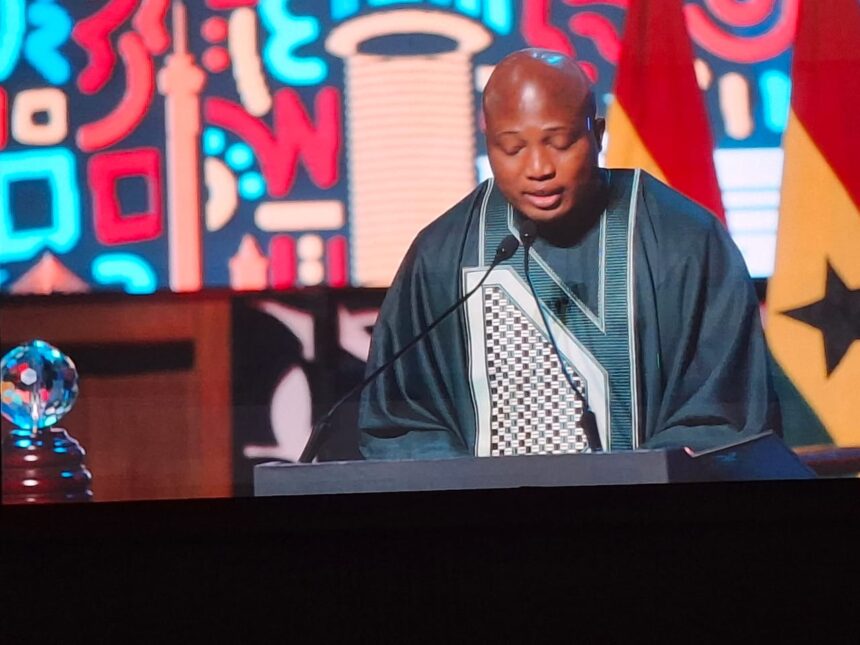
Speaking as keynote speaker at the closing ceremony of the 3i Africa Summit in Accra, the Minister for Foreign Affairs and Regional Integration said Africa cannot pursue economic and financial integration while Africans continue to mistreat one another across borders.
Related Stories

The summit, held on the theme “The Next Frontier: Shaping Africa’s Integrated Fintech Future,” focused on strengthening digital finance, cross-border payments, financial inclusion and regional collaboration across the continent.
Addressing participants on the topic “Regional Financial Integration for Nation Development,” Ablakwa stressed that regional integration remains central to Africa’s economic transformation and global competitiveness.
However, he said true integration must go beyond policy frameworks and trade agreements to include compassion, solidarity and respect for fellow Africans.
We cannot be talking about an integrated Africa when we are not welcoming of each other,” he stated. “How can we believe that Africans pose a threat to us when they come to do business in our countries?” he asked.
The Minister cautioned citizens against taking the law into their own hands when dealing with foreign nationals accused of violating local regulations.
If it is the case that some are not following domestic laws, let law enforcement deal with them. Don’t dehumanise them, don’t attack them,” he stressed.
 The minister’s comments comes in the wake of xenophobic attacks on African nationals in South Africa which have resulted in the death of some foreigners. In one of those instances, a Ghanaian was seen in a viral video being attacked by people believed to be South Africans.
Ablakwa compared Africa’s handling of migrants with Europe’s response to Ukrainians displaced by the Russia-Ukraine war, noting that millions of Ukrainians were accepted and integrated into European countries without being confined to refugee camps.
Have you seen any Ukrainian refugee camp anywhere?” he asked. “They were welcomed, integrated and given special support policies.”
He expressed concern that many African countries continue to show limited compassion toward fellow Africans fleeing poverty, conflict and economic hardship.
The Foreign Affairs Minister recounted the story of Ghanaian migrant Usman Umar, who survived a dangerous four-year journey through the Sahara Desert and across the Mediterranean Sea to Europe in search of better opportunities.
Reading excerpts from Umar’s memoir, Ablakwa described the harsh realities faced by many African youth pursuing irregular migration.
He revealed that more than 1,700 young Africans reportedly died last year while attempting to cross the Mediterranean Sea.
As African leaders, we must recognise that we have not accomplished our task,” he said. “Our mission is to create economic opportunities that will keep our young people here in Africa.”
According to him, Africa’s future depends not only on financial reforms and digital innovation, but also on Africans believing in one another and supporting homegrown opportunities.
Our solution is more integration — to come together, to love each other, to believe in our products and our innovations,” he added.
Ablakwa further urged the African Union to prioritise discussions on xenophobia and promote policies that encourage unity and inclusion across the continent.
Hatred only destroys. Hatred does not build,” he said.
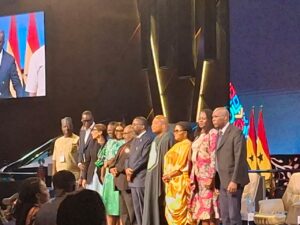
 The 3i Africa Summit brought together central bank governors, regulators, policymakers, fintech firms, investors and development partners to discuss Africa’s digital finance future.
Jointly organised by the Bank of Ghana and Ghana Interbank Payment and Settlement Systems, with support from MTN Group and the Global Finance & Technology Network, the summit focused on advancing financial inclusion, digital payments, fintech innovation and cross-border interoperability.
Held at the Destiny Arena, the forum also explored how technology and regulatory harmonisation can support the implementation of the African Continental Free Trade Area and accelerate Africa’s transition toward an integrated digital economy.