

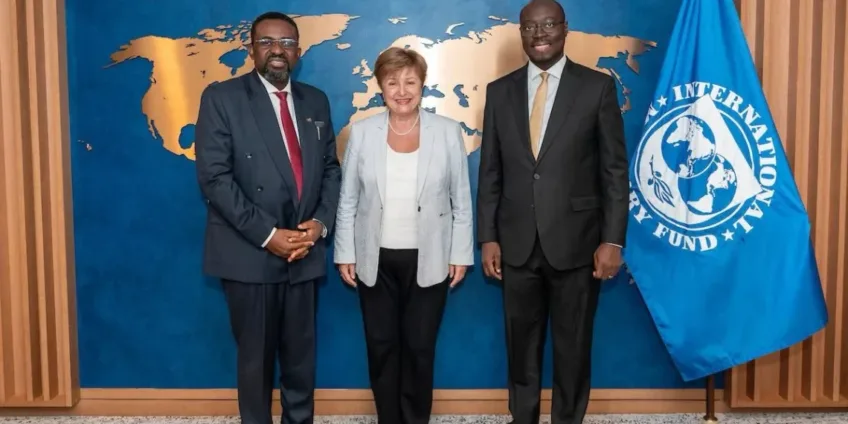
An International Monetary Fund (IMF) staff mission is scheduled to arrive in Accra on April 29, 2026, to begin Ghana’s sixth and final review under its Extended Credit Facility (ECF) programme.
The mission, expected to stay for about two weeks, will commence formal engagements on April 30, marking a critical step toward Ghana’s planned exit from the IMF-supported programme in August 2026. The country signed onto the three-year ECF arrangement in May 2023 to stabilise its economy and restore fiscal discipline.
Related Stories

This final review will assess Ghana’s performance since the fifth review earlier this year, with particular focus on whether outstanding targets and structural reforms have been met or are close to completion.
On the fiscal front, discussions will centre on developments in the energy sector, especially debt management and ongoing structural reforms. The IMF team is also expected to scrutinise government spending priorities, including allocations to key social protection programmes.
A major component of the review will involve agreeing on “prior actions” — conditions Ghana must meet to qualify for the final disbursement under the programme and successfully complete the review.
In the financial sector, the mission will evaluate progress made in resolving legacy challenges, including reforms aimed at strengthening banking sector stability.
Following its engagements in Accra, the IMF team will return to Washington, D.C., to analyse the data and prepare a report for IMF management and its Executive Board. This process typically takes between two to three weeks before a Board meeting is scheduled, potentially clearing the path for Ghana’s programme completion in August.
Technical Extension to August
Although the programme was initially due to end in May 2026, the government and the IMF agreed on a technical extension to August.
The IMF Resident Representative in Ghana, Adrian Alter, explained that the extension is purely procedural, allowing sufficient time to complete the final review using end-2025 and first-quarter 2026 data.
He dismissed claims that the extension was due to Ghana missing key targets or requiring corrective measures.
Performance and Economic Outlook
Ghana’s 36-month ECF programme, valued at approximately US$3 billion, has been described by the IMF as broadly satisfactory, despite some delays in implementing structural reforms.
The Fund noted that economic growth exceeded expectations through September 2025, driven largely by strong performances in the services and agriculture sectors. It also cited improvements in financial sector stability, including bank recapitalisation efforts and reforms involving state-owned banks.
Analysts say the country’s macroeconomic position has strengthened under the programme, supported by rising reserves at the Bank of Ghana, which now provide a stronger buffer against external shocks.
In its latest outlook, the IMF projects Ghana’s economy will grow by 4.8 per cent in 2026, outperforming the Sub-Saharan Africa average of 4.6 per cent. Inflation is expected to decline to 7.9 per cent, remaining in single digits through 2026 and 2027 if current trends persist.
Cautious Optimism Ahead of Exit
The IMF’s Africa Department has expressed optimism about Ghana’s progress but cautioned that sustaining the gains will depend on continued fiscal discipline.
Officials stress the need to balance development spending with long-term debt sustainability to avoid a relapse into the economic challenges that necessitated the programme.
Strengthening Financial Stability
Separately, an IMF technical assistance mission to the Bank of Ghana has reviewed the country’s macroprudential policy framework, aimed at strengthening financial system resilience.
The mission recommended the establishment of a dedicated macroprudential decision-making framework, enhanced communication strategies, and more forward-looking risk monitoring tools. It also called for the implementation of buffers to manage systemic risks, particularly among major banks.
These reforms are expected to play a key role in safeguarding Ghana’s financial stability beyond the IMF programme period.