

The Ghana Chamber of Mines has rejected claims that Ghana’s repeated engagements with the International Monetary Fund are linked to foreign participation in the mining industry.
Speaking at the press conference, Chief Executive Officer of the Chamber, Ign. Kenneth Ashigbey, argued that the mining sector has consistently served as a stabilising force for Ghana’s economy through foreign exchange earnings, taxes and employment generation.
Related Stories

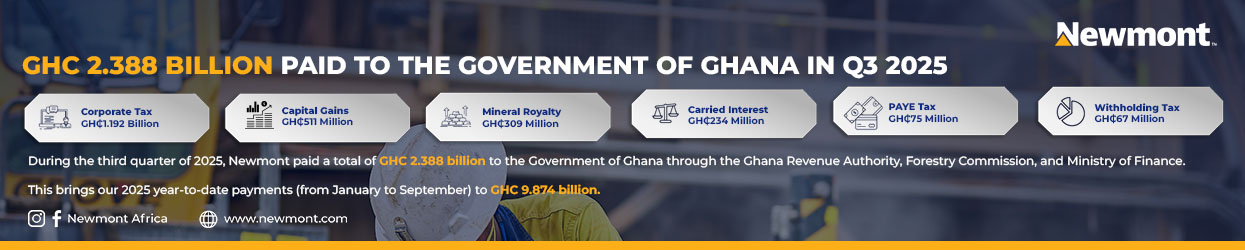
According to the Chamber, the mining sector contributed approximately GHS19 billion in taxes in 2025, representing nearly 23 per cent of Ghana’s direct domestic tax collections.
Ashigbey maintained that the country’s economic challenges should not be blamed on large-scale mining operations.
The empirical evidence does not support such a proposition,” he stated.
Instead, the Chamber pointed to the low tax contribution from the small-scale mining sector despite its high gold production levels.
It disclosed that small-scale mining operations produced more than half of Ghana’s gold output in 2025 but contributed less than GHS0.5 million in taxes.
The Chamber therefore urged government to prioritise the formalisation and taxation of small-scale mining operations as part of broader revenue mobilisation reforms.
Ashigbey also defended the role of private investment in developing Ghana’s mining industry, saying it had transformed the country into one of Africa’s leading gold producers.
The mining industry has consistently served as a stabilising pillar of the economy, providing major sources of foreign exchange earnings, fiscal revenues and external sector resilience,” he said.
“The imperative is not to reverse these gains through policy interventions that are insufficiently anchored in sectoral evidence, but rather to strengthen and modernise the sector,” Kenneth Ashigbey