

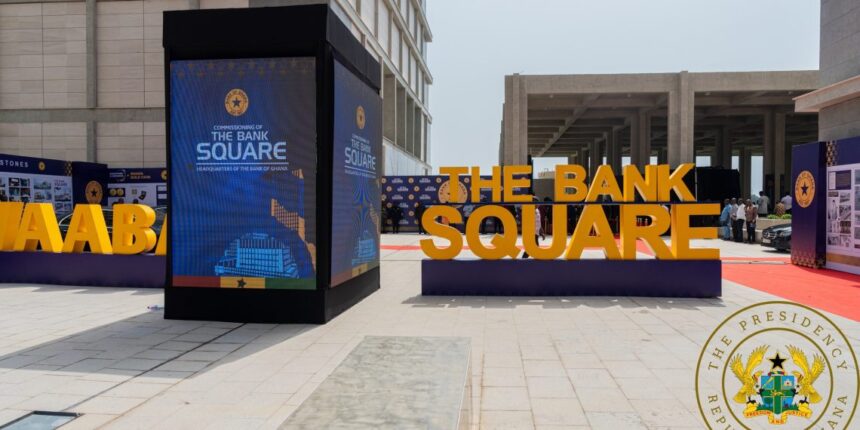
The Bank of Ghana (BoG) is increasing the amount of foreign exchange it will make available to the market under its Forex Intermediation Programme for June 2026, as the cedi continues to come under pressure.
The central bank plans to auction up to $1.2 billion this month, up from the US$1 billion it sold in May.
Related Stories

It is not immediately clear whether the decision was influenced by the recent depreciation of the cedi or forms part of the Bank’s broader forex support strategy for 2026.
However, a circular to commercial banks sighted by JOYBUSINESS indicated that future monthly auction volumes will be determined by prevailing market conditions.
New FX operations framework
In its June FX Intermediation notice to banks, the central bank said its actions will be guided by its newly approved foreign exchange operations framework.
The Bank explained that it has begun implementing measures to support reserve accumulation while ensuring FX interventions are available to dampen excessive market volatility when necessary.
The framework also supports foreign exchange intermediation under the Domestic Gold Purchase Programme.
Regarding its May operations, the Bank said all forex sales were conducted in a market-neutral manner on a spot basis through twice-weekly auctions accessible to all licensed banks.
It stressed that there were no direct FX interventions in May 2026.
The Bank further assured market participants that it remains committed to transparency and will continue to disclose relevant information on its foreign exchange market activities, including its FX intermediation operations.
Cedi performance
According to the Bank of Ghana’s internal data, the cedi has depreciated by 10.91% against the US dollar year-to-date.
This contrasts sharply with the same period last year, when the local currency had appreciated by more than 20%.
The central bank maintains that the current weakness of the cedi is largely seasonal and driven by increased demand for foreign exchange by the energy sector amid tensions in the Middle East.
The rise in global crude oil prices has increased Ghana’s import bill, raising demand for dollars to finance fuel imports.
Data contained in the Bank of Ghana’s May 2026 Summary of Economic and Financial Data showed that Ghana’s oil import bill rose from US$1.6 billion in April 2025 to US$2 billion in April 2026.
Demand for dollars has also increased as several multinational companies enter their dividend payment season and seek foreign exchange to repatriate profits.
No cause for panic
The Bank of Ghana has sought to calm market concerns, insisting it has sufficient reserves to meet seasonal foreign exchange demand.
As of May 2026, Ghana’s gross international reserves stood at approximately US$14.42 billion.
Market analysts say this provides the central bank with a strong buffer to meet forex demand without placing undue pressure on reserves.
Speaking at the 130th Monetary Policy Committee press briefing, Governor Dr Johnson Asiama said the Bank had adequate currency buffers to support the market and described the current pressures on the cedi as temporary.
He attributed the situation largely to seasonal demand linked to dividend payments and increased foreign exchange requirements in the energy sector.