

Africa is entering a new phase of financial transformation driven by digital innovation, mobile connectivity, and expanding payment ecosystems, according to leaders at the second edition of the 3i Africa Summit held in Accra.
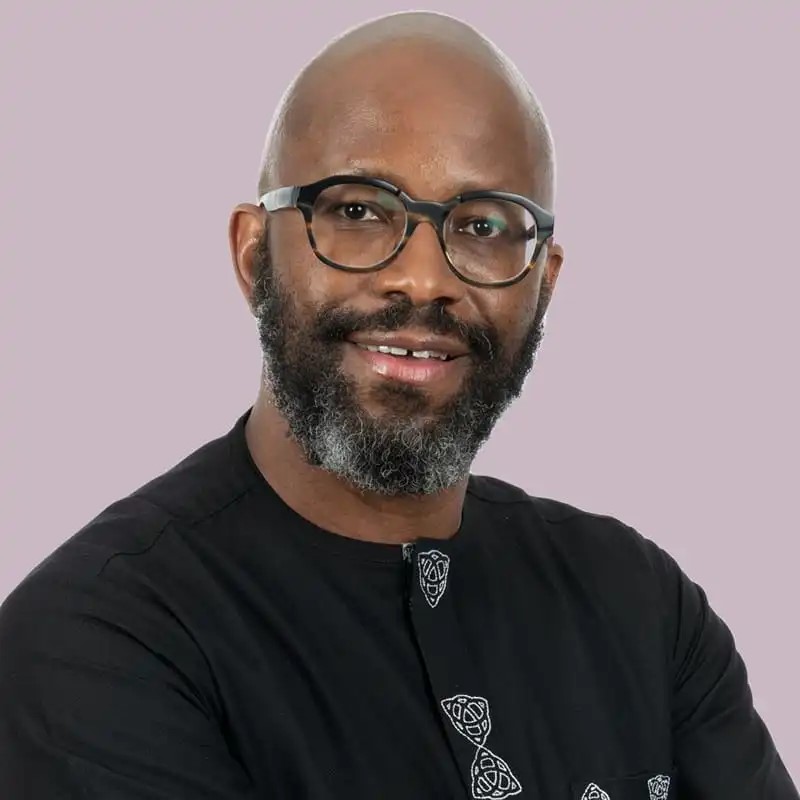
President and CEO of MTN Group, Ralph Mupita, said the continent is transitioning beyond mobile money into a more advanced, app-driven financial ecosystem powered by smartphones and deeper digital integration.
Related Stories

Speaking virtually at the summit, he noted that the COVID-19 pandemic accelerated digital adoption across emerging markets, reshaping what is possible in financial services.
We are at the point of transitioning from mobile money systems to true digital finance. This next phase will be driven by smartphones, app-based services, and deeper ecosystem participation across Africa,” Mupita said.
He explained that while mobile money has driven financial inclusion for over 15 years—especially in East Africa—the system has largely been dominated by peer-to-peer payments. The next phase, he said, will expand into digital lending, savings, insurance, and emerging financial technologies such as stablecoins and crypto-linked services.
Mupita added that telecom-led platforms have succeeded where traditional banking systems struggled, particularly in reaching underserved populations at low cost.
Telecom platforms have been able to reach customers at scale and at a cost traditional financial systems could not match,” he noted.
He said the evolution of mobile networks from 2G to smartphone-based ecosystems will unlock broader economic participation and help democratise access to financial services across the continent.
In a separate address, Chief Executive of the Ghana Interbank Payment and Settlement Systems, Clara B. Arthur, emphasised that Africa’s digital finance future depends not only on innovation but on strong infrastructure and intentional partnerships.
She said Ghana’s experience shows how collaboration between regulators, banks, fintechs, and mobile money operators can build trust and efficiency in the financial system.
Illustrating this transformation, she pointed to everyday user expectations in Ghana’s informal economy.
A market woman in Makola was asked how she preferred to receive payment. Without hesitation, she said, ‘Mobile money.’ She did not ask whether the sender was using a bank account or a wallet—she simply expected to receive the money without delay,” she said.
Arthur explained that this seamless experience is the result of interoperability built through platforms such as the national switch, gh-link, instant payment systems, and mobile money integration—all coordinated under the Bank of Ghana’s regulatory oversight.
She stressed that sustaining this progress requires deeper collaboration and continuous infrastructure development.
Resilient infrastructure, combined with strong and intentional partnerships, is essential to the future of digital finance,” she said.
Arthur also announced that Ghana is migrating its payment systems to the global ISO 20022 messaging standard to enhance cross-border compatibility, improve transaction efficiency, and support faster settlements.
She added that GhIPSS will collaborate with virtual asset service providers under a regulated framework following new legislation, and reaffirmed Ghana’s readiness to connect with other instant payment systems across Africa.
The future of digital finance lies in cross-border interoperability,” she said.
She further urged fintechs and financial institutions yet to connect to Ghana’s national switch to come on board, noting that shared infrastructure reduces costs, eliminates duplication, and strengthens scale.
Arthur concluded that Africa’s progress in digital finance is rooted in collaboration rather than competition.
When leadership is collaborative and partnerships are intentional, digital finance moves beyond systems and delivers real impact,” she said.
The 3i Africa Summit is a high-level continental forum focused on advancing Africa’s digital finance and innovation agenda through Innovation, Investment, and Impact.
Jointly organised by the Bank of Ghana and Ghana Interbank Payment and Settlement Systems, with support from partners such as MTN Group and the Global Finance & Technology Network, the summit brings together policymakers, central bank governors, regulators, fintech companies, and development partners.
Held in Accra, the forum serves as a platform to discuss how Africa can strengthen digital payments, financial inclusion, cross-border interoperability, and regulatory harmonisation.
It also focuses on key themes such as mobile money expansion, digital identity systems, fintech innovation, capital investment in digital infrastructure, and the role of technology in supporting the African Continental Free Trade Area.
In essence, the 3i Africa Summit is positioned as a strategic space for shaping Africa’s transition from fragmented financial systems to a fully integrated digital economy that supports trade, innovation, and inclusive growth across the continent.