

Morocco has now established itself as the leading industrial economy on the African continent. This is one of the main takeaways from the 2025 edition of the African Industrialisation Index published by the African Development Bank (AfDB) on the sidelines of its 2026 Annual Meetings in Brazzaville. For the first time, the Kingdom has overtaken South Africa, long regarded as the continent’s industrial benchmark. The AfDB attributes this progress to the upgrading of Morocco’s productive apparatus, the diversification of its exports, and the continuity of its industrial policy.
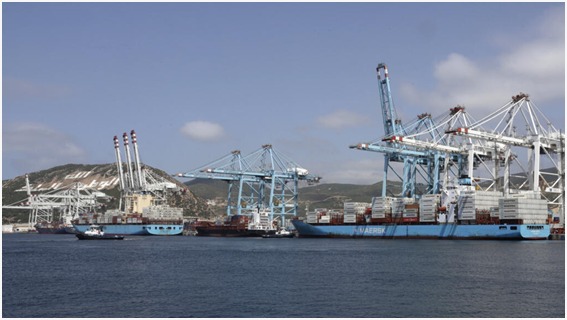
This ranking marks a significant shift in Africa’s industrial geography. South Africa remains a major manufacturing power, but its lead is eroding, while Morocco is capitalising on two decades of industrial strategy, integration into global value chains, and investment in infrastructure. The automotive, aerospace, electrical, chemical, and agro-industrial sectors have gradually shaped an export-oriented model, supported by industrial platforms, free zones, efficient ports, and partnerships with major international groups.
Related Stories
The AfDB index covers all 54 African countries over the period 2010–2024. It is not limited to industrial volume: it also takes into account productive sophistication, diversification, competitiveness, and the ability of economies to integrate into value chains. According to the report, 41 African countries improved their industrialisation scores, while the continent’s overall performance rose by 6%. This improvement, however, remains uneven, with North Africa and Southern Africa continuing to dominate.
The Moroccan case illustrates this rise in strength. In the automotive sector, the Kingdom has become a major production and export platform for Europe.
The aerospace sector also confirms this trajectory. In October 2025, Safran announced a €200 million investment to establish in Morocco an engine assembly line for Airbus, as well as a maintenance unit near Casablanca. Morocco already hosts around 150 aerospace companies, employing 25,000 people, and the sector’s exports reached 26 billion dirhams in 2024.
Morocco ranks first on a continent where industrialisation still remains limited on a global scale. Africa accounts for less than 2% of global manufacturing production and only 1.4% of manufactured exports, according to the report.
The Industrial Investment Barometer in Africa, launched alongside the AfDB index, highlights that North Africa leads in industrial diversification, investment attractiveness, and productive anchoring. The region is said to have attracted 56% of cumulative industrial investment on the continent between 2020 and 2025, with Morocco and Egypt at the forefront.
Morocco’s recognition in the 2025 African Industrialisation Index confirms the effectiveness of a strategic choice: making industry a lever of economic sovereignty, exports, and attractiveness. It also serves as a reminder that industrial leadership is not measured solely by a ranking. It will be measured by Morocco’s ability to create more local value, train the necessary skills, green its industry, and contribute to a less fragmented African industrialisation.
From this perspective, Morocco is becoming a laboratory for the continent: a country that has succeeded in attracting capital, structuring export-oriented sectors, and building a competitive industrial base.