


Community banks have been urged to meet the revised GH¢5 million minimum stated capital requirement as regulators push to strengthen the sector’s financial resilience, governance and capacity to support businesses.
The Acting Managing Director of ARB Apex Bank PLC, Curtis William-Brantuo, said banks struggling to meet the threshold should develop realistic capitalisation plans, engage shareholders and explore viable funding options.
Related Stories

Recapitalisation” alone would not be enough to secure the sector’s future, he said, calling for stronger credit controls, improved governance and greater investment in technology.
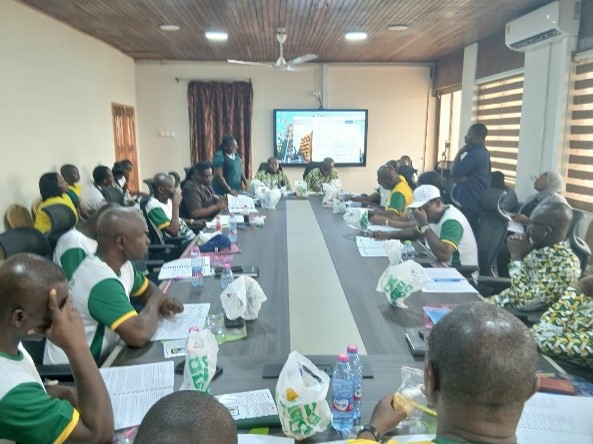
William-Brantuo, represented by Suzan Boateng, Manager of ARB Apex Bank’s Sunyani Branch, made the remarks at the 19th Biennial General Meeting of the Association of Community Banks, Bono-Ahafo Chapter, in Sunyani.
The reforms, including the transition from rural banks to community banks, place greater emphasis on capital adequacy, risk management and operational sustainability, he said. Stronger capital positions would enable lenders to absorb losses, expand responsible lending and invest in digital services while maintaining public confidence.
But he warned that weak credit administration could undermine those gains, urging bank boards and management to tackle non-performing loans, concentrated lending and insider-related exposures.
Community banks must balance their development mandate with commercial discipline, ensuring that loans to farmers, traders and small businesses reflect borrowers’ ability to repay, he said.
The banks were also encouraged to invest in digital banking, electronic payments and transaction monitoring to improve efficiency and widen access to financial services.
William-Brantuo urged institutions to strengthen cybersecurity, staff training and customer data protection, while developing products suited to farmers, young people, women-led enterprises and small businesses.
Liquidity and technology pressures
The Bono-Ahafo Chapter Chairman, Kwasi Afram, said liquidity constraints, locked-up investments and technology-related difficulties, including problems with the T24 banking system, remained major challenges for member institutions.
He said improving deposit mobilisation and staff capacity would be important to strengthening the banks’ operations. The Chapter would continue engaging the Association’s National Secretariat, ARB Apex Bank, the Bank of Ghana and other stakeholders to address the concerns.
Its priorities for 2026 and beyond include acquiring land and constructing an office complex, strengthening the National Community Banks Women’s Association (NaCoWAS), and improving collaboration among bank chairpersons, Mr Afram said.
Building confidence
William-Brantuo said sustained deposit growth would depend on public confidence, service quality and savings products that meet customers’ needs. He urged banks to deepen community engagement, promote financial education and maintain transparency and professionalism.
He reaffirmed ARB Apex Bank’s commitment to working with community banks, the Bank of Ghana and the association to strengthen operational capacity, improve regulatory compliance and build confidence in the sector.
The meeting coincided with the celebration of 50 years of community banking in Ghana under the theme, “Celebrating 50 Years of Community Banking: Honouring the Past, Building the Future.”