


The proposed policy will cover minerals including bauxite, manganese, iron and lithium, with the government planning a phased prohibition supported by legal measures, mineral-specific requirements and clear implementation timelines.
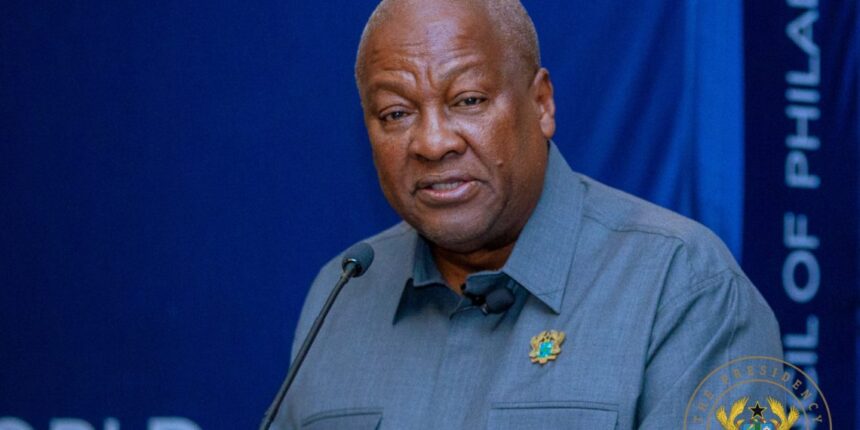
Speaking at the Mining in Motion Conference on Monday, October 19, 2026, President Mahama said Ghana must move beyond extracting minerals for export and develop the capacity to process them locally.
I’ve set a clear goal that by 2030, raw mineral ores should no longer leave our shores. Our bauxite, manganese, iron, lithium, and other minerals must support processing and industrial development here at home,” he said.
The President said the government would establish clear processing obligations for investors seeking access to the country’s mineral resources, making local value addition a key consideration in the sector.
We will pursue a phased prohibition on exports of unprocessed ores, supported by the necessary legal measures, mineral-specific requirements, and transparent implementation timetables,” he said.
He added that Ghana had already banned the export of iron scrap and non-ferrous metals, stressing that investors must understand the processing obligations attached to access to the country’s resources.
The proposed restrictions are intended to encourage investment in domestic mineral processing, strengthen local industries and create more economic opportunities along the mining value chain.
Gold refining push
Alongside the proposed restrictions on raw mineral exports, President Mahama said the government was taking steps to expand Ghana’s capacity in gold assaying, refining and related services.
The initiative, being pursued through the Ghana Gold Board (GoldBod) and the country’s gold refining policy, is intended to ensure that more value from gold production is retained within the domestic economy.
Through the Ghana Gold Board and our gold refining policy, we are working to retain more value through assaying, refining, and related services,” he said.
Expanding local gold processing is expected to create opportunities for businesses and professionals while strengthening Ghana’s participation in activities beyond mineral extraction.
The policy direction signals a broader shift towards using the country’s mineral wealth to support domestic industrial development rather than relying predominantly on exports of raw materials.
However, achieving the 2030 target will require the development of adequate processing infrastructure, investment and effective implementation of the proposed regulatory measures.