

MobileMoney Fintech Limited (MMFL) is exploring opportunities to use digital assets and tokenisation to make investment products, including gold, more accessible to ordinary Ghanaians, potentially allowing people to build assets through small, regular contributions.
The initiative forms part of the company’s broader strategy to deepen financial inclusion by integrating investment, savings and insurance services into everyday digital transactions.
Related Stories

Chief Executive Officer of MMFL, Shaibu Haruna, said tokenisation could help overcome the financial barriers that prevent many people from investing in assets such as gold, which often require substantial upfront capital.
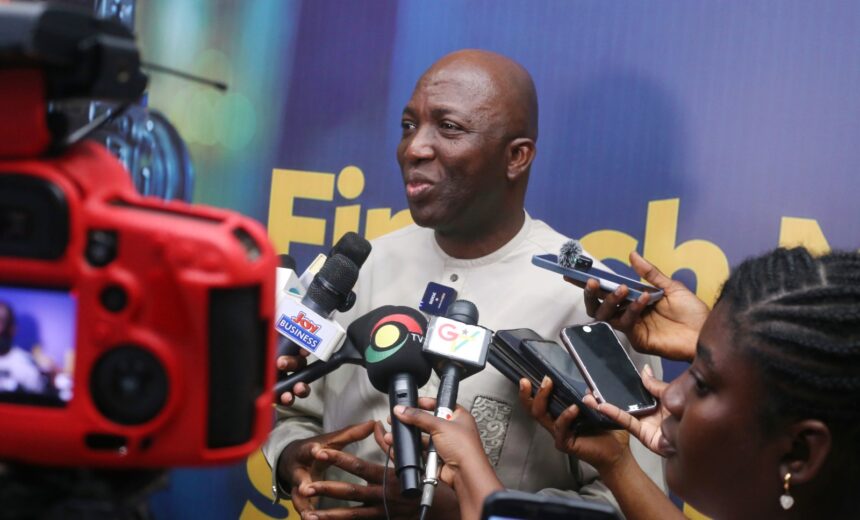
Speaking at a stakeholder engagement with the media on Friday, Haruna said digital technology could enable investors to acquire fractional interests in assets, allowing them to invest according to their financial capacity.
Why don’t we individually have gold?” he asked, highlighting the gap between Ghana’s position as a major gold producer and the ability of ordinary citizens to invest in the precious metal.
He explained that tokenisation could make it possible for individuals to purchase small fractions of gold rather than having to acquire an entire unit or a large quantity at once.
If you fractionalise gold and say you have, like, a GH¢10 gold, somebody can decide to buy GH¢10 every day as a fraction that they want to invest in gold,” he said.
According to him, such an approach could allow individuals to gradually build investment portfolios and liquidate their holdings when necessary, subject to the design and regulation of the products.
Haruna said MMFL was interested in partnering with regulated financial institutions to explore opportunities in the digital asset market as Ghana develops the regulatory framework for such activities.
He expressed optimism that clearer regulatory guidelines would support the safe introduction of digital asset services, potentially opening up new investment opportunities for consumers.
Embedded finance to widen access
Beyond digital assets, Haruna said MMFL was exploring embedded finance as another means of making financial products more accessible.
Embedded finance involves integrating services such as insurance, savings, credit and investments into platforms or transactions that consumers already use.
He explained that customers could be given the option to direct small amounts from routine purchases towards investment or insurance products, reducing the need to make separate payments. For instance, a customer could choose to allocate a portion of money spent on everyday purchases towards a savings or investment product.
Haruna said the approach could help reduce barriers to participation in formal financial services, particularly for people who find it difficult to commit larger amounts to savings or insurance at once.
He added that partnerships with other financial service providers would be important to developing and delivering such products.
Digital finance beyond payments
The MMFL chief executive said Ghana had made significant progress in mobile money adoption, but the next phase of development should go beyond basic transfers, cash-ins and cash-outs.
He said the industry needed to develop services that responded more directly to the financial needs of individuals and small businesses, including access to investments, insurance and other financial products.
Haruna also highlighted the importance of improving digital platforms to make services easier to access and use.
He said MMFL was working towards a more integrated mobile application that could bring together services from different partners and provide customers with a simpler way to access them.
The company, he added, would continue to serve customers using USSD while encouraging smartphone users to adopt the application for a more convenient digital experience.
Regulatory safeguards remain critical
The expansion of digital assets and embedded financial services will require appropriate safeguards to protect consumers and maintain confidence in the financial system.
At the same engagement, a representative of the Bank of Ghana’s FinTech and Innovation Department urged the media and the public to verify whether financial service providers were properly licensed to offer the products they advertise.
The regulator stressed that the use of technology or the availability of an application does not automatically authorise a company to provide every category of financial service.
For MMFL, collaboration with regulated institutions and compliance with applicable requirements will be essential as it explores new digital financial products.
Haruna said the company remained committed to working with regulators and industry partners to expand access to financial services while maintaining the security and trust required for the digital finance ecosystem to grow.