


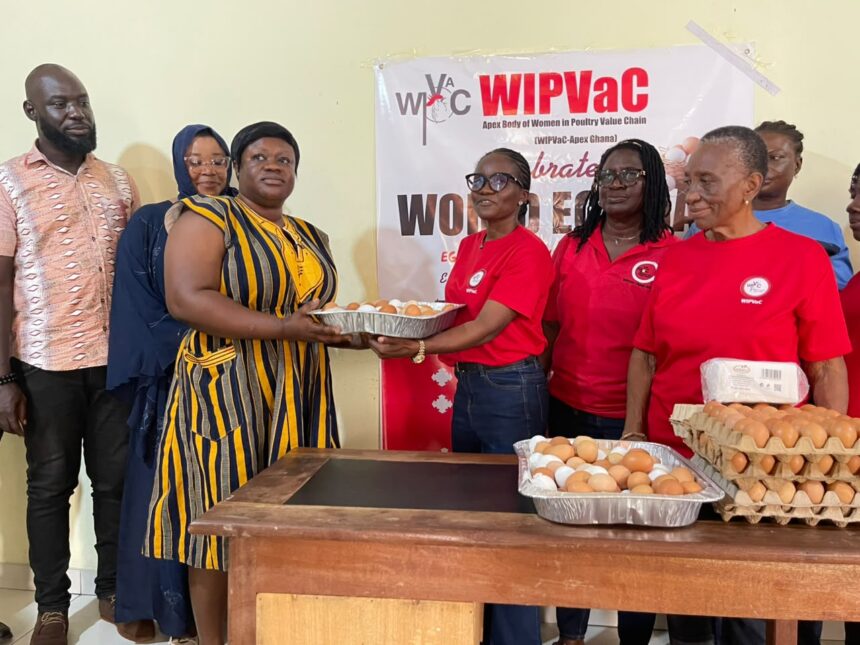
The Women in Poultry Value Chain (WIPVaC-Apex Ghana) has marked World Egg Day with an egg donation to the La Nkwantanang-Madina Municipal Assembly, calling for increased support for women in the poultry industry to boost production, create jobs and strengthen Ghana’s food security.
The donation formed part of the organisation’s corporate social responsibility activities aimed at promoting egg consumption, raising public awareness of its nutritional benefits and strengthening relationships with stakeholders.
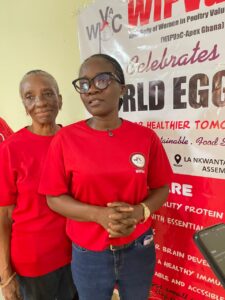
The National President of WIPVaC, Mavis Wobill, said the celebration was an opportunity to recognise the enormous contribution of eggs to nutrition, livelihoods and food security, while highlighting the important role women play in poultry production.
 She said women in the poultry value chain remained critical to ensuring access to nutritious food for families and communities, adding that sustained support for local egg production was necessary to strengthen the industry and improve livelihoods.
Madam Wobill called on the public, government and industry stakeholders to promote egg consumption, support local poultry farmers and empower more women to participate and succeed in the sector.
Let us continue to support local egg production, promote the nutritional benefits of eggs, and empower more women to participate and succeed in the poultry industry.” She noted.
Emmanuela Kpeli, National Secretary of the WIPVaC Apex Body, said the organisation decided to share eggs with staff of the Assembly in appreciation of its continued support, including providing office space for its regional meetings.
She said World Egg Day, celebrated on the first Friday in October, offered an opportunity to educate the public on the nutritional value of eggs and encourage greater consumption.
According to her, eggs provide high-quality protein and other essential nutrients that contribute to a balanced diet, including for pregnant women.
We believe we should not enjoy the benefits of eggs alone. We want to share them with our stakeholders and partners who have supported us over the years,” she said.
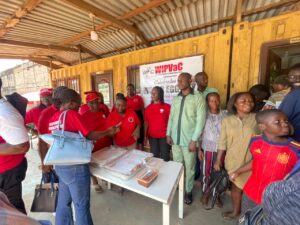
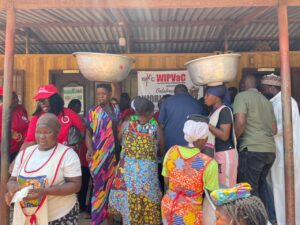
Madam Kpeli disclosed that this year, WIPVaC extended the celebration to the Madina Market, where it distribute boiled eggs to kayayei (head porters) to enable them to benefit from the nutritional value of eggs.
She said the organisation had undertaken similar outreach activities over the years, donating to schools, orphanages and psychiatric hospitals, while engaging media organisations to promote public education on poultry production and egg consumption.
Despite its outreach efforts, Madam Kpeli said the poultry industry continued to face significant operational and financial challenges that threatened the sustainability of businesses, particularly those owned by women.
She identified fluctuating feed prices as one of the major concerns confronting poultry farmers, explaining that unpredictable production costs made business planning difficult and affected profitability.
Access to credit also remained a challenge, she said, as some financial institutions considered poultry farming a high-risk venture and were reluctant to provide loans to operators in the sector.
 The industry had also experienced periods of egg glut and declining sales, forcing some farmers and traders to depend on personal resources to sustain their businesses.
Madam Kpeli called on the government to introduce policies that would strengthen the poultry industry, improve access to affordable financing and provide greater support for women entrepreneurs.
She urged women not to regard poultry farming as an occupation reserved for men, stressing that increased female participation could contribute significantly to agricultural development, job creation and national food security.
For her part, Emmanuella Ayeboah, Principal Human Resource Manager of the La Nkwantanang-Madina Municipal Assembly, expressed appreciation to WIPVaC for the donation and the public education accompanying the initiative.
She said the engagement had helped highlight the health and nutritional benefits of eggs, which remain a common food in many Ghanaian households.
Ayeboa reaffirmed the Assembly’s appreciation for its relationship with WIPVaC and expressed hope that the partnership would continue to grow.
WIPVaC represents women engaged in various aspects of the poultry value chain, including poultry farming, egg trading, processing, feed milling, imports and the supply of poultry inputs. The organization would continue collaborating with stakeholders to promote egg consumption, support women in the poultry value chain and contribute to Ghana’s food security agenda.