

MobileMoney Fintech Limited (MMFL) has pledged to deepen support for Ghanaian micro and small businesses through tailored financial services, digital solutions and improved access to investment products, as it seeks to advance financial inclusion and strengthen the country’s digital financial ecosystem.
Chief Executive Officer of MMFL, Shaibu Haruna, said the company was shifting greater attention towards micro-enterprises, many of which continue to face challenges separating personal finances from business funds, accessing credit and adopting digital payment systems.
Related Stories

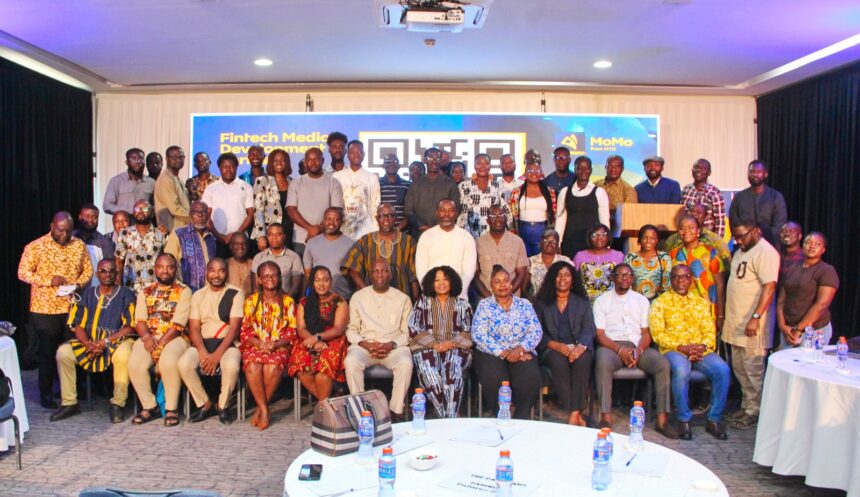
Speaking at a stakeholder engagement with the media on Friday, Haruna said the company intended to develop solutions that addressed the specific needs of small businesses rather than treating them solely as individual consumers.
We need to evolve our businesses, our micro businesses,” he said, stressing the importance of helping small-scale entrepreneurs move beyond subsistence operations towards sustainable growth.
He said although Ghana had made significant progress in digital financial services, many micro-enterprises remained underserved and continued to rely heavily on cash transactions.
According to him, MMFL would work with industry partners to identify promising small businesses, understand their challenges and provide services that could support their growth.
 Haruna cited the example of a woman selling avocados who had used money intended for her business to meet personal expenses during a period of illness.
The experience, he said, illustrated the difficulties faced by entrepreneurs who did not maintain a clear separation between household finances and business capital.
The separation is very necessary as a key step to unlocking growth in our businesses,” he said.
He added that MMFL wanted to profile and support such entrepreneurs through a more deliberate approach to micro-enterprise development, helping them build stronger businesses and create employment.
Digital payments and investment opportunities
Haruna said the company was also exploring ways to integrate financial services into customers’ everyday transactions, making products such as savings, insurance and investments more accessible.
He explained that embedded finance could allow customers to allocate small amounts from routine purchases towards investment or insurance products, reducing the barriers associated with making separate financial commitments.
For instance, customers could choose to direct a portion of their spending towards an investment or insurance product through a digital platform.
He also highlighted the potential of digital assets, particularly the tokenisation of assets such as gold, to expand investment opportunities for ordinary Ghanaians.
Tokenisation could allow investors to purchase fractional interests in assets rather than having to buy them in large quantities, potentially making investments more accessible to people with limited incomes.
Haruna said the company was interested in working with regulated institutions to explore these opportunities as Ghana’s regulatory framework for digital assets develops.
He expressed hope that the relevant guidelines would be introduced and operationalised to support the safe development of the market.
MMFL pushes mobile money app adoption
 The MMFL chief executive also outlined plans to improve customers’ experience through its mobile money application, describing the move as part of efforts to modernise access to digital financial services.
He said the traditional Unstructured Supplementary Service Data (USSD) platform remained important, particularly for customers who did not use smartphones, but its menu-based structure could make it cumbersome to navigate.
The mobile application, he explained, could provide a more intuitive experience by allowing customers to access frequently used services more easily and bringing offerings from different partners into a single digital environment.
“The app provides the opportunity for us to intuitively provide services to customers,” he said, adding that the company would encourage smartphone users to migrate to the application while continuing to serve customers who depended on USSD.
He said the objective was to make digital financial services easier to access without excluding customers who lacked smartphones or faced other barriers to adoption.
Fraud prevention and cybersecurity
Haruna identified fraud prevention and cybersecurity as central to the company’s operations, emphasising that customer trust was essential to the growth of digital financial services.
He said MMFL continued to invest in security systems and worked with the Bank of Ghana and other stakeholders to strengthen the protection of digital transactions.
However, he noted that safeguarding the ecosystem required cooperation among service providers, partners and customers.
He urged customers to adopt safe digital practices, explaining that weaknesses in one part of the ecosystem could expose other participants to risks.
Earlier, Anita Ayivi, Head of the Licensing and Authorisation Office at the Bank of Ghana’s FinTech and Innovation Department, urged journalists to verify the regulatory status of digital financial service providers before reporting on or promoting their products.
She said the Payment Systems and Services Act, 2019 (Act 987), provides for licensing, authorisation, technology security, oversight and reporting requirements for payment service providers.
An institution uses technology; that does not necessarily mean it is authorised to provide every financial service,” she cautioned.
Ayivi also urged the media to distinguish between fraud, cybersecurity incidents, service disruptions and regulatory breaches, noting that the terms describe different situations and should not be used interchangeably without verified facts.
She encouraged journalists to consult the Bank of Ghana’s published information on licensed institutions and seek clarification where the regulatory status of a provider or product was unclear.
Media urged to support financial inclusion
Chief Executive Officer of the Digital Chamber Ghana, Sylvia Ankomah, called on journalists to deepen their understanding of developments in the fintech sector and ask informed questions about emerging products, risks and opportunities.
She said Ghana had made considerable progress in digital financial services but still had opportunities to expand access to insurance, pensions, savings and other financial products.
Ankomah noted that collaboration between industry players, regulators and the media would be important in educating consumers and strengthening confidence in legitimate digital financial services.
Paapa Osei, Head of Legal & Reputation Management at MMFL, also welcomed the media engagement, describing it as an opportunity to strengthen collaboration and improve public understanding of the company’s operations following its structural separation from MTN Ghana.
He said constructive engagement with the media could help promote accurate reporting and contribute to stability in the digital financial services sector.
Haruna said MMFL remained committed to working with regulators, fintech companies and other partners to expand financial inclusion, support Ghanaian businesses and make digital financial services safer and more accessible.