

The Peasant Farmers Association of Ghana is mounting pressure on government to urgently roll out an emergency support package for rice farmers who have lost their produce after failing to secure buyers.
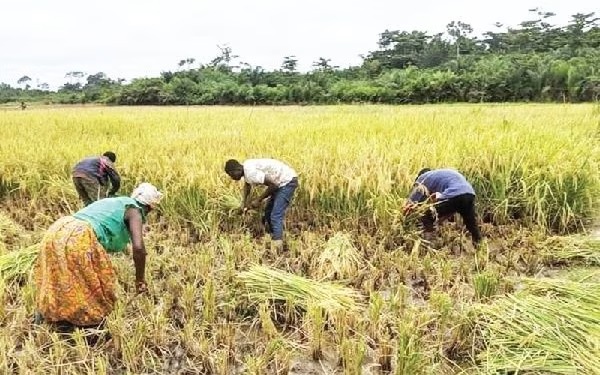
The Association says some farmers have seen their rice rot due to inadequate storage, while others have lost crops on the field after being unable to harvest because of weak market demand.
Related Stories

Executive Director of the Peasant Farmers Association of Ghana, Bismark Nortey, says government must act immediately to cushion farmers whose investments have already been wiped out.
Government should, as a matter of urgency, announce some immediate emergency support or emergency relief to farmers who are unable to sell their produce.”
Some of them also who couldn’t get market and couldn’t harvest, they’ve lost them on the field. Others who had, they have been burnt down through bushfires.”
Nortey argues that even if government provides additional funding to mop up the remaining rice in the next few months, some affected farmers will not benefit because their produce and investments have already been lost.
The Association is therefore demanding a support mechanism specifically targeted at farmers who have suffered such losses, alongside measures to purchase rice that is still available.
Nortey also wants government to urgently increase funding to the National Food Buffer Stock Company, NAFCO, to strengthen its capacity to mop up excess rice from farmers.
He says NAFCO requested about GH¢1.5 billion, but received only about GH¢300 million, which he considers inadequate to address the scale of the problem.
NAFCO has been consistent regarding the fact that their monies are inadequate to mop up all the food system.”
According to Nortey, the funding constraints have contributed to the limited presence of NAFCO and its licensed buying companies in farming communities where farmers are still struggling to sell their produce.
The Association is also calling for greater transparency in NAFCO’s operations to ensure that available resources reach communities where the need is greatest.
Beyond the immediate relief, PFAG wants government to use its procurement power to boost demand for locally produced rice, particularly through public institutions such as schools and the security services.
Nortey says stronger action is also needed against rice entering Ghana through unapproved routes, which he argues is putting additional pressure on local producers by making imported rice cheaper.
PFAG maintains that government must act quickly to prevent further losses and restore confidence among rice farmers who continue to struggle to find markets for their produce