

The West African Science Service Centre on Climate Change and Adapted Land Use (WASCAL) has called for stronger collaboration among governments, researchers, development partners, the private sector and communities to translate climate commitments into practical actions that improve livelihoods and build resilience across West Africa.
Speaking at a World Environment Day celebration and Climate Action Dialogue in Accra, WASCAL Executive Director, Prof. Emmanuel Wendsongre Ramde, said the impacts of climate change are already being felt across the region through floods, droughts, heat stress, ecosystem degradation and threats to agriculture, health and livelihoods.
Related Stories

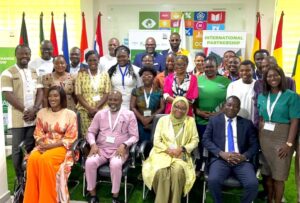
The event, held under the theme “From Global Commitments to Practical Implementation: Youth, Science and Diplomacy for Climate Action,” brought together policymakers, diplomats, researchers, development partners, media practitioners, entrepreneurs and youth leaders to discuss pathways for implementing climate solutions.
 Prof. Ramde noted that following the launch of the Climate Change Action Now (CCAN) initiative in 2025, WASCAL is entering a critical implementation phase aimed at transforming climate research into scalable and inclusive solutions that directly address community needs.
He stressed that climate action must be science-driven, youth-inclusive and anchored on strong partnerships.
Science gives us evidence. Diplomacy builds bridges. The media amplifies awareness. Communities give action meaning. And young people bring the urgency, creativity and courage needed to shape a resilient future,” Prof. Ramde stated.
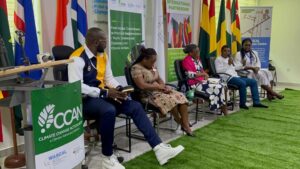 Guest speaker and policy advocate, Nana Yaw Sikapa Agyeman, challenged stakeholders to ensure that climate research translates into tangible benefits for communities rather than remaining in academic publications and conference presentations.
According to him, the true value of research lies in its ability to influence policy, improve lives and empower vulnerable populations.
Research has immense value, but its true impact is measured not by the number of publications produced, but by the number of lives improved, policies implemented and communities empowered,” he said.
He called for stronger collaboration between researchers and policymakers, greater community participation in climate projects, increased climate communication and investment in translating scientific innovations into practical solutions.
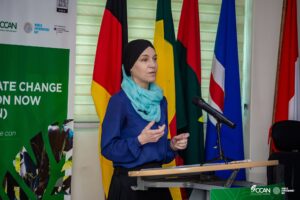 Representing the German Federal Ministry of Research, Technology and Space (BMFTR), Annassi Kerstin reaffirmed Germany’s support for WASCAL and the CCAN initiative, particularly in renewable energy awareness, climate resilience and green hydrogen development.
The representative noted that while technology remains critical in addressing climate change, meaningful transformation can only be achieved when communities, young people and local innovators are actively involved.
Climate action requires more than technology and policy. It also requires understanding, dialogue and education. By strengthening awareness and understanding, we can empower individuals and communities to become active champions of sustainable solutions,” the representative said.
Kerstin also highlighted Germany’s support for the WASCAL Innovative Ideas Competition for Sustainable Energy (WISE), which received more than 300 proposals in its inaugural edition, demonstrating growing innovation among West African youth.
Meanwhile, the Head of Monitoring at Ghana’s Office of the Minister for Climate Change and Sustainability, Moses Ayamga, underscored the role of young people in driving climate action and revealed that the newly established office is working to connect youth-led climate initiatives with development partners and international opportunities.
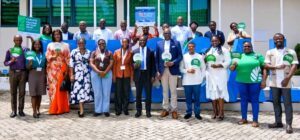 He said although the office currently operates without a dedicated budget under the Office of the President, it is facilitating partnerships, awareness creation and access to international climate platforms.
Climate change is a lived reality. Much has happened, but we need to do more. As a country, we are still lagging behind and all stakeholders — government, researchers, the media, communities and traditional leaders — must work together to address the challenges confronting us,” Ayamga said.
He added that the ministry is engaging the media, civil society organisations and local communities to identify home-grown climate solutions, insisting that many of the answers to Ghana’s climate challenges already exist within the country.
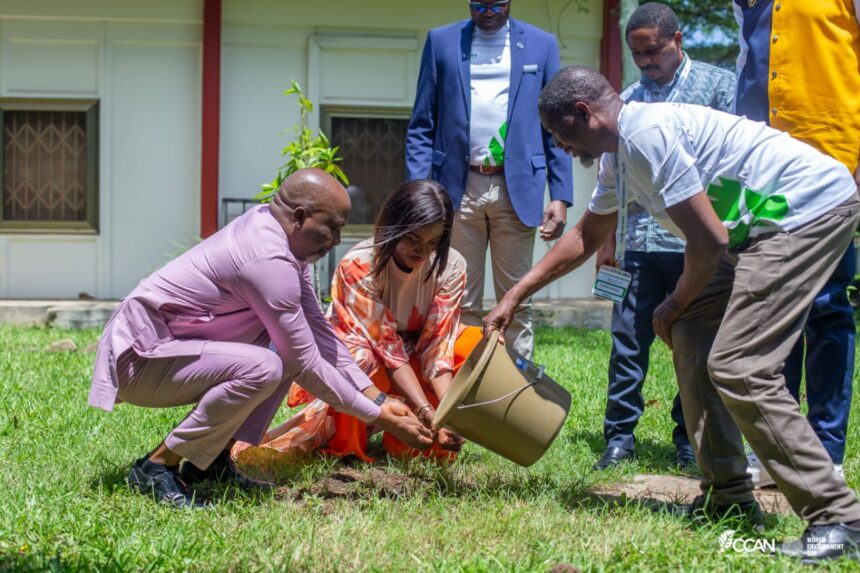
The dialogue featured solidarity messages, an intergenerational panel discussion, media engagement sessions, a climate action pledge and a symbolic tree-planting exercise, all aimed at reinforcing the commitment of stakeholders to move from climate pledges to measurable implementation.
Participants agreed that achieving climate resilience in Ghana and across West Africa will require sustained cooperation, innovation, investment and accountability to ensure that climate policies and research deliver meaningful results for communities on the ground.