

Stanbic Bank Ghana has called on small and medium enterprises (SMEs) to move beyond survival-driven operations and adopt structured business practices to achieve long-term growth.
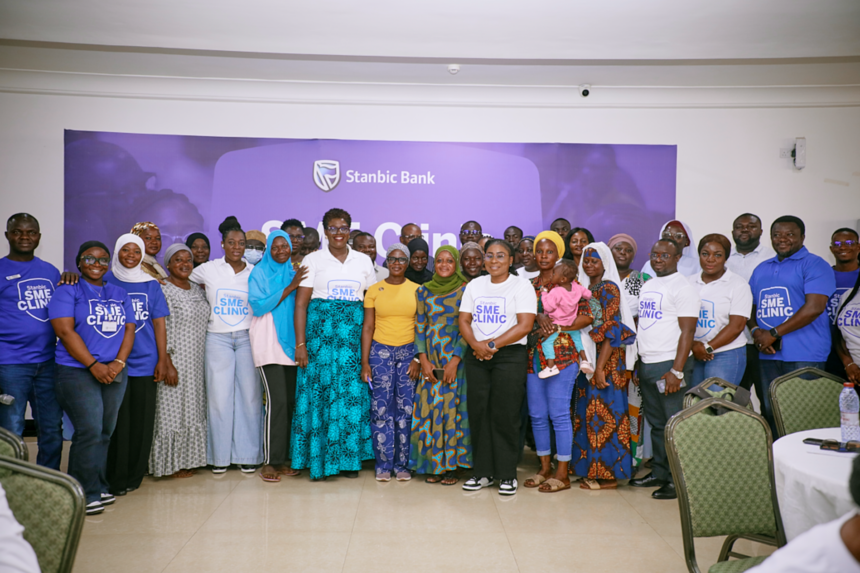
This message was central to the 2026 SME Clinic held in Tamale, which was themed “From Survival to Scale: Building SMEs that Endure.” The two-day engagement brought together entrepreneurs, business development experts, and institutional partners to equip SMEs with practical tools for sustainability.
Related Stories

Delivering the opening remarks, Dinah Kaleo-Bioh, Head of Business and Commercial Banking at Stanbic Bank Ghana, emphasized that while Ghanaian entrepreneurs are resilient and innovative, many businesses remain constrained by weak internal systems and limited access to the right knowledge.
Tamale continues to remind us why enterprise development must be intentional, practical, and locally grounded,” she said. “We see businesses deeply connected to real economic activity agriculture, trade, logistics but often constrained by structure, systems, and access to support.”
She noted that SMEs play a critical role in Ghana’s economy, accounting for over 90 percent of businesses, contributing about 70 percent of Gross Domestic Product, and providing nearly 85 percent of employment. Despite this, many operate informally and struggle to scale. “Our theme is not just relevant; it is necessary. Growth begins when we move from doing things the usual way to doing things the right way,” she said.
The SME Clinic forms part of Stanbic Bank’s “Beyond Banking” agenda, which seeks to go beyond financial support by strengthening the fundamentals of businesses. According to the bank, the initiative is designed to help entrepreneurs build enterprises that can compete, grow, and contribute meaningfully to both regional and national economies.
The clinic was delivered in collaboration with KPMG and the Ghana Enterprises Agency (GEA), both of whom played a central role in facilitating the sessions. The programme attracted strong participation from members of the AGI Women in Business (WIB) network, reflecting a growing commitment among women-led enterprises to strengthen their capabilities. Over the course of the sessions, participants were guided through critical areas such as enterprise positioning, financial management, and the development of robust operational systems. Facilitators emphasised that mastery of these elements is essential in determining whether a business remains small or successfully evolves into a scalable enterprise.
Gloria Bempong, Head of Enterprise Banking, delivered a session on Stanbic Bank Ghana’s Enterprise Banking Proposition, underscoring the critical role of the Enterprise Banking Desk in supporting MSMEs beyond traditional banking services. She highlighted a comprehensive suite of solutions available to SMEs, including tailored business account offerings, transactional and cash management services, access to financing opportunities, digital banking platforms, and dedicated business advisory support.
In her closing remarks, Head of Business Development, Safoa Appietu-Ankrah, reinforced the importance of building strong internal structures within SMEs. She noted that many businesses do not fail due to external pressures, but rather as a result of internal weaknesses, underscoring the need for deliberate efforts to strengthen governance, systems, and operational discipline. “One truth stands out: SMEs do not fail suddenly; they fail structurally over time,” she said. “Sustainable businesses are built on systems, not just effort.”
She explained that the clinic was intentionally designed to deliver practical, hands-on insights, combining real-life case studies with actionable strategies that entrepreneurs can implement immediately to strengthen their businesses. “Understanding your numbers is critical for survival and scale. A clearly defined value proposition and strong operational systems are what make businesses competitive and sustainable,” she added.
She further highlighted the role of the Stanbic Business Incubator in supporting SMEs to formalise their operations, build stronger structures, and improve access to financing and markets. “We are here to stand in the gap and help businesses become more structured, more bankable, and ultimately more sustainable,” she said.
Participants were also encouraged to take deliberate steps following the clinic, including formalizing processes, improving financial record-keeping, and leveraging available support systems. “Knowledge only becomes power when it is put into action. As you leave here, carry not just knowledge but decisions that will move your business from survival to scale.”
Stanbic Bank indicated that its continued focus on Tamale reflects a broader commitment to regional economic inclusion, recognizing the city’s growing importance as a commercial hub in northern Ghana. Participants described the session as inspiring and practical, with many pledging to implement the lessons learned.