


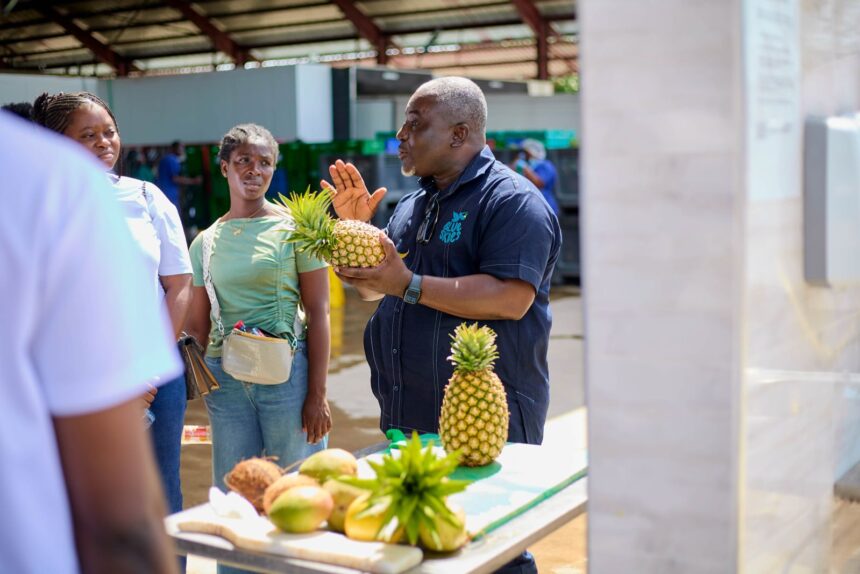
Ghana’s fruit processing industry is facing mounting pressure as companies turn to importing pineapples, mangoes and other fruits from neighbouring countries to sustain production, largely due to the rapid loss of agricultural lands and declining interest in farming among the youth.
Head of Foundation, Brand, Communication and Public Relation at Blue Skies Ghana Limited, Alistair Djimatey, disclosed that prime pineapple-growing areas, particularly around Samsam in Nsawam, have been overtaken by real estate developments, significantly reducing local fruit supply.
Related Stories
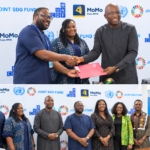

He made these remarks during a media tour of the company’s processing facility to commemorate World Press Freedom Day 2026 which was on the theme, “Shaping a World at Peace”. The tour was organised by the UK-Ghana Chamber of Commerce in collaboration with the Ghana Journalists Association and the Institute of Financial and Economic Journalists.
Djimatey painted a concerning picture of how urban expansion is steadily displacing agriculture, particularly in areas once known for large-scale pineapple cultivation that supported companies like Blue Skies.
Pineapple farms around Samsam in Nsawam and several other areas that used to supply us have all given way to real estate development. Because of that, we now have to import fruits like pineapples and mangoes from neighbouring countries to keep our factories running,” he said.
According to him, the situation has forced the company to rethink its sourcing strategy and expand operations beyond Ghana’s borders to ensure a consistent supply of raw materials for processing. the company has also started its own farm where it grows both fruits and vegetables.
He explained that while Blue Skies was founded in Ghana, it has since established a presence in other countries, including South Africa, as part of efforts to sustain its production capacity and remain competitive in international markets.
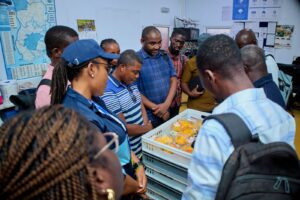
Djimatey highlighted that Blue Skies is among a few global companies able to process fresh-cut fruits and deliver them to major European supermarkets within 24 hours, a model built on efficiency and proximity to raw materials—an advantage now under threat locally.
Our model is ‘fresh from harvest’. Fruits are harvested in the morning, processed the same day, and by the next day they are on the shelves in Europe. But this model depends heavily on reliable local supply, which is now becoming a challenge,” he explained.
Beyond land constraints, he identified a deeper structural issue—declining youth participation in agriculture—which he described as a critical risk to Ghana’s agro-industrial future.
He further stressed the importance of value addition, arguing that Ghana must move beyond exporting raw agricultural commodities and instead focus on processing to capture more value within the economy.
Drawing broader comparisons, he noted that despite Ghana’s significant contribution to global cocoa production, the country earns only a fraction of the total value generated by the global chocolate industry due to limited processing.
We keep exporting raw materials and importing finished products. Until we prioritise value addition, we will not fully benefit from the resources we have,” he said.
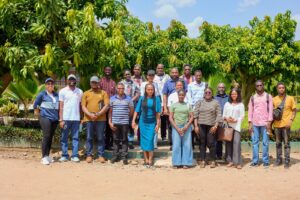
On his part, the Organising Secretary of the Ghana Journalists Association, Suleiman Mustapha, who represented the Association’s president, underscored the importance of creating an enabling environment for businesses to thrive.
He noted that companies like Blue Skies play a vital role in employment generation, tax contributions and economic growth, and therefore deserve policy support.
Businesses like this are essential to our economy. They create jobs, pay taxes and contribute to national development. As journalists, we must highlight their importance and advocate for policies that help them grow,” he said.
Mustapha also linked the commemoration of World Press Freedom Day to the need for responsible journalism that supports economic development while holding institutions accountable.

The facility tour offered journalists firsthand insight into the operations of Blue Skies and the broader challenges facing Ghana’s agro-processing sector. It also reinforced calls for urgent policy action to protect agricultural lands, promote youth engagement in farming, and strengthen local supply chains.
Industry observers warn that if current trends continue, Ghana’s dependence on imported fruits for processing could deepen, undermining efforts to build a resilient, self-sufficient agro-industrial base.
The situation, they argue, calls for a coordinated national response involving land-use planning, agricultural investment, and deliberate policies to reposition farming as a viable and attractive career path for the next generation.