

The Government of Ghana has officially declared three cocoa-growing communities in the Ashanti and Western North Regions as the country’s first Child Labour-Free Zones (hereinafter “CLFZs”), a landmark achievement made possible through the partnership between the Government of Ghana, the Japan International Cooperation Agency (JICA), local authorities, communities and other development partners.
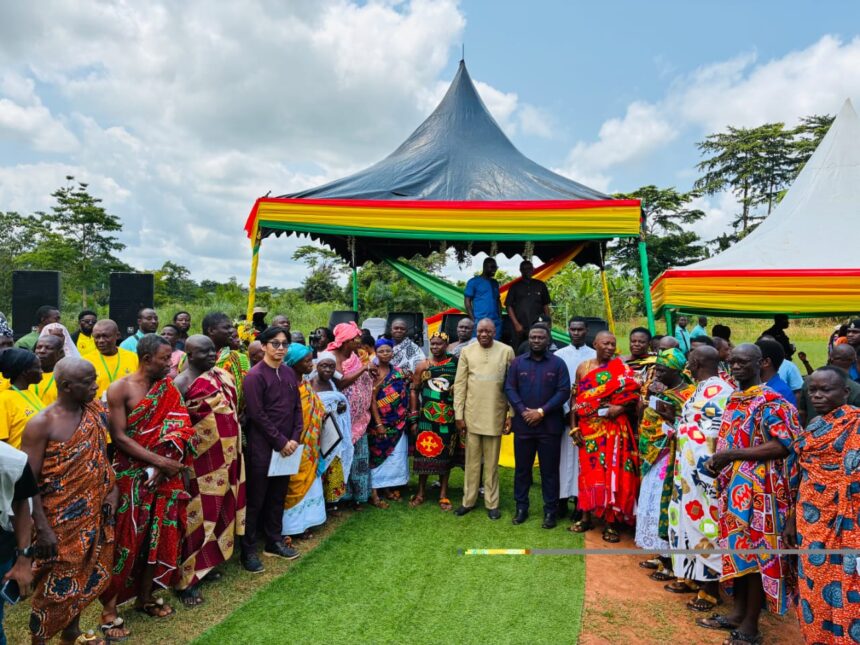
At a ceremony held at Kuffour Camp in the Atwima Mponua District, the Minister of Labour, Jobs and Employment, Dr. Abdul-Rashid Hassan Pelpuo, declared Subri in the Bibiani Anhwiaso Bekwai Municipality of the Western North Region, together with the Kuffour Camp Area Council and Tano Dumase Area Council in the Atwima Mponua District of the Ashanti Region, as Ghana’s first CLFZs.
Related Stories

The declaration marks a major milestone in Ghana’s implementation of the CLFZs model and reflects the long-standing collaboration between the Government of Ghana and JICA to build sustainable community systems that protect children from labour and ensure their access to quality education.
JICA’s Partnership Driving Lasting Change
The CLFZs concept was introduced in Ghana in 2018 under Phase II of the National Plan of Action for the Elimination of the Worst Forms of Child Labour, leading to the development of the “Guidelines and Protocols for Establishing Child Labour-Free Zones in Ghana” (hereinafter “the Guidelines”) in 2020. Since 2024, JICA has partnered with the Ministry of Labour, Jobs and Employment to support implementation of the Guidelines through institutional strengthening, development of assessment methodologies and community-level interventions, all of which contributed directly to the successful declaration.
“Today’s declaration demonstrates what can be achieved when government institutions, communities, traditional authorities, development partners, civil society organisations and the private sector unite behind a common purpose. This historic achievement belongs to all partners who have worked tirelessly to transform policy into action.”
Delivering his remarks, Mr Uchiyama Takayuki, Chief Representative of JICA Ghana congratulated the Government of Ghana and all stakeholders, describing the declaration as a defining moment and a significant step towards communities where every child can learn, grow and realise their full potential free from child labour.
Mr. Takayuki noted that Ghana’s achievement is internationally significant. Earlier this year, the Sixth Global Conference on the Elimination of Child Labour, held in Morocco, highlighted Area-Based Approaches as an effective strategy for tackling child labour by addressing its root causes across entire communities. Ghana’s implementation of the CLFZs model shows how that global commitment can be translated into meaningful action.
JICA will continue working with the Government of Ghana to strengthen the institutional, policy and operational systems needed to sustain existing CLFZs and scale up the model nationwide.
Government Commends JICA’s Support
Dr. Abdul-Rashid Hassan Pelpuo described the CLFZs model as a bold and practical approach capable of significantly reducing child labour in Ghana. He announced that assessment results awarded Subri a score of 77.7 per cent and Kuffour Camp a score of 83.62 per cent, earning both communities Grade B status and confirming their readiness for declaration.
The Minister explained that Government intends to adopt an “umbrella cover” approach to expand the CLFZs model to additional communities across the country, creating a broader protective environment for children and strengthening local ownership of child protection systems.
He expressed profound appreciation to the Government of Japan for its financial, technical and logistical support, commending Japan for its longstanding partnership and unwavering commitment to protecting vulnerable children and supporting sustainable community development.
“The declaration is a testament to the power of partnership,” the Minister stated, urging stakeholders to build on the lessons and findings from the CLFZs assessments to strengthen future interventions. “Children are our hope and must be removed from the farms to secure their future.”
About the Child Labour-Free Zones (CLFZs) Initiative
The CLFZs is a community-based approach that mobilises government institutions, district assemblies, traditional authorities, schools, civil society organisations, communities and the private sector to eliminate child labour. The initiative builds sustainable systems that protect children, promote school attendance and strengthen community ownership of child protection interventions. JICA supports the Government of Ghana in implementing the Guidelines as part of broader efforts to eliminate the worst forms of child labour in the country.