

The Head of Corporate Affairs and Foundation at Blue Skies Products (Ghana) LTD., Alistair Djimatey, has called on the Ghanaian media to be more intentional in spotlighting responsible businesses that are contributing meaningfully to national development.
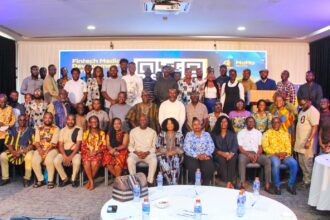
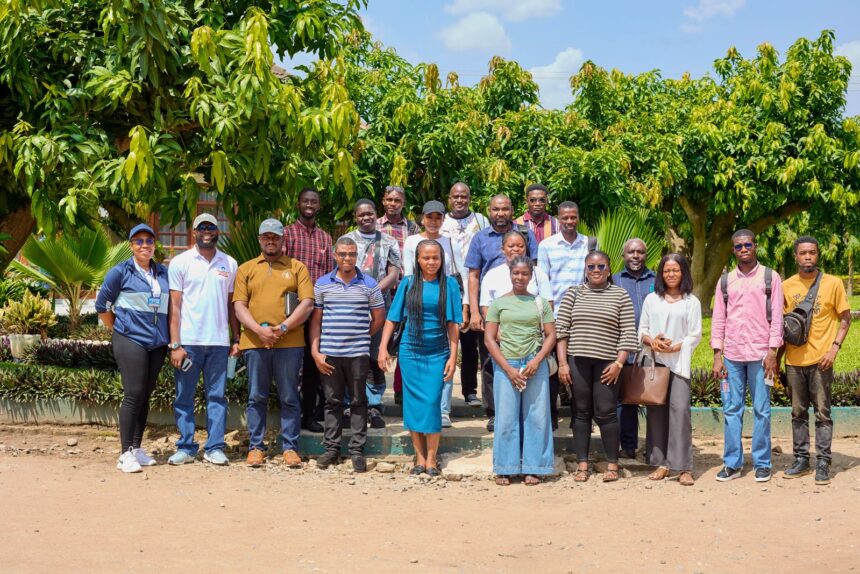
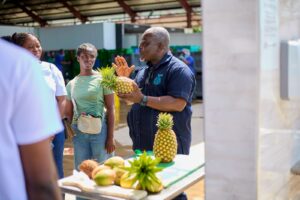
He made the call during a media tour of the company’s production facility, organised by the UK-Ghana Chamber of Commerce (UKGCC) in collaboration with the Ghana Journalists Association (GJA) and Institute of Financial and Economic Journalists (IFEJ), as part of activities to commemorate this year’s World Press Freedom Day (WPFD) in Ghana.
Related Stories

Speaking on the WPFD theme, “Shaping a World at Peace”, Djimatey remarked that “Too often, the media narrative focuses on what is going wrong. But there are many businesses doing the right things – creating jobs, supporting communities, and maintaining high standards. These are the stories that also deserve to be told.”
He noted that Blue Skies’ operations in Ghana reflect the WPFD theme through their deliberate commitment to supporting livelihoods and contributing to the country’s growth.
Balanced reporting, therefore, would not only strengthen public trust but also encourage more companies to adopt ethical and sustainable practices to shape a world at peace.
 Representatives of the Ghana Journalists Association (GJA) and the Institute of Financial and Economic Journalists (IFEJ), who participated in the tour, welcomed the call and reaffirmed their commitment to local industry and responsible journalism.
Suleiman Mustapha, GJA’s National Organising Secretary, assured Blue Skies of the associations support.
We will stand by you at all times and make sure that we help you in your advocacy to create an enabling business environment,” he said, acknowledging that without responsible businesses like Blue Skies, employment levels would be more acute than they already are, and the government will lose out on taxes from such establishments.
The Acting President of IFEJ, Roger Agana, added, “As financial and economic journalists, we see it as our responsibility to amplify businesses that are creating value locally and operating transparently. Blue Skies is a strong example of that.”
Shaping a world at peace through responsible business
Blue Skies’ unique business model of “adding value at source” serves as a practical blueprint for promoting regional stability and peace. By cutting, preparing, and packaging fresh fruit products in Ghana rather than exporting raw materials, the company directly addresses the economic disparities that often lead to social unrest.
Djimatey argued that when people are gainfully employed and earning a salary, they are less likely to participate in activities that destabilise the country. He noted that at peak seasons, the company employs up to 5,000 people, providing a livelihood for thousands in the surrounding districts.
Beyond employment, the company fosters “climate justice” by implementing sustainable practices to protect the environment for future generations. This includes the “Fresh Pack” initiative, which seeks alternatives to plastic mulch in pineapple farming, and a commitment to reaching net-zero emissions.
Djimatey explained that environmental degradation and climate change are significant drivers of conflict, stating, “we believe that when we add value at source, we help people to develop their skills” and bridge the gap between the rich and the poor, which is essential for lasting peace.
Established in 1998 by entrepreneur Anthony Pile, MBE, the company pioneered the approach of processing fresh fruits locally for export, rather than shipping raw produce abroad. This model, Djimatey noted, improves product quality while delivering tangible socio-economic benefits.
 Opportunities for growth and strategic partnership
The tour also highlighted significant opportunities for the private sector and the media to collaborate in driving Ghana’s GDP growth through agriculture.
Blue Skies currently supplies major United Kingdom (UK) and European supermarkets, including Waitrose, Marks & Spencer, Tesco, and Albert Heijn, demonstrating that Ghanaian products can meet the highest international standards. However, Djimatey identified several hurdles that require media advocacy, such as the high cost of energy, land encroachment by estate developers, and the “sugar tax” that currently lumps natural fruit juices together with sweetened beverages.
To secure the future of the industry, Blue Skies has introduced initiatives like the “Farmer of the Year” competition to encourage youth participation in agriculture and the “School Farm” project, which engaged 750 schools across 16 regions last year. There is also a push for improved intra-African trade, with Djimatey noting that while it took six months to establish a presence in Greece, the company has spent ten years trying to enter the Nigerian market.
He concluded by challenging the media to lead the clarion call in supporting local industry to grow and help promote a world at peace.
The tour also established opportunities for further dialogue on how the private sector can continue to support a free and independent media in Ghana.
The tour, facilitated by the UKGCC, ultimately reinforced the shared role of the media and private sector in shaping an informed, inclusive and peaceful society.