


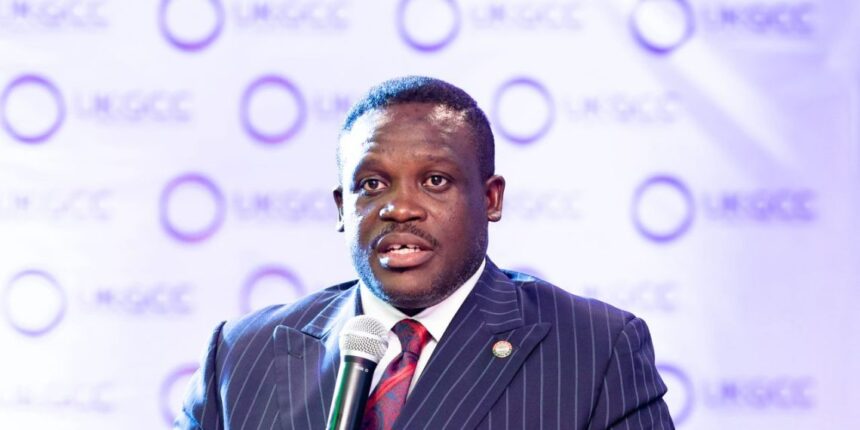
Ghana expects to complete the first phase of its first data centre within 24 months, as the government steps up efforts to strengthen the country’s digital infrastructure and support the development of artificial intelligence (AI).
The Minister for Communication, Digital Technology and Innovation, Samuel Nartey George, said the government had begun procurement processes to acquire the computing equipment and other infrastructure required for the project.
The facility is expected to provide computing capacity for universities, researchers and businesses, potentially reducing their reliance on computing resources and AI-related services purchased from providers outside Ghana.
Speaking at Joy News’ Digital Economy Forum on AI and the Ghana Economy, George said the project represented an important first step towards building the infrastructure needed to support Ghana’s AI ambitions.
We are currently going through procurement with PPA on getting a data centre, the computer infrastructure and all the various parts of it put together,” he said.
“Twenty-four months from now, we should have phase one completed with serious computing infrastructure that we can then give to our researchers, our industry and our universities who are currently buying tokens outside the country and buying capacity outside the country.”
The procurement process involves the Public Procurement Authority (PPA), which is expected to support the acquisition of the necessary equipment and infrastructure.
Building Ghana’s AI capacity
The proposed data centre is expected to provide a local computing base for institutions and businesses seeking to expand their use of AI and other digital technologies.
Access to computing capacity is an important requirement for AI research, software development and the deployment of data-intensive applications. The availability of such infrastructure in Ghana could help local researchers and businesses access computing resources without relying entirely on overseas providers.
However, the extent to which the facility will reduce these external dependencies will depend on its eventual capacity, operating costs, accessibility and the range of services it provides.
George acknowledged that the project would not resolve all of Ghana’s AI infrastructure needs within the current administration’s tenure, but said the government was focused on establishing the necessary foundations.
It is the first step, it is a long journey. Are we going to fix all of our AI needs in two years before the Mahama administration is off? That is wishful thinking, it is impossible but we are taking the key foundational steps that will set this country on the right track for its AI journey,” he said.
Long-term digital infrastructure agenda
The planned data centre forms part of the broader effort to strengthen Ghana’s digital infrastructure and position the country to benefit from emerging technologies.
For universities and research institutions, access to computing resources could support scientific research, data analysis and the development of locally relevant AI applications. Businesses could also benefit from greater access to the infrastructure needed to develop and deploy digital products and services.
The project’s impact will depend on the successful completion of procurement, installation and commissioning, as well as the arrangements put in place to ensure that researchers, educational institutions and industry players can access its computing capacity.
While the government has set a 24-month target for completing the first phase, Mr George’s remarks indicate that the facility will be an initial step in a longer process of developing Ghana’s AI capabilities.
Further details on the project’s cost, location, planned computing capacity and operational model were not provided in the remarks quoted at the forum.