

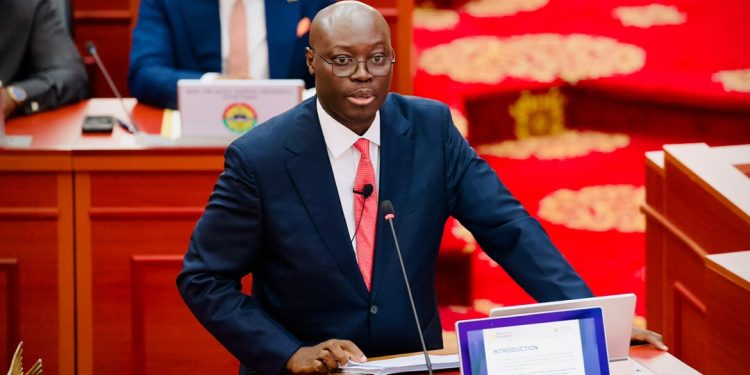
Finance Minister Dr. Cassiel Ato Forson has defended the government’s sweeping tax reforms, saying the abolition of several taxes has strengthened investor confidence, supported businesses and households, and increased domestic revenue through improved compliance rather than higher tax rates.
Presenting the 2026 Mid-Year Budget Review to Parliament on Thursday, July 23, 2026, Dr. Forson said the modernisation of Ghana’s tax regime formed the second pillar of the government’s Key Transformational Policy Reforms (KTPs), aimed at resetting the economy for growth, job creation and economic transformation.
Related Stories

He explained that the reforms were designed to restore investor confidence, revive private enterprise, provide relief to households and businesses, and improve domestic revenue mobilisation through better tax policy and administration.
As part of the reforms, the government abolished what it described as “nuisance taxes,” including the Electronic Transfer Levy (E-Levy), Betting Tax, COVID-19 Health Recovery Levy, Emissions Levy and VAT on motor insurance.
According to the Finance Minister, the government also implemented Ghana’s first comprehensive Value Added Tax (VAT) reforms since 2015, removing distortions in the tax system, improving efficiency and strengthening compliance.
Dr. Forson said the reforms have enabled businesses to retain more working capital, allowing them to invest, expand operations and create jobs.
The government also introduced a sliding-scale royalty regime for gold to ensure that Ghanaians receive a fairer share of returns from the country’s mineral resources.
Beyond tax policy, the Finance Minister highlighted significant customs reforms powered by artificial intelligence and other digital technologies to strengthen compliance, reduce revenue leakages and improve revenue collection.
He disclosed that monthly Customs revenue has increased by approximately 15 percent since the introduction of the AI-powered customs system, attributing the gains to stronger enforcement and improved operational efficiency.
Dr. Forson further announced that the government had ended the misuse of the Tax Refund Account, ensuring that funds earmarked for legitimate tax refunds are no longer diverted for unrelated expenditures.
Despite eliminating several taxes and introducing no new tax measures, the Finance Minister said non-oil tax revenue increased from 12.6 percent of GDP in 2024 to 13.1 percent of GDP in 2025, demonstrating that improved compliance and efficient tax administration can generate stronger revenue performance.
Despite abolishing multiple taxes and introducing no new tax handles, non-oil tax revenue increased from 12.6 percent of GDP in 2024 to 13.1 percent of GDP in 2025. Simply put, Government collected more revenue in 2025 even after abolishing the nuisance taxes. The lesson is simple: better policy, stronger compliance and smarter administration will always deliver more sustainable revenue than higher taxes,” the finance minister told parliament
He maintained that the results validate the government’s strategy of broadening the tax base and enhancing compliance instead of imposing additional tax burdens on citizens and businesses.