

By Elikem Desewu
Telecom operators profit from every active subscriber, but should taxpayers pay to maintain the customer databases that drive those profits?
Related Stories

A National Conversation Ghana Must Have
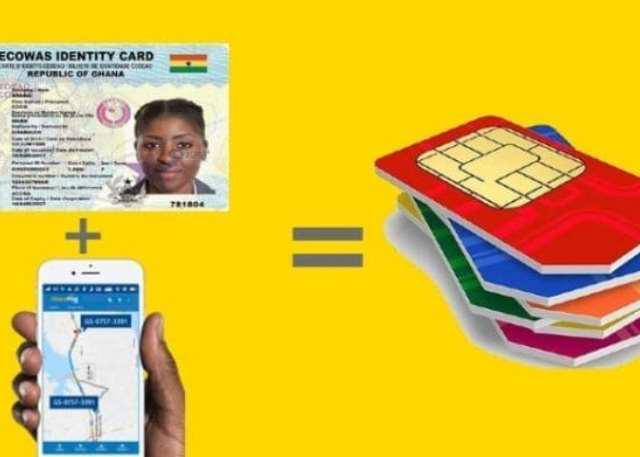
As Ghana once again embarks on discussions around SIM registration and re-registration exercises, an important question deserves national attention: Why should the State bear the cost of SIM re-registration when telecommunications companies are the primary beneficiaries of every active SIM card?
Over the years, governments have justified SIM registration on grounds of national security, fraud prevention, taxation, and digital identity management. While these objectives are legitimate, they do not change a fundamental economic reality: every active SIM card generates revenue for a telecom operator.
But critics argue that while those public interests are legitimate, they do not alter a simple commercial reality: every active SIM card generates revenue for a telecom operator.
Through voice calls, data usage, mobile money transactions and digital services all translate into income. Subscriber growth strengthens revenues, improves market valuations and ultimately rewards shareholders.
If active SIM cards are commercial assets, should taxpayers finance the process of maintaining them?
That question is becoming increasingly difficult to ignore.
The more active subscribers a telecom company has, the greater its revenues.
If telecom operators earn billions of cedis annually from these active SIMs, should taxpayers be expected to finance the process of validating and maintaining those customer records?
Registration is a Business Cost
Banks are required to perform Know Your Customer (KYC) checks on their customers. Insurance companies must verify policyholders. Fintech firms invest heavily in customer onboarding and verification systems.
These costs are considered normal operating expenses because they enable companies to conduct business safely and profitably.
Why should telecommunications companies be treated differently?
SIM registration is essentially customer acquisition, customer verification, and customer database management. These are core business functions that support revenue generation and reduce fraud losses for operators.
The cost should therefore be incorporated into the telecom business model rather than transferred to the national budget.
The State Already Provides the Identity Infrastructure
The Government of Ghana has invested heavily in the Ghana Card system, biometric databases, and digital identity infrastructure.
This public investment provides telecom operators with access to reliable identification systems that significantly reduce their verification costs.
Once the State has built and maintained the national identity platform, should it also pay for telecom operators to update their customer records?
Many would argue that this amounts to taxpayers subsidizing private sector operational expenses.
International practice also raises important questions.
Across the world, customer verification and Know Your Customer requirements are generally regarded as part of the cost of doing business.
Banks do not ask governments to finance customer onboarding.
Insurance companies absorb compliance costs.
Fintech companies invest heavily in identity verification systems.
Technology companies spend billions globally protecting customer data and strengthening cyber security.
These are not considered public expenditures.
They are regarded as investments necessary to sustain business operations and protect revenues.
Telecommunications companies are no different.
If subscriber databases are central to revenue generation, maintaining those databases should be considered part of the normal cost of running the business.
There is also the issue of fairness.
Regulation imposes costs on every sector of the economy.
Banks comply with anti-money laundering regulations.
Mining companies invest heavily in environmental compliance.
Manufacturers spend money meeting quality standards.
Insurance companies meet capital and solvency requirements.
None of these industries receive public funding to fulfill their regulatory obligations.
Why then should telecommunications companies be treated differently?
A level playing field requires that no industry privatizes profits while transferring operating costs to taxpayers.
A Better Alternative needs to be at play
Rather than allocating public funds to SIM re-registration exercises, policymakers could require telecom operators to absorb the cost as part of their regulatory obligations.
Operators could:
- Integrate SIM verification directly into their customer service systems.
- Conduct continuous registration updates during routine customer interactions.
- Use mobile applications and self-service portals.
- Share infrastructure costs across the industry.
- Deduct the expense from customer acquisition and retention budgets.
This would reduce pressure on public finances while ensuring that subscriber databases remain accurate and secure.
Technology has also changed the economics of customer verification.
The days when millions of subscribers must queue periodically to re-register SIM cards should gradually become a thing of the past
Telecommunications companies already interact with customers daily.
Mobile applications exist.
Self-service platforms exist.
Customer service centers exist.
Artificial intelligence and biometric technologies exist.
Continuous updates can be integrated into normal customer interactions rather than expensive nationwide exercises every few years.
This approach would reduce costs while ensuring that databases remain accurate and secure.
Public Funds Have Better Uses
At a time when Ghana faces pressing needs in agriculture, education, healthcare, industrialization, youth employment, and infrastructure, every cedi of public expenditure must be carefully justified.
Should taxpayers finance activities that primarily enhance the revenues and operational efficiency of private telecommunications companies?
Or should those funds be directed toward schools, hospitals, roads, irrigation systems, industrial parks, and job creation initiatives?
Government resources are finite.
Every cedi spent on one activity is a cedi unavailable for another.
At a time when public finances remain under pressure, should scarce taxpayer resources be used to finance activities that directly enhance private sector revenues?
Or should those resources be directed toward investments that generate broader social and economic returns?
That is not an anti-business argument.
It is a question of priorities.
Time for Policy Review
The issue is not whether SIM registration is necessary.
It is rather hinders around who should pay for it.
As beneficiaries of active subscriber bases and digital transactions, telecom operators have both the financial capacity and commercial incentive to maintain accurate customer records.
The State’s role should be to regulate, provide national identity infrastructure, and ensure compliance—not to subsidize routine operational activities that directly support private sector revenues.
Government has an important role.
It must regulate.
It must provide the legal framework.
It must maintain national identity infrastructure.
And it must ensure compliance.
But regulation is not the same as subsidization.
Profits belong to shareholders.
Operating costs should belong to shareholders too.
Anything else risks creating a precedent where public resources are used to support private operational expenses.
The debate is simple:
If telecom companies profit from every active SIM, why should the taxpayer pay to keep those SIMs active?
That is a question policymakers, regulators and citizens must seriously consider.
For in an era of constrained public finances, the principle should be simple: public resources should primarily serve public purposes, while private enterprises should bear the ordinary costs associated with generating private profits.
The debate, therefore, is not about whether SIM registration is necessary.
It is about whether Ghana should continue socializing costs while privatizing benefits.
And perhaps that is a conversation whose time has come.