

The Association of Ghanaian Industries (AGI) has advised industries to diversify and deepen their supply chain to mitigate the impact of future currency shocks.
According to Seth Twum-Akwaboah, President of AGI, industries should not rely on a single source of supply and should instead explore local sourcing options to reduce their exposure to foreign exchange risks.
Related Stories

We need to also diversify our sources. Let’s look at the supply chains. If you are a manufacturer and today, you are making some gains, don’t forget that tomorrow, the cedi situation may be different,” Twum-Akwaboah advised.
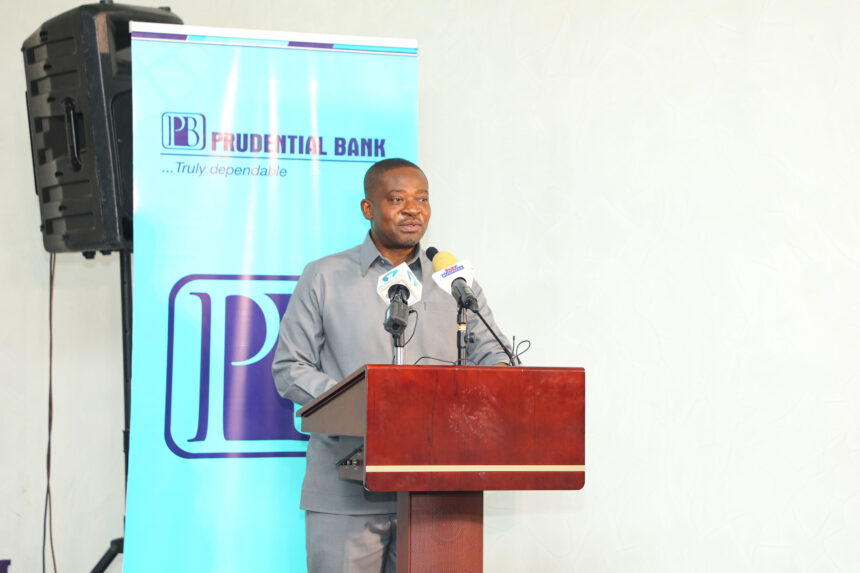
Speaking at the Prudential Banks Special Customer seminar on Cedi appreciation in Accra, the AGI president noted that the current stability of the cedi presents an opportunity for industries to reinvest in technology and improve their competitiveness.
This is the time to reinvest in technology. The situation like this will make you very competitive in the market,” he added.

Twum-Akwaboah emphasized the importance of deepening supply chains and sourcing materials locally to reduce dependence on imported goods.
It was surprising to know that you have a lot more big companies that are sourcing their own materials locally,” he revealed, encouraging others to follow suit.
on his part, Prof. Godfred Bokpin expressed concerns about the Bank of Ghana’s interventions in the foreign exchange market, warning that significant central bank involvement can lead to price distortion.
 According to Prof. Bokpin, the central bank’s footprint in the market should not be so significant that it dictates prices, as this can undermine the price discovery mechanism that is essential for a well-functioning financial market.
He emphasized that the Bank of Ghana’s interventions should be limited to addressing volatility and maintaining stability in the market, rather than trying to control prices. He noted that the central bank’s reserves are finite and that the economy’s underlying fundamentals, such as government spending and import levels, will ultimately determine the pressure on the reserves.
You only have a fixed level of reserves, and your economy is not operating optimally… when government begins to spend and import picks up, there will be pressure on our reserves.”
The Managing Director of Prudential Bank, Bernard Gyebi, earlier in his welcome address, emphasized the bank’s commitment to supporting businesses navigate the complexities of the financial ecosystem, particularly in light of the Ghanaian cedi’s recent appreciation. He also highlighted the bank’s deep understanding of the financial ecosystem and its dedication to providing innovative financial solutions to its customers.

Gyebi assured customers that Prudential Bank is committed to providing the support and guidance they need to thrive in the current economic environment. He expressed confidence that the seminar would provide valuable insights and opportunities for businesses to grow and succeed.
We are committed to providing customers with support and guidance you need to drive your business in this environment.”
The seminar provided a platform for attendees to gain insights into the current trends and outlook of the Ghanaian cedi’s appreciation in 2025, and to engage with expert speakers and panelists on the topic. By facilitating discussions and knowledge sharing, the seminar aimed to enable businesses to better understand and navigate the opportunities and challenges presented by the cedi’s appreciation.