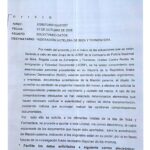



Universal Merchant Bank (UMB) has become the first bank in Ghana to receive approval from both the Bank of Ghana (BoG) and the Securities and Exchange Commission (SEC) to offer virtual accounts to eligible businesses operating within the emerging virtual asset ecosystem.
The approval marks a significant step in Ghana’s evolving financial landscape, where regulated banking, digital finance and new technology-driven business models are increasingly converging.
Related Stories

For UMB, however, the significance extends beyond the introduction of a new banking capability. It reflects a deliberate strategy to identify emerging opportunities, build the infrastructure required to serve them and work with regulators to ensure that innovation develops within a sound and sustainable regulatory framework.
The development comes as Ghana strengthens its regulatory architecture for virtual assets and virtual asset service providers (VASPs), providing greater clarity on how businesses in the sector can participate in the formal financial system.
Positioning UMB at the front of Ghana’s digital economy
The global virtual asset industry continues to evolve, driven by developments in blockchain technology, digital payments, tokenisation and broader financial innovation.
Ghana is responding to these developments with a more structured regulatory approach to create space for innovation while safeguarding the integrity and stability of the financial system.
Mensah Thompson, Acting Deputy Director-General Finance at the Securities and Exchange Commission (SEC), emphasised the importance of responsible participation by financial institutions as the sector develops.
As the virtual asset ecosystem develops, collaboration between regulators and financial institutions will be important in ensuring that innovation takes place within a properly regulated environment.
“Institutions that are prepared to understand the requirements and build the appropriate controls will be well positioned to support the development of the sector.”
Against this backdrop, UMB’s dual regulatory approval gives the Bank an early position from which to engage eligible virtual asset businesses, Fintechs, technology companies and other participants seeking access to regulated banking infrastructure.
The virtual account offering remains subject to applicable regulatory requirements and eligibility criteria.
The approval nonetheless establishes an important foundation for UMB to participate in the development of Ghana’s emerging virtual asset market and to support businesses operating within the formal financial system.
Banking for What Comes Next
For UMB Managing Director and Chief Executive Officer, Dr Philip Oti-Mensah, the development aligns with the Bank’s broader ambition to anticipate evolving customer and market needs.
The financial services landscape is evolving, and our responsibility as a bank is to understand where our customers and the economy are heading and build the capabilities to support that future.
Receiving approval from both the Bank of Ghana and the Securities and Exchange Commission to offer virtual accounts to eligible businesses is an important milestone for UMB.
It demonstrates that innovation and responsible banking can move together, and reinforces our commitment to building a modern, relevant and competitive Ghanaian bank.”
Since assuming leadership of UMB, Dr Oti-Mensah has placed transformation, innovation, customer experience and sustainable growth at the centre of the Bank’s agenda.
The virtual account approval reflects that direction in practice: identifying an emerging market early, developing the necessary banking capabilities and working within the regulatory framework to create opportunities for the Bank and its customers.
Digital Capability as a Business Strategy
UMB’s move into the virtual asset ecosystem builds on wider investments in digital banking and technology.
Through platforms such as SpeedApp and internet banking, and products such as Legacy Care Plus, the Bank has continued to expand the ways customers and businesses interact with its services.
For Tubuor Ofei-Agyemang, Head of E-Business at UMB, the virtual account capability is part of this broader digital evolution.
Digital transformation is no longer simply about moving existing banking services onto digital platforms. It is about understanding how customers and businesses are evolving and developing the infrastructure to support them.
“The virtual account capability is part of that journey and reflects our focus on building secure, scalable and relevant digital banking solutions.”
The strategy increasingly positions technology not simply as a channel for delivering conventional banking services, but as an enabler of new forms of business and financial activity.
The virtual account approval extends that approach into an emerging segment of Ghana’s digital economy, giving UMB an opportunity to develop solutions around businesses whose financial needs are evolving alongside the regulatory landscape.
A Stronger Platform for Growth
The approval also comes at an important point in UMB’s institutional journey.
In July 2026, Finance Minister Dr Cassiel Ato Forson announced the completion of the Ghana Amalgamated Trust’s full recapitalisation of Universal Merchant Bank, strengthening the Bank’s capital position and providing a stronger platform for its next phase of growth.
Combined with continued investment in technology, customer experience and operational capabilities, the recapitalisation strengthens the foundation from which UMB can pursue new opportunities and respond to emerging areas of economic activity.
The Bank is therefore entering Ghana’s evolving virtual asset space with growing institutional, financial and technological capacity.
More Than Being First
UMB’s position as the first bank in Ghana approved by both the Bank of Ghana and the Securities and Exchange Commission to offer virtual accounts is significant. But the greater opportunity lies in what that position enables.
As Ghana’s virtual asset regulatory framework develops, regulated financial institutions will play an important role in connecting legitimate businesses in the digital economy to the formal financial system.
That creates potential for deeper collaboration across banking, fintech, payments, technology and virtual asset businesses, while allowing financial institutions to develop expertise in a rapidly changing market.
For UMB, being early is therefore about more than just claiming first place. It creates an opportunity to understand the sector, build relationships, develop institutional expertise and design solutions for businesses operating within a clearly defined regulatory environment.
It is also consistent with the Bank’s wider transformation agenda: anticipate change, invest ahead of the curve and build banking solutions around where customers and the economy are heading.
As Ghana’s financial ecosystem continues to evolve, UMB is positioning itself not simply to participate in that transformation, but to help build the financial infrastructure that enables it.