


By Kofi Ahovi
The Chief Executive Officer of MobileMoney Fintech Limited (MMFL), Shaibu Haruna, has called for a shift in Ghana’s financial inclusion agenda towards economic empowerment, urging financial institutions to use digital transaction data to expand access to credit and investment opportunities for small businesses.
Related Stories

He said although mobile money had significantly expanded access to financial services, the next phase of digital finance must focus on helping individuals and businesses build wealth, secure affordable financing and contribute more meaningfully to economic growth.
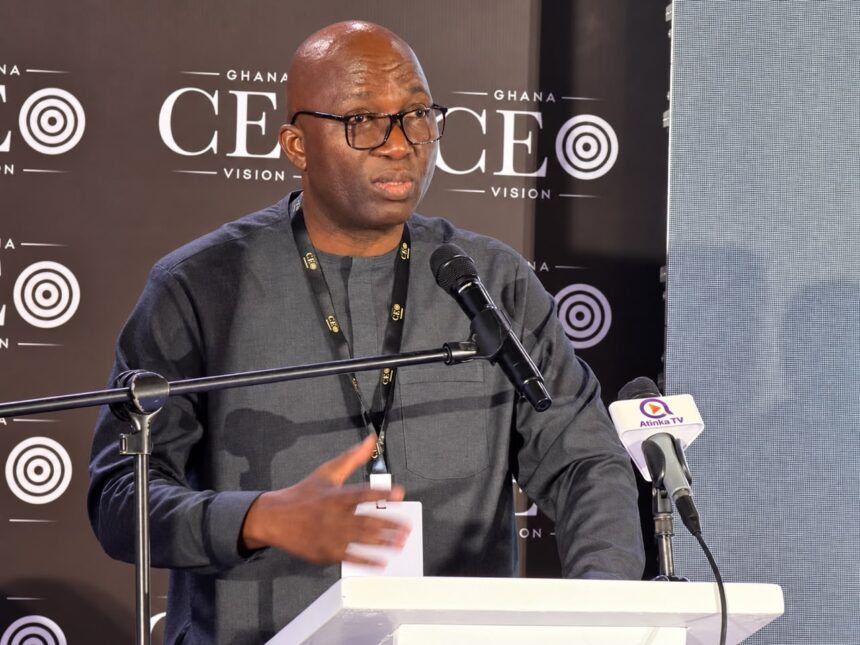
Speaking at the Ghana CEO High-Level Dialogue in Accra, ahead of the Ghana CEO Awards, Haruna said access to a mobile money wallet should no longer be considered sufficient evidence of financial inclusion.
Access to a wallet is not equal to access to financial services,” he said, arguing that the industry must now focus on deepening the financial health of customers and supporting micro, small and medium-sized enterprises (MSMEs).
He challenged financial sector players to consider whether entrepreneurs could use their digital transaction histories to obtain working capital without the conventional collateral requirements that often exclude smaller businesses.
Can a young entrepreneur use the digital financial history they have to access working capital for their business? Can a woman running a small and medium-sized enterprise access appropriate credit without having to provide collateral for her business, which she doesn’t actually have?” he asked.
Haruna said answering these questions would help Ghana move beyond basic financial access towards a system in which digital finance supports enterprise growth, job creation and broader economic prosperity.
Digital records could unlock SME financing
During a panel discussion, Haruna said digital transaction records could help financial institutions better understand the cash flows of small businesses and develop financing products suited to their needs.
He observed that many micro-enterprises still combine personal and business finances, making it difficult for lenders to assess their financial performance and determine their creditworthiness.
How do we begin to encourage people to separate their personal income or wealth from their business, so that we can structure business financing and banks and other partners can begin to see their digital footprints?” he said.
He identified the micro-enterprise sector as a critical frontier for the evolution of digital finance, adding that MobileMoney Fintech Limited was working with banking partners to extend credit to customers through its platform.
He also called for greater financial literacy to help customers understand money management, savings, responsible borrowing and investment.
Haruna said building trust and strengthening cybersecurity awareness were equally important as digital financial services expanded, particularly with the growing use of smartphones and the risks associated with online transactions.
Cross-border payments need regulatory support
The MMFL chief executive also identified cross-border payments as an area requiring urgent attention, particularly for Ghanaian businesses seeking to trade across African markets.
Responding to concerns from a business owner about difficulties receiving international payments, he said the technology needed to facilitate easier transactions already existed, but regulatory frameworks had not advanced sufficiently to unlock its full potential.
The technology exists for this to happen, but the regulation to make it happen is what is lagging,” he said.
He disclosed that MobileMoney Fintech was working with partners and the Bank of Ghana on a payment proposition within a regulatory sandbox to facilitate transactions between Ghana and another African market.
He expressed hope that the initiative would help create a more convenient payment channel for businesses engaged in cross-border trade.
Haruna said improving payment systems across Africa could help small businesses receive income more efficiently, expand their markets and create employment opportunities.
NIB pushes for capital to finance productive sectors
Also on the same panel, Osman Soale Atchulo, Chief Treasury Officer of the National Investment Bank (NIB), called for reforms to enable more financing to flow into productive sectors of the economy rather than being concentrated in government securities.
He said Ghana needed to strengthen the pipeline of bankable business projects, unlock pension funds for productive investment and address the crowding-out effect of government borrowing on private-sector credit.

Atchulo argued that NIB needed to return to its original mandate of supporting industrial development through long-term financing and equity investment.
Our commitment would be to go back to our original DNA, where we are providing not just long-term debt or patient capital, but also a combination of equity so that we can help the enterprise system grow,” he said.
He explained that equity financing could help businesses expand without relying exclusively on loans, while creating pathways for mature enterprises to access capital markets.
He also called for stronger financing support for smaller businesses, which often struggle to meet the collateral and credit requirements of conventional lenders.
Financial inclusion must translate into jobs and growth
The discussion placed access to productive capital, digital infrastructure and financial literacy at the centre of efforts to make Ghana’s financial system more supportive of enterprise development.
Haruna said digital finance should help businesses move from receiving payments to saving, accessing responsible credit and investing in growth.
He also highlighted talent development as a priority, pointing to initiatives aimed at nurturing financial technology skills and supporting locally developed ideas that could become viable businesses.
The dialogue formed part of discussions on reimagining Ghana’s future and the role of business leaders in advancing the national reset agenda.
The broader message from the financial sector representatives was that expanding access to financial services would have limited impact unless businesses could convert that access into productive investment, sustainable growth and employment.