

By Edward Adjei Frimpong
MTN Ghana is stepping up efforts to expand network coverage across underserved communities in the country’s middle belt — even as the company battles a surge in fibre-optic cable cuts that continue to disrupt telecommunications services and pose growing security concerns.
Related Stories

Across the Bono, Bono East and Ahafo regions, the operator recorded 211 fibre-cut incidents between January and November 2025, many caused by ongoing road construction. But MTN says an increasing number are deliberate acts of sabotage, carried out by criminals who disable network connectivity to facilitate armed robbery and other attacks. Communities already struggling with poor coverage are often plunged into complete communication blackouts.
The disruption has slowed data services, interrupted mobile money transactions and pushed up operational costs. In some affected towns — including Sampa, Drobo, Goaso and Mim — MTN’s attempts to mount aerial fibre lines have been undermined by the theft of poles installed to protect cables.
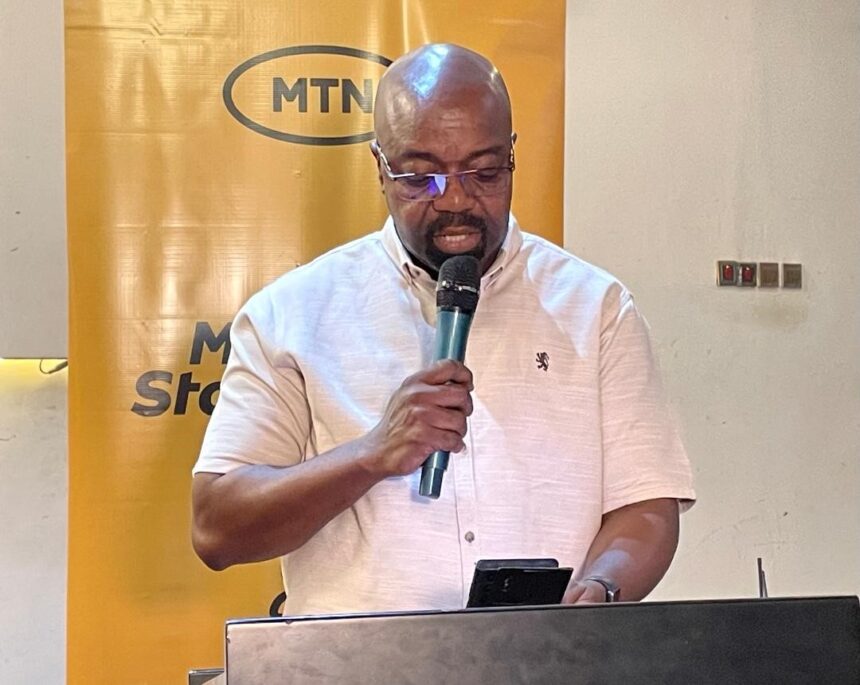
A Field Service Engineer, Philip Ennin, speaking at MTN’s 2025 media and stakeholder forum in Sunyani, described the trend as a “national security threat” and urged the public to report suspicious activity.
 Against this backdrop, MTN says it is moving to extend coverage to underserved communities that have long been left out of major network rollouts. “As part of our 2026–2027 expansion programme, we will map locations in underserved areas and assess which ones can be connected immediately, with the remainder phased in,” said Nii Adotey Mingle, General Manager for MTN’s Northern Business District.
We will continue to invest in telecom infrastructure to drive digital transformation and support sustainable development as Ghana’s digital economy rapidly evolves.”
The company says it has invested US$1 billion over the past five years to strengthen Ghana’s digital infrastructure, with US$240 million earmarked for 2025 to boost fibre capacity and improve 4G and 5G services.
MTN Ghana’s Chief Customer Experience Officer, Jemima Kotei-Walsh, said the operator is also pushing ahead with its environmental sustainability agenda through Project Zero, aimed at cutting emissions and shifting to cleaner energy.
She said, “The head office and data centres now run on solar power, and electric vehicles have been added to the fleet. These are not just upgrades, they are the digital rails supporting Ghana’s growth and the resilience of the communities we serve.”