

Small and Medium-sized Enterprises (SMEs) in Ghana continue to face steep borrowing costs, with lending rates varying widely across commercial banks despite increasing competition in the financial sector.
The latest Bank of Ghana Annualised Percentage Rate (APR) Report for May 2026 shows that interest rates on SME loans remain significantly higher than those available to large corporate borrowers, underscoring the elevated risk premium banks continue to assign to the sector.
Related Stories

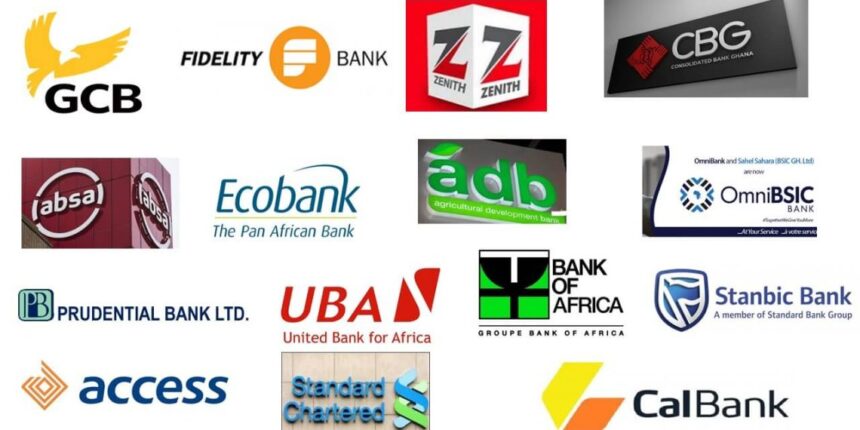
According to the report, Guaranty Trust Bank Ghana recorded the highest annualised percentage rate for one-year SME loans at 33.58 percent, while Standard Chartered Bank Ghana offered the lowest rate at 11.03 percent. The more than 22-percentage-point gap highlights the significant differences in the cost of credit available to small businesses across the banking industry.
For three-year SME loans, Universal Merchant Bank (UMB) quoted the highest APR at 31.09 percent, whereas Stanbic Bank Ghana offered the most competitive rate at 13.34 percent.
On five-year SME facilities, the Agricultural Development Bank (ADB) recorded the highest APR at 25.07 percent, while Ecobank Ghana offered the lowest rate at 13.97 percent.
The findings reinforce long-standing concerns over access to affordable finance for SMEs, which form the backbone of Ghana’s economy by contributing significantly to employment, entrepreneurship and economic output. High borrowing costs continue to limit business expansion, capital investment and job creation, despite government efforts to stimulate private sector growth.
By comparison, larger corporate borrowers continued to enjoy considerably lower financing costs.
The report shows that one-year corporate loans were available from as low as 7.62 percent at Absa Bank Ghana, while three-year corporate facilities started at 9.78 percent, reflecting the stronger credit profiles, collateral positions and lower default risks associated with established businesses.
Uneven Cost of Credit
Across the banking industry, the average Annualised Percentage Rate (APR) stood at 17.64 percent in May 2026, while the Ghana Reference Rate (GRR) remained unchanged at 10.03 percent.
The Bank of Ghana explained that the APR represents the total cost of borrowing by combining the benchmark reference rate with each bank’s risk premium and other applicable lending charges, providing borrowers with a more comprehensive measure of loan costs than interest rates alone.
The latest data suggest that while some banks are offering relatively competitive financing to SMEs, many businesses continue to pay a substantial premium to access credit. Analysts warn that unless financing costs moderate, high lending rates could continue to constrain entrepreneurship, productivity and broader economic growth.