

By Kofi Ahovi
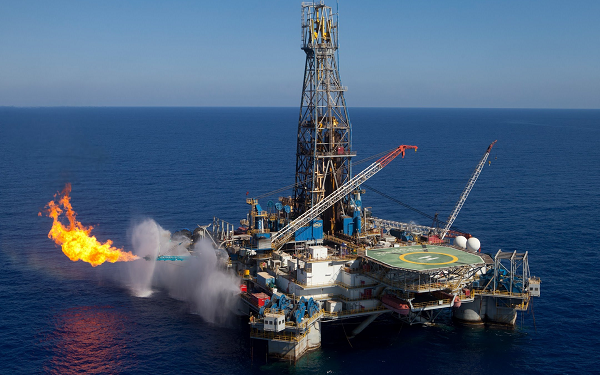
The Government has secured more than US$3.5 billion in new investment commitments to revitalise Ghana’s upstream petroleum sector, as part of a broader strategy to reverse years of declining crude oil production and strengthen the country’s energy security.
Related Stories

Presenting the 2026 Mid-Year Budget Review to Parliament on Thursday, July 23, 2026, Finance Minister Dr. Cassiel Ato Forson said the government’s investor-friendly reforms have restored confidence in Ghana’s oil and gas industry and are already delivering measurable results.
He noted that crude oil production had fallen dramatically over the past six years, underscoring the need for urgent policy interventions to attract fresh investment into the sector.
Ghana’s crude oil production declined sharply from 71.4 million barrels in 2019 to about 36 million barrels in 2025. To reverse this decline, Government has introduced investor-friendly reforms that have already secured more than US$3.5 billion in new investment commitments from the Jubilee and OCTP partners,” Dr. Forson told Parliament.
The Finance Minister said the renewed investments have translated into higher-than-expected production at Ghana’s major oil fields.
According to him, production at the Jubilee Field has risen significantly above projections, while output from the Sankofa Field has also improved.
These reforms are already delivering results. Oil production has exceeded expectations, with Jubilee increasing from a projected 68,000 barrels to about 95,000 barrels per day, while Sankofa is now producing about 28,000 barrels per day,” he stated.
Dr. Forson said natural gas production has also increased substantially, helping to improve fuel supply for power generation and industrial activities.
He disclosed that gas output has risen from 245 million standard cubic feet per day to about 282 million standard cubic feet per day, with further increases expected following a new agreement with upstream partners.
A new agreement with the OCTP partners will increase gas production further to 350 million standard cubic feet per day,” the Finance Minister announced.
Beyond increasing production, the government is also moving to strengthen Ghana’s regulatory framework to attract additional investment into the upstream petroleum industry.
Dr. Forson revealed that the government is reviewing the country’s petroleum laws to align them with global best practices and improve Ghana’s competitiveness as an investment destination.
Government is also updating the laws governing the upstream petroleum sector to make Ghana more attractive for investment, with the proposed amendments expected to be submitted to Parliament before the end of the year,” he said.
The Finance Minister said the combination of increased investment, higher production and regulatory reforms is expected to position Ghana’s upstream petroleum sector for sustained growth, enhance energy security, create jobs and generate additional revenue to support the country’s economic transformation.