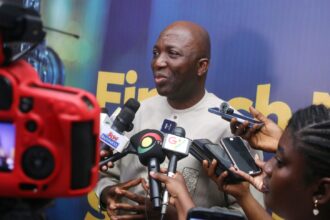


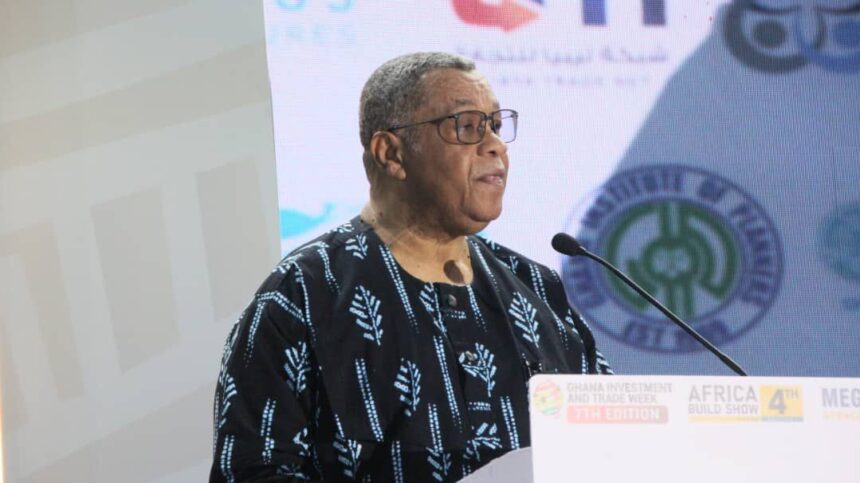
The government’s ambitious 24-hour economy agenda will be underpinned by renewable energy, industrial parks, electric mobility and export-driven manufacturing as part of a long-term strategy to transform Ghana into a competitive production hub, Presidential Advisor on the 24-Hour Economy and Accelerated Export Development Programme, Goosie Tanoh, has said.
Delivering the keynote address at the opening of the seventh Ghana Trade and Investment Week in Accra, Tanoh outlined what he described as a comprehensive roadmap to build an economy that “produces what it consumes and exports more value than it imports.”
Related Stories

Speaking on the theme “Powering the 24-Hour Economy: Integrating Infrastructure, Energy, Electric Mobility and Sustainable Real Estate,” he said affordable and reliable energy would be the cornerstone of Ghana’s industrial transformation.
The 24-hour economy and the Accelerated Export Development Programme exist to complete the unfinished task of building an economy that produces what it consumes and exports more value than it imports,” he said.
According to him, the success of the policy will depend on shifting Ghana’s energy mix towards renewable sources that can sustainably power industries while reducing dependence on imported fossil fuels.
Every power plant, industrial park and transport system we commission today will be with us for decades. The critical decision is how to power it all, and the source of that power is a choice,” he stated.
 Tanoh disclosed that government has already signed agreements to develop 1.5 gigawatts of solar power backed by battery energy storage systems, with construction of the first phase expected to begin in the coming months.
He also announced plans to develop compressed biogas plants and waste-to-energy facilities to generate cleaner industrial fuel, lower electricity costs and support Ghana’s transition to a low-carbon economy.
Solar power with battery storage can deliver electricity at between seven and nine cents per kilowatt hour. That does more for the competitiveness of Ghanaian industry than any other single intervention,” he noted.
The Presidential Advisor said the energy investments would support industrial parks, agro-processing zones and manufacturing clusters under the 24-hour economy programme, creating new opportunities for value addition and exports.
The broader 24-Hour Economy Authority is working to pair local agricultural modernization and agro-processing with round-the-clock logistics across Ghana’s northern development corridors.
He added that electric buses and trucks powered by renewable energy would form part of an integrated transport system aimed at reducing logistics costs and improving productivity.
Tanoh called on local and international investors to partner government in financing renewable energy projects, industrial parks, affordable housing, electric mobility infrastructure and manufacturing ventures.
The opportunities are enormous—from renewable generation and battery storage to industrial parks, affordable housing and electric mobility. We welcome investors, financiers and development partners to participate in building this new economy,” he said.
Earlier, President of the Ghana Chamber of Construction Industry, Nana Opare Kwafo I, said infrastructure development would be critical to the success of the government’s 24-hour economy agenda.
He called for increased investment in transport infrastructure, sustainable energy, logistics and affordable housing to unlock Ghana’s industrial and trade potential.
The government’s 24-hour economy policy offers a bold opportunity to increase productivity, industrialisation and employment. To achieve this vision, we must invest in reliable infrastructure, sustainable energy, efficient transportation systems and modern logistics,” he said.
Chairman of MIE Group, David Wang, organisers of the annual trade and investment forum, said the event continues to attract international investors seeking opportunities in Ghana’s manufacturing, renewable energy and infrastructure sectors.
According to him, more than 100 exhibitors from about 10 countries are participating in this year’s event, with a strong focus on green energy technologies, solar manufacturing and sustainable infrastructure.
He noted that previous editions of the exhibition have facilitated business partnerships that have resulted in foreign companies establishing manufacturing operations in Ghana, creating jobs and supporting industrialisation.
The 7th Ghana Trade and Investment Week is expected to strengthen investment partnerships, promote technology transfer and support the implementation of Ghana’s 24-hour economy and export-led growth strategy.