

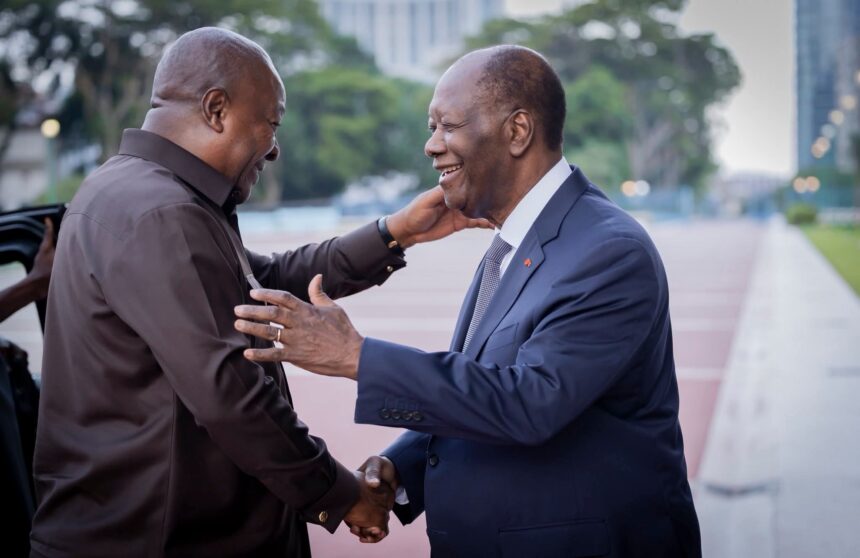
Ghana and Côte d’Ivoire have reaffirmed their commitment to transforming the cocoa sector and improving the livelihoods of farmers, with Presidents John Dramani Mahama and Alassane Ouattara pledging deeper cooperation to address longstanding challenges facing the industry.
The commitment was contained in a Joint Declaration issued after the Côte d’Ivoire-Ghana High-Level Summit on the Future of the Cocoa Economy held in Abidjan on June 16, 2026.
Related Stories

The two leaders underscored the strategic importance of the cocoa sector, noting that Ghana and Côte d’Ivoire together account for about 60 percent of global cocoa production, placing on them a shared responsibility to shape the future of the industry.
The summit reviewed progress made under the 2018 Abidjan Declaration, highlighting key achievements including the establishment of the Côte d’Ivoire-Ghana Cocoa Initiative (CIGCI), the implementation of the Living Income Differential (LID), harmonised producer price announcements, cocoa traceability systems, and collaborative efforts to combat Cocoa Swollen Shoot Virus Disease (CSSVD).
Despite these gains, the leaders acknowledged that the cocoa industry continues to face significant threats, including volatile international prices, illegal mining activities, climate change impacts, increasing use of cocoa substitutes, and stricter sustainability requirements in global markets.
They also expressed concern that while Africa produces about 80 percent of the world’s cocoa, the continent captures only a small fraction of the value generated along the cocoa-chocolate supply chain.
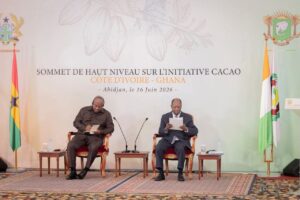 As part of the renewed partnership, Ghana and Côte d’Ivoire agreed to harmonise farm-gate pricing policies to improve farmer incomes, strengthen market stability and deepen commercial cooperation. The countries will also align market premiums and crop season calendars to enhance coordination across the sector.
The declaration further commits both nations to ensuring fair and decent remuneration for cocoa farmers, strengthening scientific research and disease management programmes, particularly against Swollen Shoot disease, and expanding cocoa processing capacities to create more value within Africa.
The two countries also announced plans to broaden the Côte d’Ivoire-Ghana Cocoa Initiative to include other African cocoa-producing nations, with the aim of strengthening regional cooperation and enhancing Africa’s collective bargaining power in global cocoa markets.
President John Dramani Mahama and President Alassane Ouattara jointly stated that:
Fair remuneration for farmers is a pillar of the sector’s sustainability and a requirement for economic justice and social stability.”
The two leaders further emphasized their determination to:
Guarantee producers fair and decent remuneration and place them at the heart of the cocoa value chain.”
On the future of regional cooperation, the declaration noted:
The expansion of the Côte d’Ivoire-Ghana Cocoa Initiative to other African countries will enhance regional cooperation, harmonise sector policies, strengthen collective bargaining power on global markets, and coordinate responses to emerging challenges in the cocoa economy.”
The presidents also reaffirmed their commitment to increasing local value addition by:
Creating added value through increased processing capacity, encouraging regional and continental trade, and stimulating national and regional consumption of cocoa-based products.”
The summit concluded with both countries pledging to maintain their leadership role in the global cocoa industry while working together to secure sustainable incomes for farmers and greater economic benefits for Africa.