

Ghanaians are increasingly treating their mobile money (MoMo) wallets as savings accounts, with balances hitting a record GH¢40 billion in June 2026, signalling a major shift in how individuals and businesses manage their money.
Latest payment systems data from the Bank of Ghana shows that mobile money wallet balances—commonly referred to as mobile money float—rose from GH¢28.9 billion in June 2025 to GH¢40 billion in June 2026, representing a year-on-year increase of more than 38 percent.
Related Stories

The surge suggests that mobile wallets are no longer being used solely for payments and money transfers. Instead, an increasing number of Ghanaians are keeping funds in their wallets for daily expenses, business transactions and emergency needs, reflecting growing confidence in digital financial services.
The trend also highlights changing consumer behaviour, with many users opting to retain money electronically rather than depositing it in traditional bank savings accounts or withdrawing cash immediately after receiving funds.
The rapid growth in wallet balances comes as Ghana’s digital payments ecosystem continues to expand, driven by widespread mobile phone usage, improved financial technology infrastructure and increasing acceptance of cashless transactions.
The Bank of Ghana’s data further shows that the number of registered mobile money accounts** rose to 84.6 million in June 2026 from 76.4 million a year earlier. Meanwhile, active mobile money accounts** increased to 26.4 million, indicating that more Ghanaians are regularly relying on digital financial services.
Transaction volumes remained robust during the month, underscoring mobile money’s growing importance in the country’s economy.
In June alone, mobile money platforms processed 954 million transactions valued at GH¢492.9 billion, reflecting the extensive use of the platforms for merchant payments, salary disbursements, utility bill payments, remittances and person-to-person transfers.
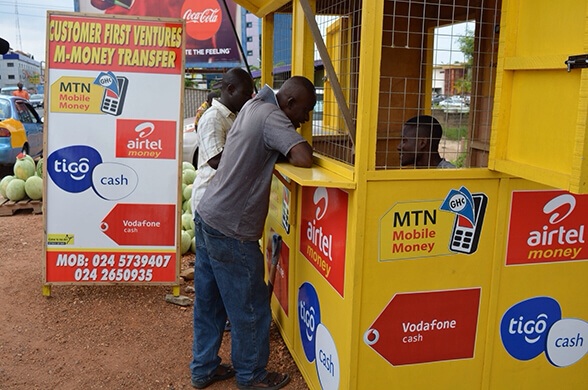
The industry’s agent network also reached a historic milestone. The number of registered mobile money agents surpassed one million for the first time, reaching 1.016 million, while active agents climbed to 546,000.
The expanded network is expected to improve access to digital financial services, particularly in rural and underserved communities, further strengthening financial inclusion across the country.
Interoperability between mobile money platforms also continued to gain traction. During June, users completed 33 million cross-network transactions worth GH¢6.2 billion, demonstrating the growing ease of transferring funds across different mobile money providers.
The latest figures reinforce mobile money’s evolution from a simple payments platform into a critical component of Ghana’s financial system. Beyond facilitating transactions, mobile wallets are increasingly serving as a convenient store of value, supporting commerce, expanding financial inclusion and accelerating the country’s transition to a digital economy.
While the record wallet balances point to a growing preference for holding money digitally, analysts note that the funds in mobile money wallets remain part of the banking system because they are backed by trust accounts held with partner banks. Nevertheless, the trend underscores how mobile money is reshaping traditional savings and payment habits in Ghana.