


The Chief Executive Officer of the Ghana Chamber of Mines, Kenneth Ashigbey, has called on the Government of Ghana to enact a Minerals Revenue Management Act to ensure the country effectively manages windfall revenues from high gold prices and protects the economy against future fluctuations in the global commodities market.
Ashigbey said Ghana must establish a legal framework that channels excess mineral revenues into a heritage fund and a stabilisation fund, providing long-term financial security when commodity prices eventually decline.
Related Stories

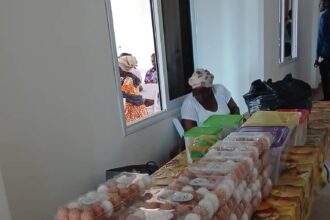
He made the call on the sidelines of a donation ceremony where the Ghana Chamber of Mines presented relief items to the National Disaster Management Organization (NADMO) for victims of the devastating June 29 floods across the country.
Addressing journalists on the outlook for the mining sector, Ign. Ashigbey cautioned against assuming that the current favourable gold prices would last indefinitely.
He explained that the mining industry has historically experienced cycles of boom and decline and therefore plans its long-term investments with caution rather than relying on temporary market highs.
The interesting thing about gold prices is that they go through a cycle. For the industry, we know that this is not going to be permanent. Most of the workings that the industry would do may not even be using this US$4,000 price level. We might move up a bit, but definitely the time is going to come where the price of gold will come down.”
According to him, Ghana should seize the opportunity presented by the current market conditions to establish a sustainable framework for managing mineral revenues instead of treating the present earnings as permanent income.
He stressed that revenues generated during periods of exceptionally high commodity prices should be strategically invested to protect future generations and cushion the economy during periods of declining mineral earnings.
It is the reason why, for us as a Chamber, we ask government that we need to have a Minerals Revenue Management Act, so that when you have windfalls from high prices of gold, we can put some money into a heritage fund for tomorrow—the rainy day—and also have some money in the stabilisation fund. That is really important so that we can take advantage of this period when the price of gold is high.”
Gold is currently trading at approximately US$4,060 per ounce, having retreated from a record high of about US$5,608.35 per ounce recorded in January 2026. Despite remaining historically high, Ashigbey maintained that commodity markets are inherently volatile and require prudent fiscal planning.
He noted that a Minerals Revenue Management Act would help ensure that extraordinary mining revenues are managed transparently and strategically, reducing the country’s exposure to external commodity price shocks while strengthening long-term economic resilience.
Beyond the policy call, the Ghana Chamber of Mines demonstrated its commitment to national development by donating relief supplies to victims affected by the June 29 floods, one of the country’s most devastating natural disasters in recent years.
Presenting the items to NADMO, Ign. Ashigbey expressed profound sympathy to families who lost relatives, homes, businesses and livelihoods during the floods, describing the disaster as a moment that required national unity and collective compassion.
He said the Chamber stood in solidarity with all affected families as they worked to rebuild their lives.
To the thousands of families who lost their homes, businesses, farms, livelihoods, and cherished possessions, please know that you are not alone. We stand with you. We mourn with you.”
Ign. Ashigbey explained that the donation reflected the mining industry’s commitment to responsible corporate citizenship, emphasising that the role of mining companies extends beyond mineral extraction to supporting communities during periods of national hardship.
He commended member companies of the Chamber for contributing generously to the relief effort, noting that some mining firms had themselves been affected by the floods but still responded to the humanitarian appeal.
Receiving the donation on behalf of the Government, Deputy Minister for the Interior, Ebenezer Okletey Terlabi, described the gesture as timely and an example of meaningful corporate social responsibility.
On behalf of the Government of Ghana, particularly the Ministry of the Interior, I wish to express my profound gratitude to the Ghana Chamber of Mines and its member companies for this timely gesture of compassion, solidarity, and corporate responsibility,” he said.
The Deputy Minister noted that the floods had destroyed homes, disrupted livelihoods and claimed lives, making the support particularly significant. He stressed that disaster management required collaboration among government, the private sector and civil society.
Terlabi assured the Chamber that the donated items would be distributed fairly and transparently to those most in need. He also called for long-term investments in disaster preparedness, improved drainage systems, responsible waste management, stronger early warning systems and stricter enforcement of planning regulations to reduce the impact of future floods.