


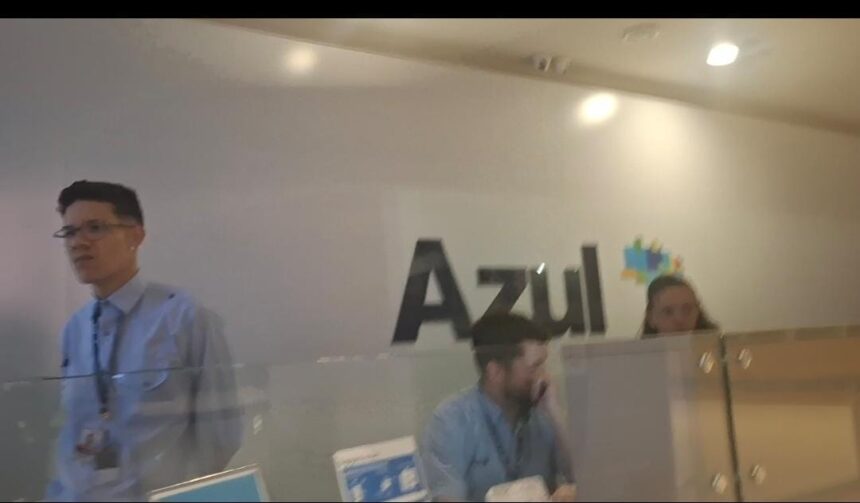
I had the shock of my life at the Belém International Airport in Brazil. I booked a flight with Azul Linhas Aéreas Brasileiras (Azul airline) from Belém to Sao Paolo, and when I got to the check-in counter, the attendant asked me to pay for my luggage. I was taken aback, considering I only had one bag, weighing less than 23kg – well within the accepted weight limit, and I’m someone who always travels light. In fact, if you know me well, you’ll know that I’m quite particular about packing light. I once had an issue with US immigration at JFK with how light my luggage was, but that’s a story for another day.
Back to the issue at hand, the attendant showed me a price list, and I was told to pay 200 reals equivalent to US$ 40 for my luggage. I asked her why my luggage fee wasn’t included in the price of the ticket, and she said that’s the practice here. I was shocked – how do I pay for a ticket worth over a thousand dollars and still have to pay extra for my small luggage? It’s not like I’m checking in multiple bags or exceeding the weight limit. It’s just one small bag!
Related Stories

To make matters worse, I was only informed about this at the airport, and language was a barrier. We had to rely on Google translator to communicate, which was already a challenge. I tried to explain to her that I wasn’t aware of this policy, but she wouldn’t badge. A woman, presumably her supervisor, came and insisted I pay or leave my luggage behind. I was really taken aback by her tone and the lack of empathy.

I demanded a refund so I could look for another flight, but they refused. After back and forth me and my colleagues had to pay 200 reals each for our luggage. What struck me was that I only saw people of African descent being charged for luggage. I didn’t see others being asked to pay for their luggage. It was as if there was a clear bias in how they were enforcing this policy.
After paying and boarding, we thought our plight was over until, the flight attendant came around and ordered us to remove our hand luggage from the overhead locker, which was right above our seat, so he could place someone else’s. When he saw the expressions on our faces, he advised himself.
We thought the worse was over until we reached Campinas Viracopos International Airport. Prior to buying the tickets, we were informed that Azul will provide a free shuttle service to transport us from Campinas airport to São Paulo/Guarulhos – Governor André Franco Montoro International Airport (GRU airport) which was our original destination and for whatever reasons, Azul airline will not go to GRU that night. We arrived at Campinas around 11 pm, and after a 40-minute wait for our luggage, we made our way to the parking lot, only to be told there was no bus – the last one had left at 10 pm, and the next one wouldn’t be available until 6 am. What? We screamed in unison because we were shocked and frustrated. From further enquiry from Azul’s office at the airport, we were told the bus only had less than 50 seats so there was no everyone could get on board. what really got our blood boiling was the staff’s attitude – they were incredibly rude. They were so rude that we had to tell them were journalists and will not let this behaviour slide but they cared less and only begun to run after we took our phones to film them. We then had to opt for an overpriced taxi ride, which seemed like a gold mine for the taxi drivers.
 It’s unacceptable for airlines to prioritize profits over passenger well-being. The lack of transparency and poor customer service can be really frustrating, especially when you’re already tired from traveling.
The Brazilian aviation authority ANAC (Agência Nacional de Aviação Civil) and United Nations Framework Convention on Climate Change (UNFCCC) need to address this issue and stop these airlines from taking advantage of passengers and ensure airlines are held accountable for providing decent service. Charging extra for luggage is already a contentious issue, and then to have unreliable shuttle services? That’s just adding insult to injury.
https://youtube.com/shorts/oA4NsLcGvnk?si=25Rl4olsMoFGyRwm
Source: Kofi Ahovi