

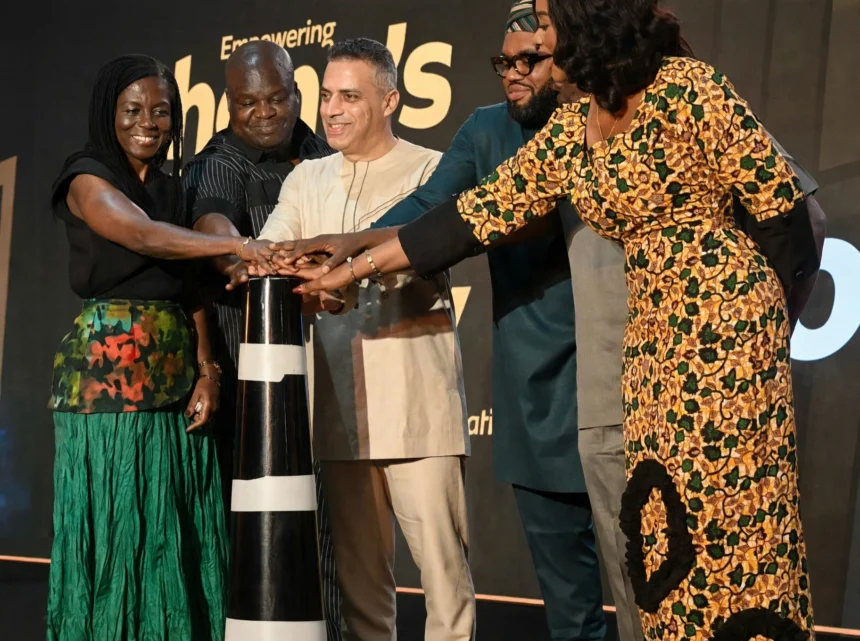
Government has challenged MTN Ghana to position its newly launched MTN One TV as more than a streaming platform by investing in local content, talent development and the wider creative industry ecosystem.
Deputy Minister for Communications, Digital Technology and Innovation, Mohammed Adams Sukparu, said the platform should not only distribute Ghanaian content but also help creators earn sustainable incomes and build viable businesses from their work.
Related Stories

Speaking at the launch of MTN One TV, Sukparu, who represented the sector Minister, Sam George, said Ghanaian creative works had already demonstrated their ability to travel beyond the country.
Our creatives have demonstrated that Ghanaian stories can travel,” he said. “The question is how we ensure that these stories reach wider markets while creators receive fair and sustainable value from their work,” he added.
He said the growth of digital technology had fundamentally changed how creative content was produced, distributed and consumed, allowing Ghanaian creators to reach global audiences directly from the country.
Beyond content distribution
Sukparu said MTN had the networks, technology, platforms and audience to play a bigger role in developing Ghana’s creative economy.
Its significance should go beyond being another streaming service. It should become part of an ecosystem that expands access to Ghanaian content, strengthens distribution, creates better monetisation pathways and connects our creators to larger audiences,” he said.
He therefore encouraged MTN Ghana to look beyond distributing existing productions and consider commissioning new Ghanaian content, supporting emerging talent and working with government to strengthen initiatives for the creative sector.
MTN has the networks, technology, platforms and audience, and therefore I encourage MTN Ghana to see its role beyond content distribution,” Sukparu urged.
He said a portion of the value generated from Ghanaian content on local digital platforms should be reinvested in the ecosystem that produces the content.
According to him, Government had identified the creative industry as an important contributor to employment, enterprise development and economic growth and had established a Film Development Fund with seed funding of GH¢20 million.
Government cannot do it alone,” he said, calling on corporate Ghana, particularly companies operating within the digital ecosystem, to increase investment in the sector.
Success should go beyond views
The Deputy Minister also cautioned against measuring the success of Ghana’s digital creative economy solely by audience numbers.
He said high viewership was important but should not be considered the ultimate measure of success.
Global reach is not the same as sustainable revenue,” he observed.
“Our measures of success must therefore go beyond audience numbers. We must ask: how much do creators earn, how many jobs are created, how much investment is attracted and how much value remains within Ghana?”
He said the creative sector should enable artists, filmmakers, producers and other professionals to build sustainable livelihoods from their work.
Sukparu said the decline of traditional distribution channels such as CDs and VCDs, combined with Ghana’s reliance on international digital platforms, had created challenges for local creators.
He said locally controlled digital platforms could help address some of these challenges by creating additional avenues for distribution and monetisation.
Government calls for stronger collaboration
The Deputy Minister for Arts and Culture, Yussif Issaka Jajah, who represented the Minister for Tourism, Culture and Creative Arts, Abla Dzifa Gomashie, also called for stronger collaboration between telecommunications companies, producers, actors, regulators and digital platforms.
He said the creative sector needed to move beyond cultural preservation towards creating livelihoods and economic value.
Culture is the soul of a nation, but if that soul is to remain vibrant, it must not only be preserved; it must also create opportunities, livelihoods and value for the very people who give it life,” he said.
Jajah said Ghana had a long history of producing stories that travelled beyond its borders, but the financial value generated from those stories did not always remain in the country.
He said digital transformation provided an opportunity to change that situation.
With MTN One TV today, you are taking a bolder step by giving content a home and Ghanaian creators a platform that is only Ghanaian and truly global,” he said.
He urged private-sector players to increase investment in local content while working with government and regulators to create an enabling environment for the creative industry.
Intellectual property and local content
Jajah said Government was also working to strengthen intellectual property protection, local content and training to enable Ghanaian creative works to meet international standards.
We need collaborations among telecom companies such as MTN, producers, actors, regulators and digital platforms,” he said.
He urged stakeholders to use digital technology to tell Ghanaian stories confidently while ensuring that creators and communities benefit from the commercial value generated.
Technology has given us the camera, technology has given us the data and screens. Let us use them to tell our stories boldly and profitably,” he urged.
AI presents opportunities and risks
Sukparu also highlighted the growing influence of artificial intelligence on the creative sector. He said AI could support creators in areas such as production, editing, translation, animation, music, audience analysis and distribution.
However, he cautioned that the technology should be used in a way that protects creators and their intellectual property.
Technology must empower the creator, not erase the creator,” he said.
He said Government would work with the Ministry of Tourism, Culture and Creative Arts to promote responsible use of AI while protecting the image, voice, identity and intellectual property of artists.
He also cited Government’s digital skills initiatives, including the One Million Coders programme, as part of efforts to prepare young people for opportunities in the digital economy.
Local languages and affordable access
The Deputy Minister further urged MTN Ghana to explore ways of making digital entertainment more affordable, including innovative data and content packages.
He also called for greater representation of Ghanaian languages in digital content.
Ghanaian languages must also have a strong presence in the content ecosystem,” he said.
Sukparu said the launch of MTN One TV presented an opportunity for the private sector and government to work together to build a more sustainable creative economy.
“Do not simply build a platform for Ghanaian content, but help build the ecosystem,” he said.
That means commercialising Ghanaian content sustainably, investing in talent, supporting local production and helping ensure that Ghanaian creators are not left behind in the value chain.”
He said a stronger creative industry would contribute to Ghana’s digital transformation, employment creation and economic growth.
When the creative industry grows, Ghana grows; when the digital economy grows, Ghana grows; and when Ghanaian stories reach the world, Ghana grows its influence,” he said.