

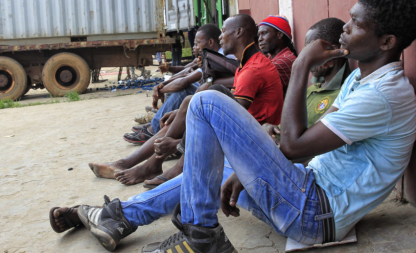
Nearly two million young Ghanaians are neither in education, employment nor training (NEET), raising concerns about the country’s ability to harness its growing youth population for economic growth, according to the Ghana Statistical Service (GSS).
The GSS disclosed that approximately two million people aged 15 to 35—representing 19.5% of Ghana’s youth population—were classified as NEET as of the third quarter of 2025.
Related Stories

The figures were released to mark World Population Day under the theme, “Investing in Ghana’s Future through Healthy, Skilled and Empowered Young People.”
According to the Service, the findings highlight the urgent need for greater investment in education, skills development and employment opportunities to enable young people to contribute meaningfully to national development.
The report also raised concerns about adolescent pregnancy, citing the 2022 Ghana Demographic and Health Survey, which found that 15% of girls aged 15 to 19 had ever been pregnant, while 11% had already given birth.
The GSS noted that early pregnancy often disrupts education, limits access to skills training and reduces young women’s long-term participation in the labour market, with significant implications for economic productivity.
The NEET statistics come amid persistently high youth unemployment. Data from the Quarterly Labour Force Survey covering the first three quarters of 2025 showed that unemployment among people aged 15 to 35 averaged 21.9%, considerably higher than the national unemployment rate of 12.8%.
The Service said Ghana’s youthful demographic presents both a significant opportunity and a pressing policy challenge. Young people between the ages of 15 and 35 now make up 36.9% of the country’s estimated population of 33.7 million, an increase from 34.6% in 2000.
According to the GSS, this growing share of young people makes investments in youth development increasingly critical to Ghana’s long-term economic and social progress.
To address the challenge, the Service called for expanded investment in technical and vocational education and training (TVET), stronger school-to-work transition programmes, increased support for youth entrepreneurship and the growth of industries capable of generating decent and sustainable jobs.
The GSS stressed that Ghana’s ability to benefit from its demographic dividend will ultimately depend on how effectively it equips young people with the education, skills and employment opportunities needed to participate fully in the economy.
A business-focused version or a shorter newspaper-style version can also be prepared if needed.