

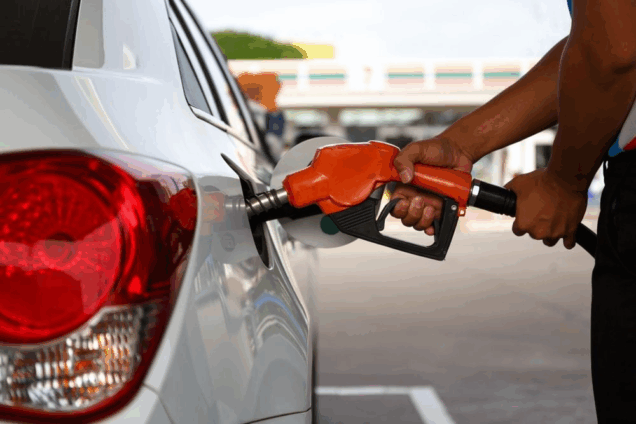
The Chamber of Oil Marketing Companies (COMAC) has warned that consumers should expect further increases in fuel prices as oil marketing companies (OMCs) struggle to cope with rising international market pressures and changing supply costs.
The Chief Executive Officer of COMAC, Dr Riverson Oppong, said the recent upward adjustments at the pumps are a reflection of developments in the global petroleum market, which he said are beyond the control of local fuel traders.
Related Stories

Speaking on Eyewitness News on Monday, July 27, Dr. Oppong explained that rising tensions in the Middle East, higher spot market prices and changing costs from Bulk Distribution Companies (BDCs) are forcing OMCs to adjust prices to remain sustainable.
We see the increment coming up, showing that the oil marketing companies now want to show that when fuel prices are increasing, they’re also going to do the same. They’re not going to wait for NPA to review prices perhaps with a new window before it’s done,” he said.
According to him, the previous practice where OMCs absorbed some cost pressures through price competition has affected the profitability of many companies in the sector.
He described the situation as a long-standing challenge that has weakened the financial position of OMCs, adding that companies have seen their margins shrink over the past five years.
The so-called price war; price went down in the past two or three windows. We’ve played our part, but now the circumstances within the Middle East are going up again,” he stated.
Dr. Oppong said trading companies are currently selling petroleum products at spot prices, while BDCs are also adjusting their prices more frequently due to uncertainty in the international market.
What you see now is that the spot purchase prices are being initiated and that mandates us to also give a cost-reflective price to the Ghanaian,” he explained.
He stressed that the volatility in fuel prices is largely driven by global factors, including geopolitical developments, which local operators have little influence over.
The uncertainty is not from us. It is from the global market price which nobody controls. I don’t believe it’s fair for anybody to say that traders are increasing their prices, BDCs are increasing their prices and OMCs should maintain prices,” he said.
OMCs seek government support
Dr Oppong also called on the government to consider measures to support the petroleum downstream sector, arguing that the industry is facing severe financial pressure.
He said public discussions around fuel price increases often focus on consumers, while the difficulties facing OMCs and other industry players receive little attention.
If you take the pain to understand how the profits of the oil marketing companies have shrunk for the past five years, you’ll be shocked. The loans which they are not able to pay the banks, and here I’m talking about the smaller OMCs, the struggle is real,” he said.
He added that BDCs are also facing similar challenges, warning that continued pressure on industry players could affect the stability of the downstream petroleum sector.
GH¢1 levy review
Dr Oppong repeated COMAC’s call for the government to temporarily suspend the additional GH¢1 levy on petroleum products, arguing that current market conditions justify its removal.
He said the levy was introduced when fuel prices had dropped significantly but should now be reviewed as prices approach previous high levels.
We were 17 when it went to 10, and for that matter it could justify a one cedi. But now we are going back to 17 and there’s more reason why some of us were asking for a clause that will say when the price hits certain levels or certain percentage increase, this one cedi will be taken off,” he stated.
He acknowledged the importance of the levy in supporting government revenue mobilisation but appealed for temporary relief as consumers and businesses face increasing fuel costs.
We have heard the minister said that the one cedi has been able to accumulate so much to pay for our doomsday debt, which is good. We are happy. But now that we are also suffering, please release us small,” he added.
COMAC has previously indicated that continued increases in global oil prices, exchange rate pressures and rising import costs could result in further adjustments at the pumps in the coming pricing window.