

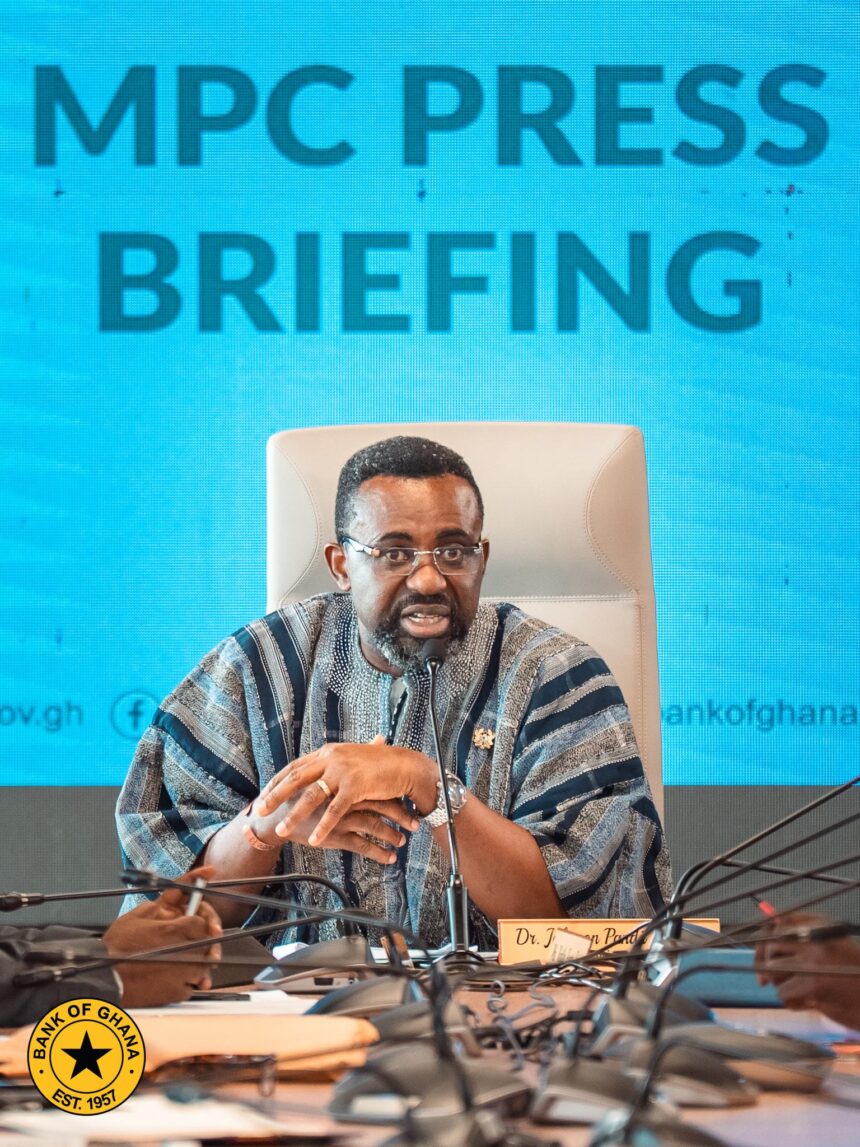
Ghana’s banking sector continues to show signs of recovery and resilience, with total industry assets rising to GH¢465.4 billion as of February 2026, according to the Bank of Ghana’s March Monetary Policy Report.
The 21 percent year-on-year growth in assets, though slower than the previous year’s pace, reflects a shift toward more stable and sustainable expansion, supported by stronger domestic asset growth and improved funding conditions.
Related Stories

A notable trend in the report is the increasing dominance of domestic assets, which now account for 93.8 percent of total industry assets, up from 88 percent a year earlier. This highlights a growing local focus among banks and reduced vulnerability to external economic shocks.
Investment activity played a significant role in driving growth, with total investments rising sharply by 57.5 percent to GH¢192.8 billion. The surge was largely fueled by short-term instruments, which grew by 130.1 percent, pointing to improved money market yields and more active liquidity management strategies by banks.
Deposits remained the primary funding source for the sector, increasing by 18 percent to GH¢338.5 billion. The growth was driven mainly by domestic inflows, signalling renewed public confidence in the banking system.
The sector’s capital base also strengthened considerably, with shareholders’ funds rising by 44.1 percent to GH¢60.6 billion, supported by strong profitability and ongoing recapitalisation efforts.
Although credit growth moderated during the period, analysts view this as a deliberate shift, with banks focusing more on maintaining asset quality and managing risks amid a gradually stabilising macroeconomic environment.
Overall, the latest data points to a banking sector that is expanding on firmer fundamentals, better positioning it to support Ghana’s broader economic recovery.