

Stakeholders in Ghana’s mining sector are calling for a decisive shift away from reliance on royalties toward building sustainable local industries, following the maiden Mining for Development Forum (MDF) held in Goaso in the Ahafo Region.
The forum, organised by the Ghana Chamber of Mines in partnership with Newmont Ghana and the University of Energy and Natural Resources (UENR), brought together government officials, traditional leaders, academia, civil society, and businesses to explore pathways for inclusive, mining-led development.
Related Stories
Held under the theme “Beyond Royalties: How Mining Communities Can Build Local Industries Around the Mine,” the forum underscored the need to transform mining communities into hubs of enterprise and innovation.
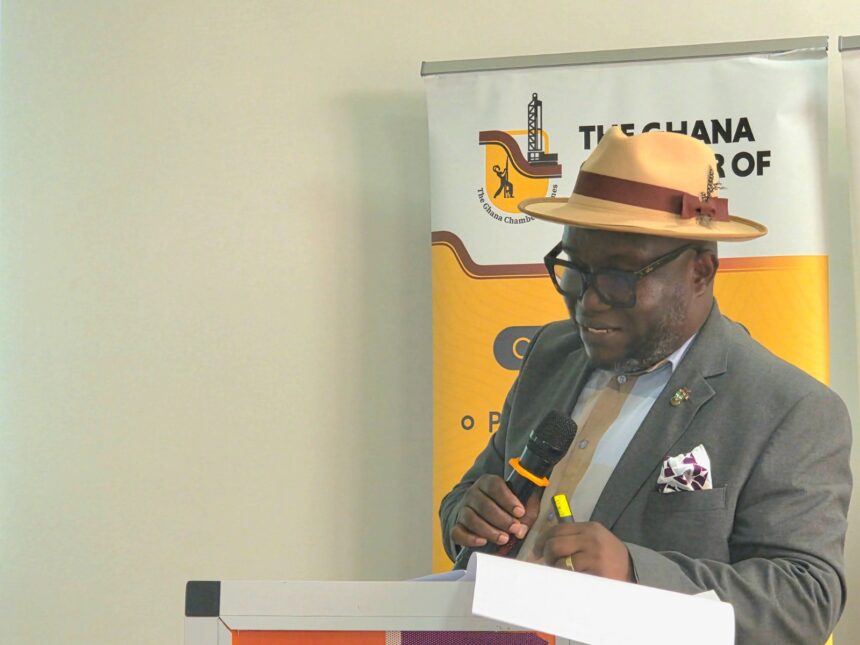
 Opening the event, Chief Operating Officer of the Chamber, Ahmed Dasana Nantogmah, stressed that royalties alone cannot deliver long-term development for host communities.
Royalties alone cannot transform communities. We must deliberately focus on enterprise development, job creation, and value addition across mining supply chains,” he said.
He pointed to untapped opportunities in sectors such as transport, logistics, catering, fabrication, and agribusiness, noting that limited access to finance and information continues to hinder local participation.
Delivering the keynote address, Chief Executive Officer of the Chamber, Kenneth Ashigbey, revealed that Ghana’s mining sector generated over US$51 billion in mineral revenues between 2014 and 2024, with more than 70 percent retained locally.
Despite this, he noted that royalty flows have not translated into sustained and inclusive development.
Capturing even a portion of the mining sector’s procurement spend can significantly transform local economies,” he stated, advocating for investment in industries such as activated carbon production using local agricultural by-products.
Vice Chancellor of UENR, Elvis Asare-Bediako, described the forum as timely and essential for reshaping Ghana’s development approach to mining.
This platform is critical for rethinking how mining can better support local development outcomes,” he said.
He called for increased investment in education, healthcare, and sectors like tourism to drive long-term economic resilience, while reaffirming UENR’s commitment to supporting capacity-building initiatives.
Ahafo Regional Minister, Charity Gardiner, also stressed the importance of planning beyond the lifespan of mines.
Without deliberate planning, mining communities risk economic vulnerability, especially after mine closure,” she cautioned.

She highlighted government interventions such as the National Apprenticeship Programme and SME support initiatives, urging stakeholders to position communities to benefit from the full mining value chain.
Representing Newmont Ghana, General Manager of the Ahafo South Mine, Alex Kofi Annin, outlined efforts to strengthen local enterprise development through the Ahafo Linkages Programme, implemented with the International Finance Corporation.
We currently work with over 1,000 community-based businesses, creating jobs and expanding economic opportunities,” he noted.
Traditional authorities also weighed in, with the Omanhene of Ntotroso and President of the Ahafo Regional House of Chiefs, Nana Barima Twereku Ampem III, urging stronger action against illegal mining.

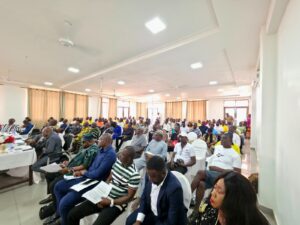
Participants identified key priorities for unlocking mining-led development, including improved access to finance, skills development, stronger institutional coordination, and investment in human capital—particularly in fabrication, agribusiness, digital skills, and enterprise management.
The forum concluded with a strong call for a paradigm shift—from dependence on royalties to building diversified, resilient local economies anchored on mining.
Mining communities must evolve into centres of enterprise, innovation, and long-term economic transformation,” stakeholders emphasised.