

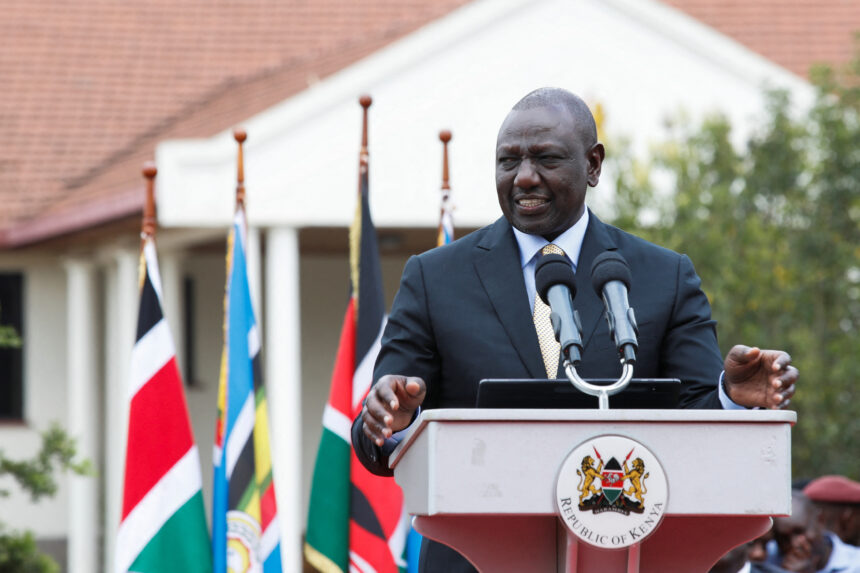
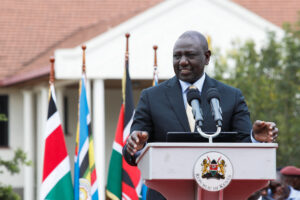
President William Samoei Ruto has outlined an ambitious plan to transform Kenya’s energy landscape through the adoption of nuclear power, positioning it as a cornerstone of the country’s long-term economic and industrial strategy.
Related Stories

Speaking at the International Conference on Nuclear Energy 2026 in Nairobi, the President announced that Kenya aims to more than triple its installed electricity capacity from 3,300 megawatts to at least 10,000 megawatts within the next five to seven years. Of this, 3,000 megawatts will be generated from nuclear energy.
As part of the roadmap, construction of a 2,000MW nuclear power plant in Siaya County is expected to begin in 2027, with commissioning targeted for 2034.
President Ruto underscored the central role of energy in national development, stressing that reliable power supply is critical to unlocking industrial growth and economic transformation.
He noted that “Energy is the lifeblood of industrialisation, innovation, and economic transformation,” adding that “No country has achieved its development ambitions without adequate and reliable energy.”
Addressing concerns about nuclear safety, the President noted that global experience demonstrates that nuclear energy can be deployed safely and efficiently when supported by strong regulatory systems. He pointed to countries such as France and the United States, as well as South Africa, as examples of successful nuclear energy adoption.
He further highlighted nuclear power’s environmental and economic advantages, describing it as a clean and reliable energy source capable of supporting Kenya’s climate commitments and reducing dependence on fossil fuels.
The planned nuclear programme is also expected to deliver significant socio-economic benefits. During peak construction, the Siaya project could generate between 5,000 and 12,000 jobs, while also driving infrastructure development and boosting local economies through increased demand for goods and services.
President Ruto called on local communities and stakeholders to actively support the initiative, emphasising inclusive development and shared benefits.
On the international front, he welcomed global commitments to expand nuclear energy capacity and called for stronger collaboration and financing support, particularly from institutions such as the World Bank.
The President reaffirmed Kenya’s commitment to establishing a robust regulatory framework aligned with global safety standards, while deepening cooperation with international partners, including the United States.